
Eucalyptus leaf psyllid
Eucalyptolyma maideni
Description
How to identify
The Eucalyptus leaf psyllid (Eucalyptolyma maideni) is a small insect belonging to the family Psyllidae within the order Hemiptera. These specialized pests are specifically adapted to feed on various species of the Eucalyptus genus, which they locate through chemical signals.
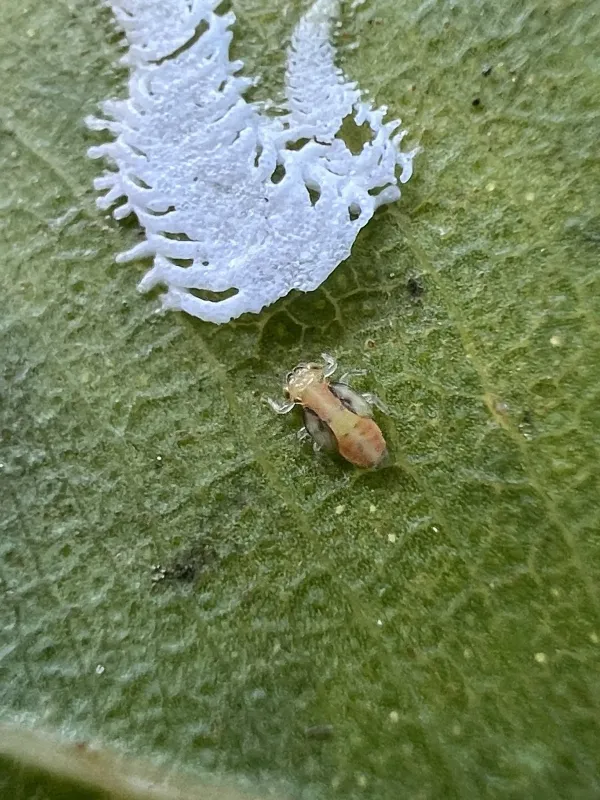
Adult psyllids are small, jumping insects with transparent wings that resemble tiny cicadas. Their coloration often mimics the foliage of the host tree, providing excellent protection against avian predators in their natural habitat.
The nymphs go through several developmental stages (instars) while remaining largely stationary on the leaf surface. During these stages, they produce characteristic waxy secretions or protective test-like structures that shield them from environmental stress.
Their life cycle is highly opportunistic, allowing them to reproduce rapidly when weather conditions are favorable. In many regions, they produce several generations per year, which significantly complicates management efforts in nursery environments.
Distinguishing Eucalyptolyma maideni from other psyllid species often requires a close examination of the specific leaf damage patterns and the morphology of the protective capsules created by the nymphs during their growth.
What it damages
The damage caused by the Eucalyptus leaf psyllid primarily affects the vigor and aesthetic appearance of the host plant. Both nymphs and adults extract sap from the leaves and soft terminal growth using their specialized piercing-sucking mouthparts.
As the insects feed, they inject saliva into the plant tissues, which frequently leads to leaf discoloration, curling, and abnormal tissue development. This physiological stress diverts energy from growth, resulting in stunted branches.
A major indirect symptom is the massive production of honeydew, a sugary byproduct of their feeding. This substance accumulates on the foliage and branches, creating a sticky environment that is detrimental to the overall health of the tree.
This honeydew serves as a substrate for sooty mold fungi, which cover the leaves in a black, powdery layer. This layer blocks essential sunlight, significantly reducing the tree's ability to perform photosynthesis and leading to further decline.
Severe infestations can lead to significant defoliation of the canopy. While healthy, mature eucalyptus trees can often tolerate some psyllid pressure, young trees and stressed saplings may suffer permanent damage or even mortality under high population densities.
Signs of infestation
One of the earliest and most reliable signs of an infestation is the appearance of small, white or cream-colored waxy structures on the leaves. These are the protective covers (tests) constructed by the developing nymphs.
Visual signs also include yellow spotting (chlorosis) on the leaves at the site of feeding punctures. As the colony grows, the affected leaves often become deformed, twisted, or distorted, making the tree look untidy.
The presence of sticky honeydew on the leaves is a clear indicator that a colony is actively feeding. You may also notice an increased number of ants or wasps, which are attracted to the sweet honeydew produced by the psyllids.
A black, sooty coating on the leaves and stems is a secondary sign that suggests the infestation has been ongoing for some time. This is often the point at which ornamental value is compromised to a high degree.
Finally, a tell-tale sign is the sudden movement of tiny, winged adults flying from the foliage when the branches are shaken or disturbed, allowing for quick confirmation of a psyllid presence.
Control measures
Managing the Eucalyptus leaf psyllid requires a multi-faceted approach. Culturally, maintaining tree health through adequate irrigation and proper fertilization helps the eucalyptus withstand and recover from psyllid-induced stress more effectively.
Biological control is highly effective in large-scale settings. Introducing or encouraging natural predators, such as ladybird beetles, lacewings, and parasitic wasps, can keep psyllid populations below economically damaging levels without chemicals.
For chemical intervention, systemic insecticides are the most effective, as they are absorbed by the tree and kill the pests as they feed on the sap. It is crucial to apply these during the period of active leaf growth for the best results.
Horticultural oils or insecticidal soaps can be used on smaller trees to suffocate the nymphs and adult psyllids upon contact. These products are generally safer for the environment and preserve beneficial insect populations if used carefully.
- Prune and destroy heavily infested branches to reduce local population density.
- Monitor pest levels using yellow sticky cards to time treatments correctly.
- Improve air circulation within the canopy by thinning overgrown branches.
- Consult an arborist to ensure proper selection of systemic products for your specific eucalyptus species.
Taxonomy
- Latin name
- Eucalyptolyma maideni
- Order
- Hemiptera (bugs, aphids, leafhoppers)
- Family
- Aphalaridae
- EPPO code
- ECLLEU
Discussion
No discussions yet — be the first.