
Eucalyptus psyllid
Eucalyptolyma
Description
How to identify
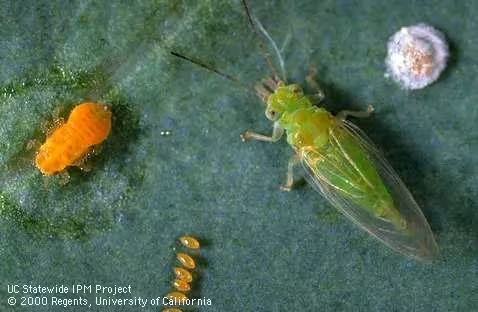
The eucalyptus psyllid (genus Eucalyptolyma) belongs to the order Hemiptera, family Psyllidae. These insects are small, sap-sucking pests often referred to as jumping plant lice due to their powerful hind legs.
Adults exhibit specific wing patterns that serve as camouflage on the bark of eucalyptus trees. Their antennae are usually well-developed, aiding in the detection of host plant signals.
The nymphs go through several developmental stages, often secreting protective wax or sugars to hide from predators and environmental stressors during their growth period.
Lifecycle patterns are closely synchronized with the growth flushes of the eucalyptus tree, ensuring that the next generation has immediate access to tender, nutrient-rich foliage.
Identification at the species level usually requires specialist entomological expertise, focusing on the microscopic morphological differences in wing venation and abdominal structure.
What it damages
The primary hosts for these psyllids are trees within the genus Eucalyptus. The insects specifically target young leaves and growing tips, where the concentration of nutrients is highest.
By extracting plant sap, the pests induce significant stress on the tree, leading to stunted growth, leaf curling, and in severe cases, the necrosis of young twigs.
The metabolic disruption caused by psyllid feeding results in reduced photosynthetic efficiency, which significantly hampers the overall health and vigor of the tree.
The sugary honeydew excreted by the nymphs facilitates the growth of sooty mold, a black fungus that covers the leaves and further blocks sunlight, exacerbating the damage.
Repeated or chronic infestations can make the tree susceptible to secondary diseases and pests, potentially leading to long-term decline in urban and nursery environments.
When it appears
Psyllid activity is strictly seasonal and correlates with the spring and summer growth cycles of the eucalyptus tree, providing optimal conditions for oviposition and development.
The duration of each life stage is temperature-dependent; warm climates allow for faster reproduction, leading to overlapping generations throughout the warmer months.
During the winter, the insects usually enter a period of reduced activity, overwintering as eggs or adults in bark crevices or protected leaf shelters.
Weather fluctuations, especially periods of prolonged drought followed by rapid spring growth, can trigger population explosions as the host tree is under increased stress.
Field monitoring should be intensified during the initial warm days of spring, when overwintering populations begin to lay the first batch of eggs on new buds.
Signs of infestation
A classic sign of infestation is the sticky honeydew film on leaves, which often appears shiny before the black sooty mold fungus begins to colonize the surface.
Leaves often display visible signs of deformation, such as rolling or severe puckering, caused by the localized damage during the psyllid feeding process.
The presence of white, cotton-like wax filaments on the undersides of leaves or along stems is a clear indicator that a colony is currently feeding on the plant.
- Premature leaf drop throughout the canopy.
- Yellowing or chlorosis of the affected young foliage.
- Increased ant activity on the bark, attracted by the nutrient-rich honeydew secretions.
Visual inspection of the canopy, especially the tender tips of branches, typically reveals the insects themselves or their characteristic protective coverings.
Control measures
Effective control requires a multi-faceted approach, starting with the use of systemic insecticides that are absorbed by the plant and target the sap-sucking nymphs directly.
Encouraging biological control agents, including parasitic wasps, lady beetles, and lacewings, is essential for maintaining natural equilibrium in larger landscape settings.
Maintaining tree health through proper irrigation and balanced fertilization prevents the tree from becoming overly attractive to psyllid colonization.
Pruning and disposing of heavily infested branches can help reduce the initial pest load, especially in small, localized outbreaks in gardens or nurseries.
Monitoring programs that incorporate yellow sticky traps can help track population trends and determine the optimal timing for targeted intervention before damage reaches critical levels.
Taxonomy
- Latin name
- Eucalyptolyma
- Order
- Hemiptera (bugs, aphids, leafhoppers)
- Family
- Aphalaridae
- EPPO code
- ECLLSP
Discussion
No discussions yet — be the first.