
Eterusia
Eterusia
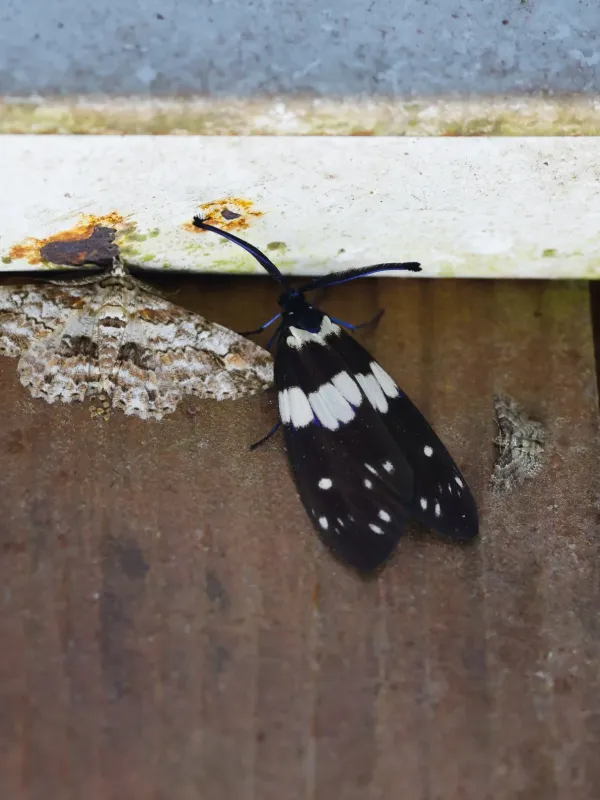
Description
How to identify
Eterusia belongs to the Zygaenidae family. These are day-flying moths characterized by bright warning coloration, which signals the presence of toxins in their body.
Adult individuals have a wingspan of approximately 60–80 mm. The forewings are typically dark with a metallic sheen, often featuring yellow or white spots, which helps them mimic other insects.
The larvae are covered in characteristic protuberances and bristles, with coloration ranging from bright yellow to orange with black spots, acting as an unpalatability signal to predators.
The life cycle includes complete metamorphosis: egg, larva (caterpillar), pupa, and adult (imago). Depending on the climate, one or two generations can develop per year.
Adults are active during the day, preferring sunny areas where they feed on nectar from flowering plants before commencing the egg-laying process.
What it damages
The primary food source for Eterusia larvae are members of the Theaceae family, specifically the tea bush (Camellia sinensis).
The pest is also found on various species of Camellia, which are grown as ornamental or agricultural crops in Southeast and East Asian regions.
The caterpillars are highly voracious, feeding en masse on leaf blades, which leads to a critical reduction in the photosynthetic activity of the plants.
At high population densities, Eterusia can completely defoliate shrub branches, significantly weakening the plant's immunity and reducing overall crop yields.
Damage to young shoots and terminal buds is particularly dangerous, as these constitute the most valuable part of the tea leaf, resulting in direct economic losses.
Signs of infestation
The first sign of infestation is the appearance of skeletonized leaves, where only major veins remain due to the active consumption of leaf tissues by caterpillars.
Caterpillar frass, appearing as small dark pellets, accumulates on leaf surfaces and under the bushes, which is noticeable upon careful inspection of the plantation.
The presence of the caterpillars themselves, which often cluster on the undersides of leaves or along stems, is definitive proof of an active infestation.
During the pupation period, dense cocoons protected by silky webbing can be found on branches or trunks, indicating the end of the feeding cycle.
Affected parts of the bush begin to yellow and drop prematurely, leading to a decline in plant vigor and loss of product marketability.
Control measures
An effective biological method involves encouraging natural enemies, such as predatory bugs and hymenopteran parasitoids, which help reduce larval populations.
Hand-picking and destroying caterpillar nests are effective in small areas or during the early stages of a pest outbreak to prevent large-scale damage.
The application of biological preparations based on Bacillus thuringiensis allows for selective control of caterpillars without harming beneficial insects or the quality of the product.
Using pheromone traps helps monitor adult moth flights and precisely determine the timing for protective measures, minimizing the use of synthetic pesticides.
In cases of severe infestation, systemic or contact insecticides may be used, provided that pre-harvest intervals are strictly observed to ensure food safety.
Taxonomy
- Latin name
- Eterusia
- Order
- Lepidoptera (butterflies)
- Family
- Zygaenidae
- EPPO code
- ETERSP
Discussion
No discussions yet — be the first.