
Yellow-brown stink bug
Erthesina fullo
Description
How to identify
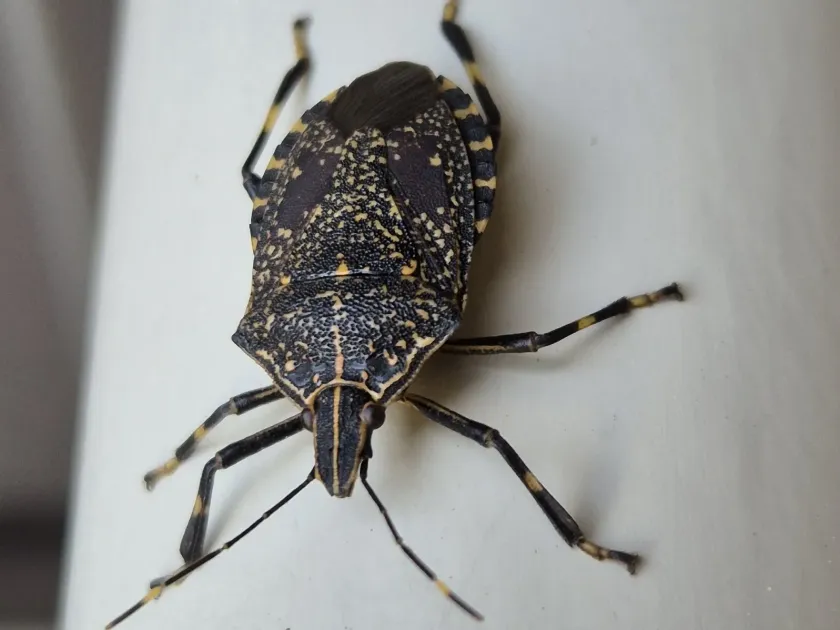
The yellow-brown stink bug (Erthesina fullo) is a large insect species belonging to the Pentatomidae family, recognized by its distinct morphology and coloration.
Adult insects typically measure between 17 and 23 mm in length, possessing an oval, shield-shaped body covered in a dense pattern of dark dots against a brown or yellowish background.
The head is elongated and features five-segmented antennae, a key identifying feature that distinguishes it from other common stink bug species found in agricultural fields.
The nymphs go through several developmental stages (instars), gradually increasing in size and developing wing pads while their coloration evolves from bright yellow to dark brown.
These bugs possess a specialized piercing-sucking mouthpart, known as a rostrum, which they insert into plant tissues to feed on sap and essential nutrients.
What it damages
Erthesina fullo is highly polyphagous, meaning it feeds on a vast array of botanical species, making it a significant threat to diverse agricultural sectors.
Orchard crops such as apples, pears, peaches, and plums are primary targets, as the bugs feed on tender shoots, flower buds, and developing fruit during the peak season.
Vegetable crops, including tomatoes and peppers, often suffer from stunted growth, fruit malformation, and secondary rot infections triggered by the insect's saliva.
Nut-bearing trees, such as walnuts and hazelnuts, are frequently infested, leading to kernel shriveling and a substantial reduction in the overall harvest quality.
Vineyards are also susceptible, with the bugs piercing grapes, which often leads to sour rot and decreased market value for both table and wine grapes.
When it appears
The life cycle of the yellow-brown stink bug is closely dictated by seasonal weather patterns, with adults emerging from overwintering sites in early spring.
Following emergence, the bugs begin feeding and mating, with the first generation of nymphs appearing as temperatures consistently stay above the threshold for development.
Population levels typically peak during the mid-to-late summer months when crops are in full fruit, providing the insects with an abundant food supply for rapid reproduction.
In warmer climates, the species may produce multiple generations per year, significantly increasing the pressure on host plants throughout the growing season.
As autumn arrives and temperatures drop, adults seek protected microhabitats such as bark crevices or man-made structures to enter a state of diapause for the winter.
Signs of infestation
The most prominent sign of an infestation is the appearance of tiny, dark puncture marks on the skin of fruit, often surrounded by small, sunken necrotic areas.
Damaged fruit often exhibits uneven growth or corky tissue inside the flesh, which renders the produce commercially unviable and prone to early spoilage.
Leaves on host plants may show chlorotic spotting and curling, resulting from the enzymatic components in the bug's saliva injected during the feeding process.
A foul, pungent odor is a classic indicator of the presence of stink bugs, particularly when foliage is disturbed or when the insects are crowded on a plant.
Scouting for groups of nymphs and adults on the undersides of leaves or along succulent stems is an effective way to detect early stages of colonization.
Control measures
Integrated Pest Management (IPM) is the recommended approach to controlling Erthesina fullo, focusing on combining chemical, biological, and physical methods.
Chemical control involves the timely application of approved insecticides; however, it must be performed with caution to protect beneficial pollinators and natural predators.
Cultural management plays a vital role, specifically through the removal of surrounding weeds and wild host plants that serve as reservoirs for the pest population.
Biological control through the preservation and augmentation of natural enemies, such as egg parasitoids, can provide long-term regulation of stink bug numbers.
Monitoring using pheromone traps and light traps is essential for early detection, allowing growers to implement targeted interventions before the infestation spreads.
Taxonomy
- Latin name
- Erthesina fullo
- Order
- Hemiptera (bugs, aphids, leafhoppers)
- Family
- Pentatomidae
- EPPO code
- ERTNFU
Discussion
No discussions yet — be the first.