
Yellow-spotted stink bug
Erthesina
Description
How to identify
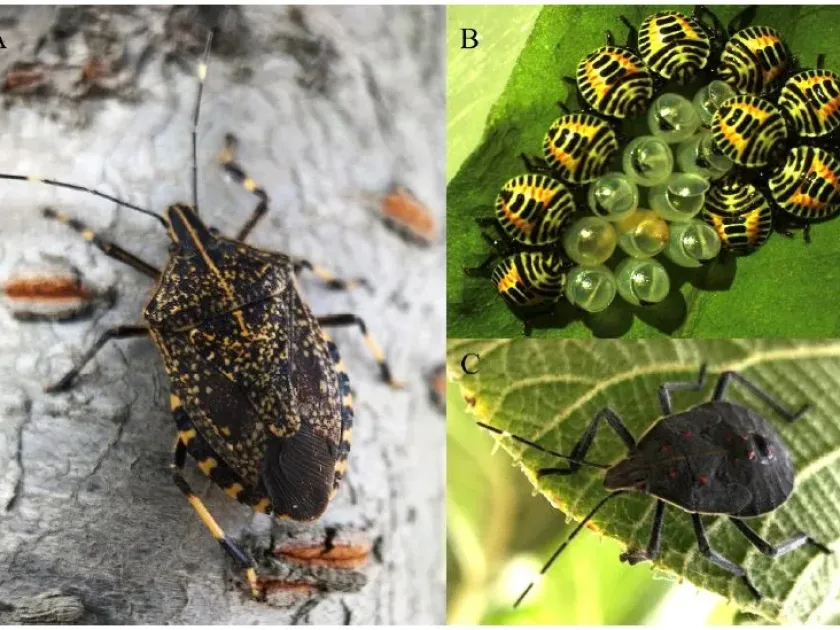
The yellow-spotted stink bug (scientific name Erthesina fullo) is a member of the Pentatomidae family, widely recognized for its characteristic spotted appearance.
Adult insects measure between 17 and 23 mm in length, possessing a flattened, shield-shaped body that is mottled with a mix of brown, grey, and distinctive yellow spots.
A longitudinal pale stripe runs down the center of the head and the pronotum, which serves as a key diagnostic feature for visual identification in the field.
Nymphs undergo five developmental stages (instars), appearing more rounded and varying in color as they progress toward the adult form while retaining the typical shield-bug shape.
These insects are highly adaptable, capable of thriving in diverse environments, which has facilitated their spread across various agricultural and urban landscapes.
What it damages
As a highly polyphagous pest, the yellow-spotted stink bug feeds on a wide range of fruit trees, vegetables, and ornamental plants, causing severe agricultural losses.
Primary targets include apples, pears, peaches, citrus fruits, and grapevines, where the bugs use their piercing-sucking mouthparts to extract sap from plant tissues.
Feeding on developing fruit leads to localized cell death, causing characteristic deformities, pitting, and internal tissue discoloration that renders the harvest unmarketable.
The pest's feeding behavior can also weaken the overall vigor of the host plant, resulting in stunted shoot growth, premature leaf yellowing, and eventual yield reduction.
- Fruit trees (Apple, Pear, Peach, Plum)
- Citrus species
- Vineyards (Grapes)
- Ornamental trees and shrubs
When it appears
The life cycle of the stink bug is heavily influenced by seasonal temperature fluctuations, with the warmer months providing ideal conditions for rapid reproduction.
Adults overwinter in protected microhabitats such as bark crevices, under leaf litter, within wooden structures, or in dense vegetation near the orchard borders.
As temperatures rise in the spring, the overwintering adults emerge to feed on developing foliage and tender stems, signaling the start of the primary infestation period.
Multiple generations can occur throughout the year, with peak population densities usually observed during the mid-summer months when nymphs and adults are both present.
As autumn approaches and temperatures decrease, the bugs gradually seek out suitable hibernation sites to survive the winter, often congregating in large numbers.
Signs of infestation
The most immediate signs of an infestation include the appearance of tiny punctures on leaves and stems, which often turn into necrotic spots surrounded by chlorotic tissue.
Fruits affected by feeding will exhibit small depressions or dimples, often described as a 'bumpy' or irregular surface, accompanied by internal tissue hardening or rotting.
The presence of frass (excrement) on the undersides of leaves and on the skin of developing fruits serves as a clear indicator of active feeding colonies.
Heavily infested plants may show signs of general stress, including wilting of terminal shoots and premature drop of both leaves and underdeveloped fruit.
An unpleasant odor, produced by the insect's defensive scent glands, is often detectable in orchards with significant populations of the yellow-spotted stink bug.
Control measures
Management of the yellow-spotted stink bug requires an integrated pest management (IPM) approach that combines physical, biological, and chemical control measures.
Sanitation practices, such as removing debris and overwintering habitats around fields, are crucial for reducing the starting population size in the spring.
Monitoring populations using pheromone traps allows farmers to track the timing of seasonal activity and apply targeted control measures when they are most effective.
When chemical intervention is necessary, the application of systemic or contact insecticides should be timed to coincide with the most vulnerable developmental stages, such as early instar nymphs.
Encouraging natural predators, including beneficial wasps and predacious insects, provides a long-term strategy for suppressing bug numbers without excessive chemical use.
Taxonomy
- Latin name
- Erthesina
- Order
- Hemiptera (bugs, aphids, leafhoppers)
- Family
- Pentatomidae
- EPPO code
- ERTNSP
Discussion
No discussions yet — be the first.