

Pest · Hemiptera (bugs, aphids, leafhoppers)
Woolly apple aphid
Eriosoma lanigerum
Description
How to identify
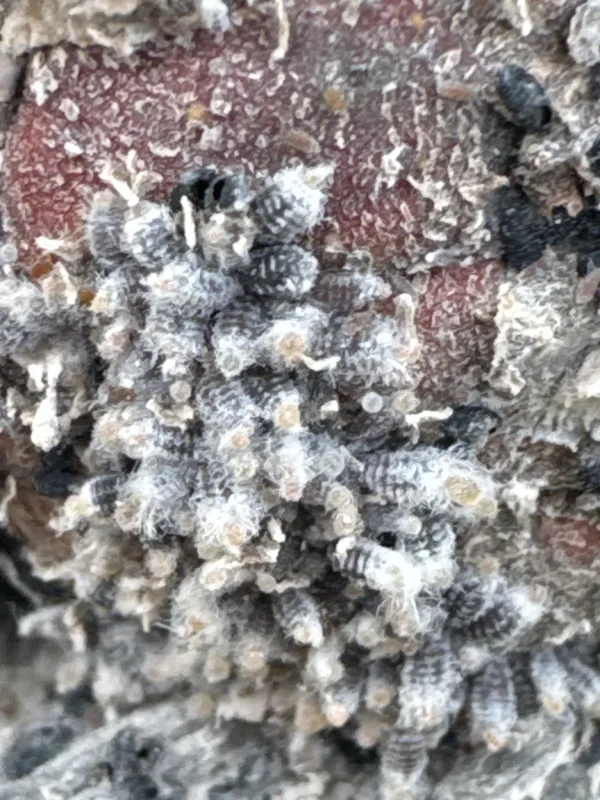
The woolly apple aphid (Eriosoma lanigerum) is a member of the aphid family known for its distinct white, cotton-like waxy secretion. This coating serves as a protective layer against environmental stress and predators.
When crushed, the aphid releases a reddish fluid, which is the origin of its common name. The insect reproduces through parthenogenesis, allowing a single colony to expand rapidly under favorable weather conditions.
Nymphs are smaller and lighter in color, beginning to produce their characteristic wax filaments shortly after birth. This waxy covering makes them look like small patches of mold or cotton wool on the bark.
Most individuals in a colony are wingless, but winged forms appear when the population density becomes too high. These winged aphids migrate to other trees, facilitating the spread of the pest across entire orchards.
Overwintering occurs as nymphs hidden in bark crevices, pruning wounds, or near the root zone. As temperatures rise in spring, these survivors emerge to establish new colonies on young shoots.
What it damages
The primary host for this pest is the apple tree, though it can also infest pears and other related species. The aphid prefers feeding on succulent tissues, such as young twigs and fresh growth.
By piercing the bark and sucking sap, the aphid causes severe physical damage to the tree. This feeding process results in the formation of galls and deformed, swelling tissues on the stems and roots.
These deformed areas often crack, creating entry points for fungal pathogens and bacterial infections. Secondary damage from these infections can lead to branch dieback and overall tree decline.
Root infestation is particularly dangerous because it is difficult to detect early. Attacked roots lose their ability to transport water and nutrients, causing the tree to suffer from chronic stress and reduced yields.
In high-density commercial orchards, a severe infestation can lead to significant economic losses. Persistent colonies can eventually kill young trees if not managed with appropriate chemical or biological measures.
When it appears
Activity begins in early spring, once temperatures consistently exceed 5 degrees Celsius. Overwintered nymphs emerge and start feeding on the budding leaves and bark of the previous year’s growth.
The peak activity period usually occurs during the summer months, specifically June and July. During this time, the aphids reproduce aggressively, and colonies become highly visible across the tree canopy.
Warm, dry summers favor rapid population growth, allowing the pest to colonize various parts of the tree, including the crown and trunk. Growers should perform frequent inspections during these months.
As autumn arrives and temperatures drop, the aphids start to move toward the root zone or deeper into the bark for overwintering. This migration is a crucial stage to target with late-season treatments.
There can be multiple generations per year, depending on the climate. Keeping track of these cycles is essential for timing insecticide applications to break the development chain.
Signs of infestation
The most recognizable sign is the white, fuzzy, cotton-like substance covering the branches. This growth is easily spotted during routine orchard walkthroughs, especially on younger trees.
Closer inspection of the bark reveals abnormal swellings, bumps, and deep cracks. These deformities, or galls, are clear indicators of long-term aphid presence and physiological damage.
Reduced vigor in the tree, characterized by stunted growth and yellowing leaves, often suggests a heavy infestation. In severe cases, the tree may show signs of wilting even when well-watered.
Finding a red, blood-like stain when touching the white aphid masses is a definitive diagnostic feature. This simple test confirms the presence of Eriosoma lanigerum.
- White, cottony masses on branches and trunks
- Galls, bumps, and deep fissures on bark
- Stunted shoot growth and curled leaves
- Premature leaf drop and branch dieback
- Red fluid residue when crushed
Control measures
Systemic insecticides are the most effective management tool because they translocate through the tree's sap. This ensures the aphids ingest the toxin while feeding on the plant's tissues.
Good orchard hygiene is essential; cleaning old, rough bark helps remove hiding spots for overwintering nymphs. Pruning infested branches and burning the material can also limit colony spread.
Biological control, particularly the introduction of the parasitoid wasp Aphelinus mali, has shown great success in many regions. This wasp specifically targets the woolly apple aphid.
Regular monitoring of the orchard is critical, especially in nurseries and new plantings. Identifying small colonies early allows for spot treatments instead of full-orchard spraying.
Rotate the use of different chemical classes to prevent the aphids from developing resistance. Always follow label instructions regarding timing and application rates to ensure effective control.
Content graph
Connections · Woolly apple aphid
Most often together:
Marketplace
Products · 1
Biology
Taxonomy
- Latin name
- Eriosoma lanigerum
- Order
- Hemiptera (bugs, aphids, leafhoppers)
- Family
- Aphididae
- EPPO code
- ERISLA
Community
Discussion
No discussions yet — be the first.