
Gold-rimmed moth
Eriogaster catax
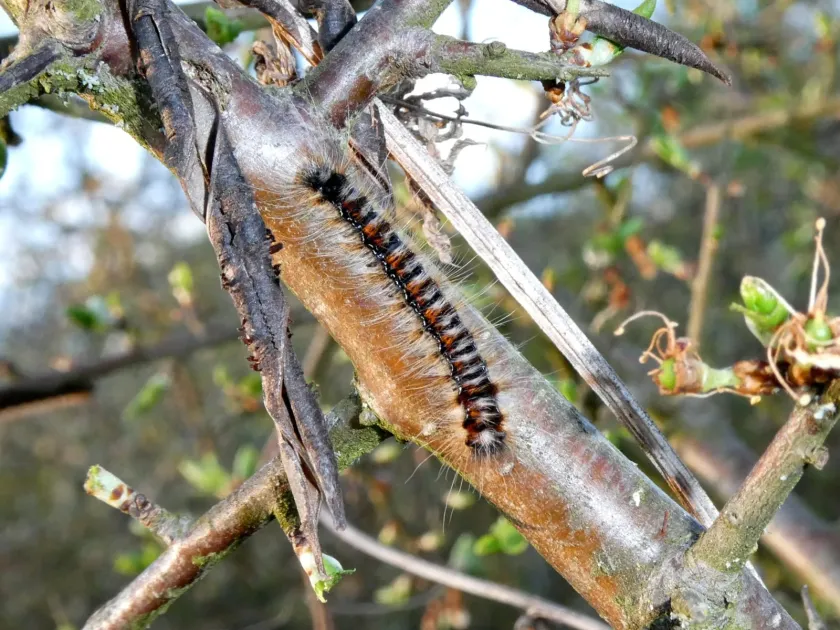
Description
How to identify
The Gold-rimmed moth (Eriogaster catax) is a moth species belonging to the family Lasiocampidae. It is a medium-sized insect with a wingspan typically ranging from 35 to 50 mm.
The forewings of the adults are characterized by colors varying from pale yellow to yellow-brown, with a distinct white spot located in the center. This white marking is a primary visual identifier for the species.
The larvae, or caterpillars, are covered in dense, irritating hairs that can cause allergic reactions if touched. They typically display dark, striped patterns, which provide effective camouflage against the bark of host trees.
Pupation occurs within dense, firm, yellowish cocoons, which are often securely attached to the twigs or trunks of the host plant, protecting the pupa throughout its development phase.
This species is native to Europe and Western Asia, preferring sunny forest edges and warm orchard environments where its host plants, such as hawthorn and various fruit trees, are abundant.
What it damages
The Gold-rimmed moth is a specialized phytophagous pest that primarily attacks broad-leaved trees and shrubs. Members of the Rosaceae family are particularly susceptible to damage from this insect.
The damage is mainly caused by the larvae, which begin feeding in early spring. They consume buds and young leaves, often causing skeletonization by feeding on the soft tissue between the veins of the leaf.
In managed orchards, this pest can pose a significant threat to fruit-bearing trees including apple, pear, plum, and cherry, potentially leading to substantial economic loss if populations are not controlled.
Heavy defoliation severely inhibits the tree's photosynthetic capability, leading to weakened growth, stunted development, and reduced yield capacity in following seasons.
In addition to orchard crops, the moth frequently targets hawthorn and oak, maintaining stable reservoir populations in the surrounding landscape that can easily migrate into agricultural areas.
When it appears
The Gold-rimmed moth completes one generation per year. Adult moths are typically active in late summer and early autumn, which is the period for mating and egg-laying.
The eggs overwinter on the twigs of host trees, laid in compact clusters that are often covered with protective hairs from the female's abdomen to withstand cold winter temperatures.
In the spring, synchronized with the budding of host trees, the larvae hatch. This represents the most vulnerable stage for the pest and the best opportunity for targeted intervention.
The active feeding phase of the caterpillars lasts throughout the spring, generally from April to June. During this time, they pass through multiple instars, significantly increasing their size and food consumption rate.
Pupation takes place in early summer within a protected cocoon on the branches or trunks, where the insect remains until the emergence of the adult moth later in the year.
Signs of infestation
A key indicator of an infestation is the presence of webbed nests formed by the larvae on the tips of branches, which serve as protective shelters during the day.
During the dormant season, careful inspection of one-year-old twigs can reveal egg clusters, which appear as small, firm "cuffs" or sleeves often covered in brownish or greyish hairs.
The presence of frass (larval droppings) beneath tree canopies and signs of eaten leaves in early spring are clear indicators of an active colony working in the upper branches.
Old cocoons left on branches or tree trunks provide evidence of previous infestations, indicating that the location is suitable for the species and likely to host future generations.
Increased activity of avian predators or specific parasitoid wasps around the trees can also act as an indirect warning sign that a caterpillar colony is present in the canopy.
Control measures
Mechanical control is highly effective for smaller orchards. During winter pruning, inspect branches for egg clusters and manually remove and destroy any infected twigs.
Early spring scouting allows for the manual collection and destruction of larval webbed nests before the caterpillars disperse, which is often sufficient to contain small localized populations.
Biological control using Bacillus thuringiensis-based products can be implemented when larvae are in their early stages, as these treatments are effective against caterpillars while remaining safe for beneficial insects.
Chemical intervention should be reserved for severe outbreaks where economic thresholds are exceeded, ensuring that pesticides are applied in accordance with regional regulations and safety guidelines.
Maintaining strong tree vigor through proper horticultural practices—such as balanced fertilization and timely pruning—helps increase natural resilience, making the trees less prone to successful colonization by pests.
Taxonomy
- Latin name
- Eriogaster catax
- Order
- Lepidoptera (butterflies)
- Family
- Lasiocampidae
- EPPO code
- ERIGCA
Discussion
No discussions yet — be the first.