
Eocanthecona furcellata
Eocanthecona furcellata
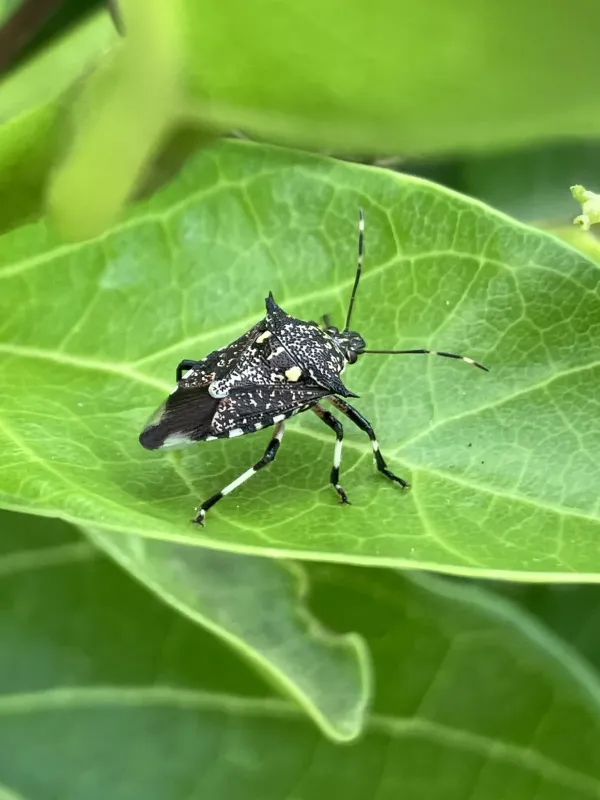
Description
How to identify
Eocanthecona furcellata is a member of the Hemiptera order, specifically the Pentatomidae family (stink bugs). The adult insect features a shield-shaped body measuring approximately 10–15 mm in length, typically displaying brown, grey, or yellowish hues.
A distinctive morphological trait of this species is the presence of sharp, thorn-like projections on the pronotum. The head is relatively small, equipped with a robust rostrum designed for piercing the cuticle of prey or plant tissues.
Eggs are typically deposited in dense, ordered clusters on the undersides of leaves and possess a barrel-like shape. The nymphal stages undergo several molts, gradually changing coloration and increasing in size before reaching the adult stage.
While fundamentally a predatory entomophagous bug, this species exhibits facultative phytophagy, meaning it can shift to plant-based diets when preferred prey is scarce. Understanding this dual behavior is critical for accurate pest management.
The insect develops via incomplete metamorphosis. Its life cycle is closely synchronized with the tropical and subtropical climate conditions, allowing for multiple generations to occur within a single growing season.
What it damages
Although often beneficial for suppressing lepidopteran larvae, Eocanthecona furcellata can cause significant damage to various crops. Key sectors at risk include tea plantations, fruit orchards, and diverse vegetable crops.
When feeding on plants, the bug targets young shoots, leaves, and flower buds. Damage occurs primarily through the piercing of tissues and the injection of salivary enzymes, which lead to localized necrosis and tissue degradation.
Economic losses are most severe in nurseries and young plantations, where the bug's activity results in stunted growth and shoot deformity. Affected plants exhibit loss of turgor and physiological developmental delays.
In monoculture farming systems, where the predator population can explode due to abundant food, the risk of significant plant damage increases drastically. This necessitates rigorous field monitoring to keep populations in check.
The punctures left by this bug serve as entry points for secondary fungal and bacterial pathogens. Consequently, the indirect impact on crop health may often exceed the direct harm caused by sap-sucking feeding habits.
When it appears
Activity typically begins with the arrival of sustained warm temperatures. In tropical climates, reproduction can persist year-round, with peak population densities often aligning with the seasonal outbreaks of caterpillar prey.
In spring, overwintered adults emerge and begin searching for hosts. During this time, scouting the edges of fields and border zones is essential, as these areas often serve as initial aggregation sites for the pest.
Temperatures exceeding 20-25°C are optimal for mating and oviposition. Accelerated metabolic rates combined with high humidity facilitate a rapid development cycle for each subsequent generation of the bug.
As conditions turn unfavorable, adults seek refuge in leaf litter, hedgerows, or other sheltered environments, entering a state of diapause until the return of favorable spring conditions.
Monitoring seasonal population dynamics allows for predictive management. Utilizing pheromone traps or systematic visual plant inspections remain the standard methods for identifying the onset of pest activity.
Signs of infestation
The first indicator of infestation is the discovery of egg clusters on the abaxial leaf surfaces. These eggs are usually arranged in neat, geometric rows and display a characteristic iridescent sheen.
Visible punctures on leaves and stems, accompanied by localized yellowing or darkened necrotic spots, indicate feeding activity. These lesions result from the toxic interaction between the insect's saliva and the plant tissue.
The presence of large nymphal aggregations is a clear sign of a significant infestation. Older nymphs are highly mobile and tend to disperse across the entire aerial portion of the host plant.
Generalized growth stunting and the curling of terminal leaves are classic symptoms of extensive feeding on young, nutrient-rich tissues. Affected plants often appear withered without any corresponding soil-borne pathology.
Small, dark fecal droplets scattered near feeding sites are an additional diagnostic sign. In extreme cases, widespread flower wilting and premature fruit drop can be attributed to heavy feeding pressure.
Control measures
Effective management focuses on maintaining an ecological balance where the bug functions primarily as a beneficial predator. Preserving natural enemies of the bug is crucial for long-term population regulation.
When the economic threshold is exceeded, the use of selective, low-toxicity insecticides is recommended to target the pests while minimizing collateral damage to non-target beneficial insect species.
Cultural practices include the regular clearing of weeds that act as alternate host sites. Furthermore, deep fall plowing can effectively disrupt the overwintering cycle of adults by destroying their shelter.
In greenhouse environments, the installation of exclusion netting is a highly effective physical barrier against adult colonization. Manual removal of egg clusters can also be a viable strategy for small-scale operations.
- Continuous field monitoring for early detection of egg masses
- Optimization of irrigation to maintain plant vigor and stress resistance
- Deployment of microbial biological control agents (e.g., fungi) when appropriate
- Implementation of crop rotation to break the pest's reproductive cycle
Taxonomy
- Latin name
- Eocanthecona furcellata
- Order
- Hemiptera (bugs, aphids, leafhoppers)
- Family
- Pentatomidae
- EPPO code
- EOCAFU
Discussion
No discussions yet — be the first.