
Four-spotted checkered beetle
Enoclerus quadrisignatus
Description
How to identify
The four-spotted checkered beetle (Enoclerus quadrisignatus) belongs to the Cleridae family within the order Coleoptera. This small, predatory insect is often found in forest ecosystems.
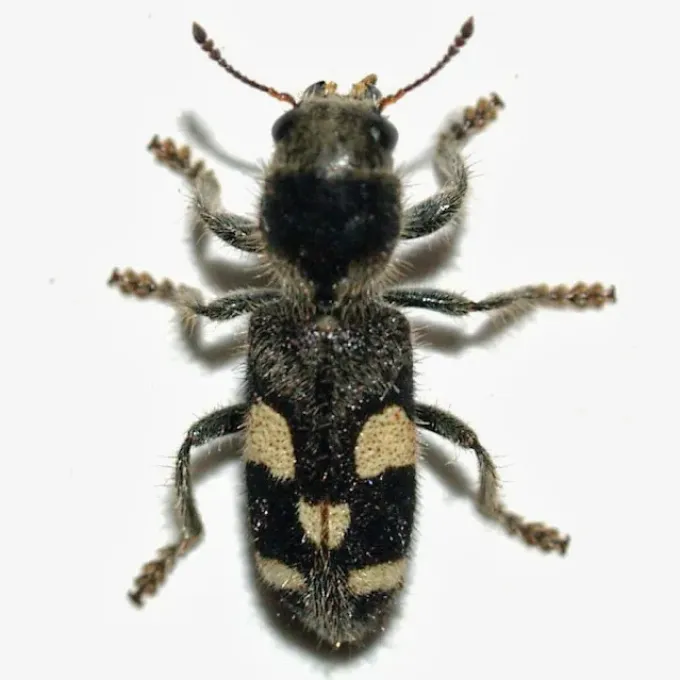
The beetle is characterized by an elongated body covered with dense setae. Its most distinctive feature is the set of four symmetrical spots on the elytra.
The coloration of the integument typically ranges from dark brown to black, accented with reddish or yellowish transversal bands or spots.
The head and pronotum are proportional, designed for mobility within the narrow crevices of bark and wood galleries.
Larvae have a spindle-shaped body, which is a common trait among clerid beetles adapted to living and hunting under tree bark.
What it damages
This beetle is primarily associated with coniferous and some deciduous tree species, where it occupies the bark and phloem layers.
Adult beetles and their larvae inhabit the galleries of other wood-boring insects, frequently acting as aggressive predators of bark beetles and weevils.
However, under conditions of high population density or scarcity of natural prey, they may feed on the tissues of stressed trees, exacerbating their decline.
Feeding larvae disrupt the cambium layer, which can interfere with the tree's nutrient transport system and weaken its overall vitality.
Severe infestations are mostly recorded in forest nurseries or areas with already compromised trees that cannot recover from physical damage.
When it appears
The active life cycle of the four-spotted checkered beetle begins in the spring as soon as bark temperatures rise sufficiently.
Mass emergence of adult beetles typically occurs in late spring, coinciding with the peak vegetative growth of host trees.
Mating and oviposition take place in bark cracks or pre-existing holes abandoned by other xylophagous insects.
The larval stage spans throughout the summer, characterized by intensive feeding on tree tissues and any prey found in the galleries.
As autumn approaches, larvae move deeper into the bark or wood to undergo pupation and survive the winter in a state of diapause.
Signs of infestation
The presence of the beetle is indicated by numerous exit holes on the bark surface, often accompanied by fine wood dust (frass).
Inspecting the trees for small, irregular wounds or specific entry channels is a reliable way to detect an ongoing infestation.
Yellowing of needles or premature leaf drop can serve as indirect symptoms that the tree's vascular system is under stress from pest activity.
Removing sections of the bark during a site assessment often reveals the larvae or adults hiding within their excavated galleries.
Active colonization is often accompanied by the presence of bark beetle galleries, which the checkered beetle exploits for its own development.
Control measures
Effective management begins with maintaining high sanitary standards, which includes the prompt removal of infested or dead trees.
Clearing forest areas of fallen timber and debris is essential to minimize breeding sites for wood-inhabiting beetles.
Pheromone traps are highly effective for monitoring adult beetle populations and reducing their numbers during peak flight periods.
- Application of specialized insecticides on trunks during the emergence phase.
- Encouraging natural predators such as woodpeckers and insectivorous birds in the area.
- Enhancing tree health through proper irrigation and forest fertilization programs.
In nursery settings, systemic insecticides are recommended to create a residual protective barrier that effectively targets larvae before they cause significant damage.
Taxonomy
- Latin name
- Enoclerus quadrisignatus
- Order
- Coleoptera (beetles)
- Family
- Cleridae
- EPPO code
- ENOCQL
Discussion
No discussions yet — be the first.