
Cereal shoot fly
Elachiptera bimaculata
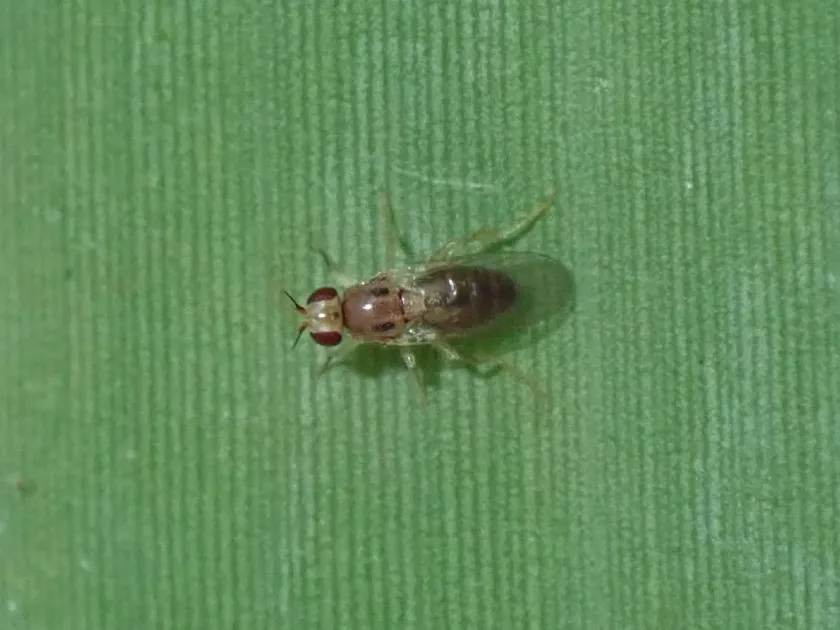
Description
How to identify
The cereal shoot fly, Elachiptera bimaculata, belongs to the family Chloropidae within the order Diptera. These are small insects, typically measuring 2–3 millimeters in length.
Adult flies are generally yellowish-brown to black in color, with a distinctive pattern on the thorax. They possess well-developed compound eyes, which are essential for navigating and finding host plants in the field.
The larvae are typically maggot-shaped, cylindrical, and white or yellowish, reaching up to 4 mm in length. Their mouthparts are specialized for scraping plant tissue, which allows them to feed inside the stems.
Positive identification in the field is difficult due to their small size and similarity to other fly species. Accurate classification usually requires expert examination of the adult morphology under a microscope.
The lifecycle of this pest is closely tied to the presence of grasses and cereal crops. They prefer humid microclimates within dense vegetation, where they can thrive and reproduce efficiently.
What it damages
The primary hosts for this pest include major cereal crops such as winter and spring wheat, barley, oats, and rye. They are significant pests within the agricultural landscape.
Besides cultivated crops, the fly utilizes wild grasses for survival and reproduction. These wild areas act as reservoirs, allowing the pest to maintain high populations throughout the growing season.
Damage is caused by the larvae, which burrow into the stems or leaf axils of young plants. By feeding on the internal tissues, they disrupt the plant's vascular system and metabolic processes.
Affected plants often show stunted growth, leaf deformation, and reduced tillering capacity. In severe cases, the infested stem may die, leading to visible gaps in the crop stand.
The overall impact on productivity is proportional to the pest density. High infestation levels can lead to significant yield losses, especially when plants are attacked during their most sensitive developmental stages.
When it appears
The overwintered adults emerge in the spring as soon as temperatures become favorable. This timing often aligns with the early vegetative development of spring cereals, creating a high risk for infestation.
Females lay eggs on young leaves or within the leaf sheaths. This developmental phase is critical, as young seedlings have limited defensive capabilities against the feeding larvae.
The species is capable of producing multiple generations during a single growing season, depending on environmental factors like humidity and heat, which accelerate their biological cycle.
During the summer months, the pest shifts its focus to late-planted crops or secondary host grasses. This continuous cycle ensures that the pest remains a constant threat throughout the year.
Winter survival is achieved by remaining in the pupal or adult stage, usually hidden within plant debris, soil, or dry stems of grasses, waiting for the spring conditions to restart their activity.
Signs of infestation
A primary indicator of infestation is the yellowing and wilting of the central leaf of a young cereal plant during the tillering stage. This "dead heart" effect is a classic sign of shoot-feeding pests.
Closer inspection of the affected plants often reveals the presence of larvae inside the leaf sheaths or stems. Secondary fungal infections often appear in these injured areas, exacerbating the damage.
Visible signs of plant stress include leaf curling and abnormal development of the stem. The plant may fail to produce normal heads, significantly affecting its overall health and grain production.
In infested fields, patches of stunted plants appear throughout the crop. These symptomatic patches are often more frequent near field edges where wild grasses act as a source of the pest.
To confirm the diagnosis, the stems of suspect plants should be carefully opened to inspect for the presence of larvae or the characteristic feeding tunnels left behind by the insects.
Control measures
Effective management begins with robust crop rotation. By avoiding the cultivation of susceptible grasses in the same field repeatedly, farmers can significantly reduce local pest populations.
Deep autumn plowing is a highly recommended practice to bury and destroy overwintering pupae and larvae located in crop residues, effectively lowering the pest pressure for the following spring.
Weed management, particularly controlling perennial grasses on field margins, is essential to remove the breeding grounds that serve as a source of infestation for the crops.
Chemical control using systemic insecticides can be employed during periods of peak adult flight. Timing is crucial to prevent egg-laying and minimize the colonization of the crop.
Optimizing planting dates—planting earlier for spring crops or within the recommended window for winter crops—allows plants to gain sufficient strength and biomass before the pest reaches peak activity levels.
Taxonomy
- Latin name
- Elachiptera bimaculata
- Order
- Diptera (flies)
- Family
- Chloropidae
- EPPO code
- ELACBI
Discussion
No discussions yet — be the first.