
Elachiptera
Elachiptera
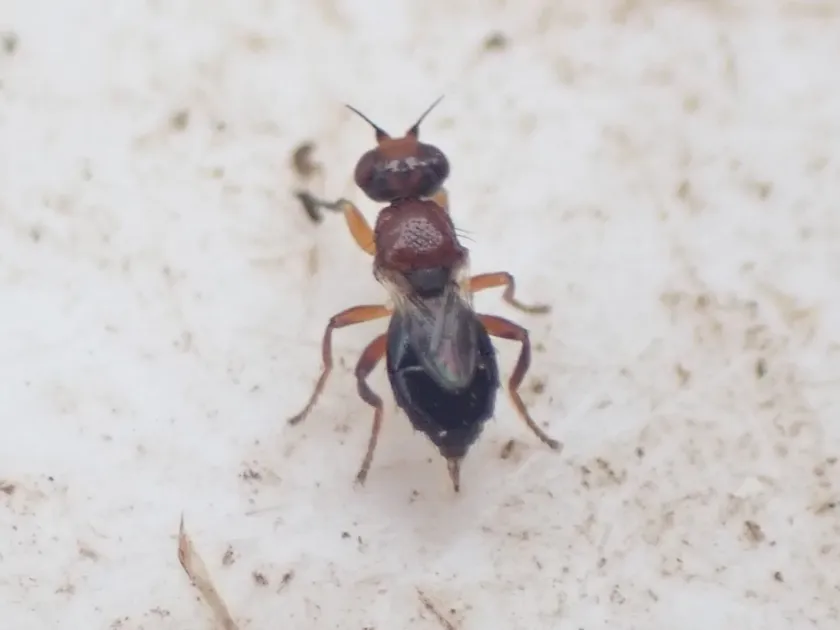
Description
How to identify
Elachiptera is a genus of small flies belonging to the family Chloropidae (frit flies). These insects are typically microscopic, measuring roughly 2 to 3 millimeters, which makes them difficult to detect during standard field scouting without professional tools.
Adult flies are often dark or yellowish-black in color with specialized head structures. Their wing venation is a key taxonomic feature used by entomologists to distinguish Elachiptera from other related cereal-infesting fly species.
The larvae are typically legless and headless, presenting a white or creamy appearance. They are adapted for a cryptic lifestyle inside the stems or leaf sheaths of host grasses, where they feed on succulent plant tissues.
Because they belong to the Chloropidae family, they share ecological similarities with other well-known agricultural pests, requiring specialized management strategies that account for their small size and rapid reproduction cycles.
Monitoring for these pests is best conducted using yellow sticky traps or sweep netting during the morning hours when adults are most active in the canopy of the growing crops.
What it damages
The primary hosts for Elachiptera include essential cereal crops such as wheat, barley, rye, and oats. In addition to cultivated plants, they frequently utilize wild grasses as alternative hosts, ensuring their survival across diverse landscapes.
Larval feeding causes direct damage to the plant's vascular system. By consuming the inner parts of the stem or the base of the developing ear, they interrupt the transport of nutrients and water, leading to localized plant decay.
Damage often manifests as stunted growth, yellowish leaves, and the deformation of the main tiller. In severe cases, the central leaf of the seedling may wither and die, significantly reducing the stand density.
Secondary damage occurs because the feeding sites often become entry points for various pathogens, including fungi and bacteria, which exploit the weakened state of the plant to cause rot and further loss of yield.
Economic losses are linked to lower yields and inferior grain quality. In commercial farming, Elachiptera damage can translate into significant financial impacts, especially in years when weather conditions favor early-season population spikes.
When it appears
Activity typically begins in early spring as soon as temperatures rise, allowing the adults to emerge from hibernation. They quickly colonize winter crops, seeking out the tender shoots for egg-laying.
The number of generations per year is highly dependent on regional climate. In warmer climates, several generations can overlap, creating a continuous threat to various stages of crop development throughout the growing season.
Peak egg-laying periods coincide with the tillering stage of cereal crops. Females lay eggs under leaf sheaths, providing the emerging larvae with immediate access to nutritious plant tissue.
During the summer months, the pests migrate to alternative host plants, including regrowth or grass weeds. This ability to shift hosts allows the population to remain persistent even after the primary harvest.
Autumn brings the transition to overwintering. The pests settle in debris, stubble, or soil layers, where they can effectively survive cold temperatures until the cycle begins again in the following year.
Signs of infestation
Visual identification in the field starts with noticing localized yellowing of the foliage and overall stunted growth compared to healthy neighboring plants. Such patches are often clear indicators of larval activity.
Examining the stem near the base often reveals entry holes or internal tissue destruction. The stem itself may become brittle and prone to breakage under environmental stress like wind or heavy rain.
In the reproductive phase, symptoms include white heads or deformed ears, which fail to develop grains. This "blighted" appearance is a direct result of damage to the vascular connections that feed the ear.
Carefully peeling back the leaf sheath of a suspicious plant will often reveal the presence of larvae. This simple diagnostic step is essential for confirming that the symptoms are caused by Elachiptera rather than abiotic factors.
Documenting these signs through systematic field inspection allows for localized monitoring and data collection, which is vital for calculating potential economic injury levels.
Control measures
Effective management begins with strict adherence to agrotechnical practices. Deep plowing and thorough stubble destruction immediately after harvest are critical to eliminating overwintering sites for the next generation.
Crop rotation remains the most powerful tool in the arsenal. By alternating cereals with non-host crops, farmers can disrupt the pest’s lifecycle and prevent population buildup on the same field over multiple years.
Seed treatments with systemic insecticides are a standard proactive measure. They provide a protective layer for the seedling, effectively preventing larvae from establishing their initial feeding sites.
Chemical control via foliar application is indicated only when pest counts exceed economic thresholds. It is crucial to time these applications with the peak activity of larvae to ensure maximum efficacy.
Integrating these methods into a coherent management plan reduces reliance on heavy pesticide usage while ensuring high crop productivity and sustainable farm profitability.
Taxonomy
- Latin name
- Elachiptera
- Order
- Diptera (flies)
- Family
- Chloropidae
- EPPO code
- ELACSP
Discussion
No discussions yet — be the first.