
Edessa meditabunda
Edessa meditabunda
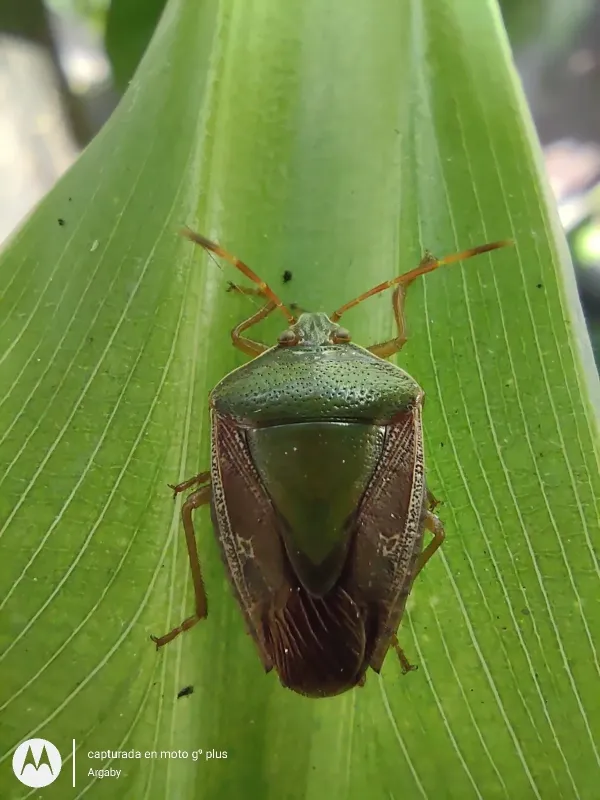
Description
How to identify
Edessa meditabunda is a species of hemipteran insect belonging to the stink bug family (Pentatomidae). Adult individuals exhibit the shield-shaped body characteristic of this family, with prominent humeral angles on the pronotum.
The coloration of the insect varies from light green to yellowish-brown, providing effective camouflage among foliage. Adults reach a length of approximately 10–12 millimeters, possessing firm hemelytra with distinct venation patterns.
The biological cycle of this pest includes an egg stage, five nymphal instars, and the adult stage. Early instar nymphs often differ in color from adults, frequently displaying bright, spotted patterns on their dorsal abdomen.
This species is highly adaptable to various climatic conditions in the tropical and subtropical zones of South and Central America. The population can multiply rapidly under favorable temperature regimes and abundant food availability.
Reproduction occurs sexually, and females lay eggs primarily on the underside of host plant leaves. Egg masses are typically laid in orderly rows, serving as a crucial diagnostic feature for field identification.
What it damages
This stink bug is a polyphagous pest that feeds on a wide range of agricultural crops. It causes significant economic damage to soybean, sunflower, tomato, potato, and various other legume crops.
The pest uses its piercing-sucking mouthparts to penetrate plant tissues, extracting sap from leaves, young shoots, and developing seeds. Necrotic lesions frequently appear at the feeding sites on leaves.
In soybeans, the insect damages pods at various developmental stages. This leads to a substantial reduction in seed weight, impaired germination rates, and degraded market quality of the harvested grain.
Beyond direct physical damage, Edessa meditabunda facilitates the transmission of various fungal and bacterial plant diseases. Through the feeding puncture wounds, secondary pathogens easily gain access to the plant's vascular system.
During mass outbreaks, these bugs can destroy a significant portion of the harvest, causing premature flower and pod abscission. Affected plants exhibit stunted growth and drastically reduced physiological productivity.
When it appears
The peak activity period of Edessa meditabunda coincides with the growing season when host crops are in stages of active growth and development. In tropical regions, activity may persist throughout the year.
The optimal temperature range for the development of this pest is between 25 and 30 degrees Celsius. Under these conditions, the generation interval is shortened, resulting in rapid population surges.
Overwintering of adults typically occurs in crop debris, under leaf litter, or in other protected habitats. As temperatures rise, the bugs migrate onto young crops to begin feeding and reproduction cycles.
Peak infestation periods often correlate with the flowering and pod-filling stages of crops like soybean. Consistent field monitoring during these intervals is essential for effective management.
Precipitation and relative humidity play critical roles in the bug's life cycle. Irrigated fields often provide ideal microclimatic conditions that sustain high population densities, even during dry seasons.
Signs of infestation
The primary sign of infestation is the presence of the bugs themselves on leaves and stems, as well as egg masses on the underside of leaves. Inspection during morning or evening hours is most effective.
Yellowish or brown spots appear on leaves at the sites of stylet penetration. Over time, these spots can coalesce, leading to chlorosis and the physical deformation of leaf tissues.
Visual inspection of pods may reveal indentations and necrotic areas indicating compromised seed integrity. Seeds within affected pods often appear shriveled or display abnormal pigmentation.
The release of a specific, unpleasant odor, characteristic of pentatomids, is a reliable sign of their presence. When disturbed, the bugs release glandular secretions that signal an active infestation.
General signs of crop stress, such as stunted growth, decreased grain quality at harvest, and increased susceptibility to secondary diseases, are all indicative of this pest's detrimental activities.
Control measures
The foundation for managing Edessa meditabunda is an Integrated Pest Management (IPM) approach that combines agronomic, biological, and chemical strategies. Regular field scouting is vital for timely intervention.
- Utilizing crop rotation to break the pest's developmental cycle.
- Eliminating host weeds that act as reservoir sites for the bugs.
- Encouraging biological control agents, such as egg parasitoids.
- Applying selective insecticides when economic thresholds are exceeded.
Chemical control should rely on products registered for the specific crop. Rotating active ingredients is strongly recommended to prevent the development of insecticide resistance within the population.
Special attention should be directed toward field borders, as initial migration often begins there. Perimeter treatments can help localize the outbreak and minimize total pesticide usage.
Biological control methods, such as the release or conservation of parasitoid wasps, have proven effective in sustainable agricultural systems, reducing pest density while preserving ecological balance.
Taxonomy
- Latin name
- Edessa meditabunda
- Order
- Hemiptera (bugs, aphids, leafhoppers)
- Family
- Pentatomidae
- EPPO code
- EDESME
Discussion
No discussions yet — be the first.