
Edessa bifida
Edessa bifida
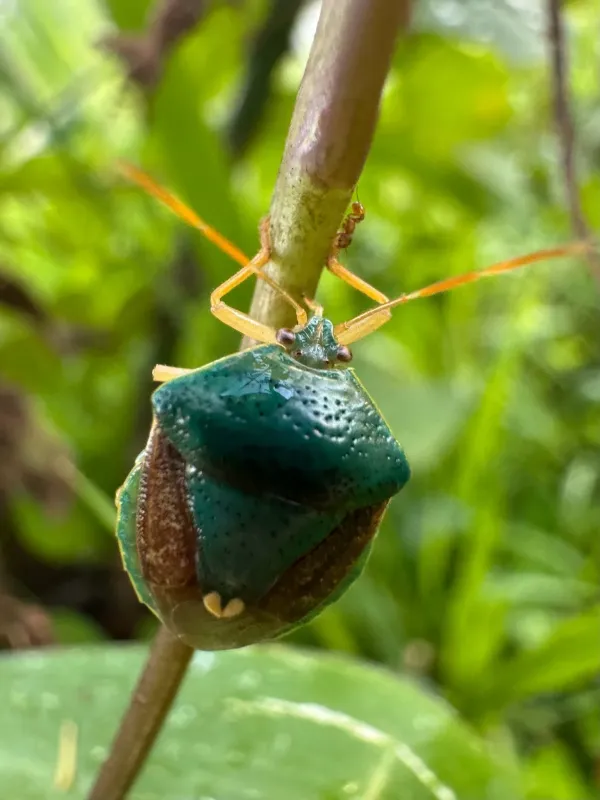
Description
How to identify
Edessa bifida is a species belonging to the family Pentatomidae, commonly known as stink bugs. These insects are easily recognized by their distinct shield-like body shape and the elongated, often pointed, humeral angles of the pronotum.
Adults typically exhibit a green or yellowish-brown coloration, which serves as effective camouflage against plant foliage. They measure approximately 12 to 15 millimeters in length, making them visible to the naked eye during field inspections.
Nymphs go through several developmental stages (instars) before reaching maturity. During these stages, they gradually develop wing pads and become more similar to adults in shape, though they often exhibit different color patterns.
Like other members of their family, they possess a piercing-sucking mouthpart designed to penetrate plant tissue. They feed by injecting saliva containing enzymes to pre-digest plant juices before ingestion.
Identifying Edessa bifida requires attention to specific morphological details, such as the structure of the venter and genitalia. Field identification is usually based on their characteristic shape and movement patterns when disturbed.
What it damages
Edessa bifida is a polyphagous pest, meaning it feeds on a wide range of host plants. It can cause significant damage to vegetables, legumes, and certain fruit-bearing crops in various agricultural ecosystems.
The primary damage occurs when both adults and nymphs feed on young shoots, flower buds, and developing fruits. They extract essential fluids, which directly impacts the plant's growth and productivity.
Fruits damaged by these bugs often develop necrotic spots, surface depressions, and deformities. This reduces the marketability of the crop and can lead to premature fruit drop, causing substantial financial losses to growers.
Heavy infestations can result in the stunting of the entire plant. When the bugs feed on the growing tips, these tips may wilt, twist, or eventually die, severely hampering the plant's ability to develop normally.
Furthermore, the physical damage caused by the bugs' mouthparts creates entry points for various pathogens, including fungi and bacteria, which can lead to secondary infections and rapid decay of the plant tissue.
When it appears
The life cycle of Edessa bifida is strongly influenced by local climatic conditions. Activity typically commences in the spring as temperatures rise, allowing overwintering adults to emerge and begin searching for suitable hosts.
Egg-laying usually occurs on the underside of leaves, where the clusters are protected from environmental extremes. The timing of this process is synchronized with the most active growth phase of the target crop plants.
Depending on the region and climate, the insect can complete multiple generations in a single growing season. Warmer temperatures generally accelerate development, leading to higher populations during mid-summer.
Mid-summer is typically the peak period of activity. During this time, the bugs are most visible and are actively spreading through fields, feeding on maturing fruits and succulent vegetative tissues.
As autumn temperatures drop, adults seek shelter to enter a state of diapause. They look for protected sites such as leaf litter, bark crevices, or crop debris to survive the winter months until the next season.
Signs of infestation
The first sign of an Edessa bifida infestation is often the appearance of small, chlorotic spots or necrotic lesions on leaves where the bugs have been feeding. These spots may enlarge if the feeding pressure continues.
The presence of the bugs themselves is a major indicator. If touched or disturbed, they often emit a pungent odor, which is a classic defensive behavior of shield bugs and helps in confirming their presence in the field.
Deformed fruit is a clear sign of a significant infestation. Since the bugs pierce the fruit during its development, the area around the puncture site often ceases to grow at the same rate as the rest of the fruit, causing lumps.
Wilting and stunted growth of shoots are secondary indicators. When the plant is attacked, it diverts energy to repairing the damage, which disrupts the normal development of leaves and branches.
- Yellowing or brown necrotic spots on leaves.
- Visible egg clusters on the underside of foliage.
- Fruit deformation and surface pitting.
- Wilted or twisted growing tips on stems.
- Dropping of young fruit and flower buds.
Control measures
Management of Edessa bifida requires an integrated approach. Cultural practices, such as removing weeds and crop debris, help reduce the availability of food and overwintering sites for the population.
Biological control methods involve promoting natural enemies, such as parasitic wasps that target the eggs of the shield bugs. Protecting these beneficial insects is crucial for maintaining natural suppression of the pest.
Chemical control should be implemented only when the pest population reaches the economic injury level. Systemic or contact insecticides are effective if applied during the early nymphal stages of the bug.
Rotating insecticides with different modes of action is essential to prevent the development of resistance. Applications should be timed carefully to ensure maximum efficacy while minimizing impacts on non-target species.
Constant monitoring using traps or field counts allows for early detection. By tracking the population density, farmers can make informed decisions regarding the necessity and timing of control interventions.
Taxonomy
- Latin name
- Edessa bifida
- Order
- Hemiptera (bugs, aphids, leafhoppers)
- Family
- Pentatomidae
- EPPO code
- EDESBI
Discussion
No discussions yet — be the first.