
Duronia chloronota
Duronia chloronota
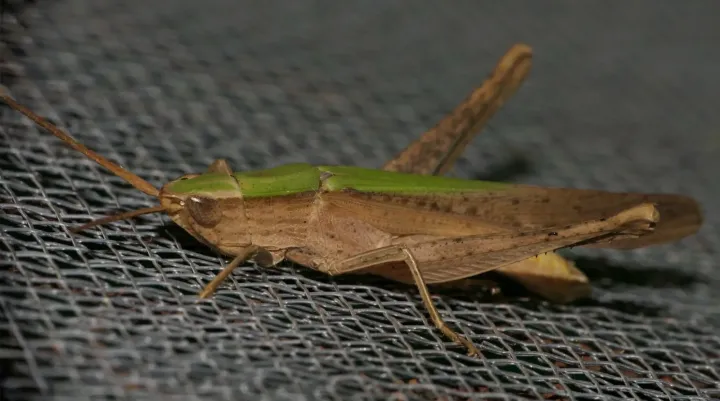
Description
How to identify
Duronia chloronota is a species of grasshopper belonging to the Acrididae family within the order Orthoptera. This insect is recognized by its slender body and a distinctive greenish or brownish stripe running along its dorsal side, which serves as a primary field identification marker.
Adult insects possess fully developed wings, enabling them to migrate over long distances. Their coloration often provides excellent camouflage, allowing them to blend seamlessly into dry grasses or green pastures, making detection difficult without careful scouting.
The life cycle involves incomplete metamorphosis, including egg, nymph, and adult stages. Females lay their eggs in the soil, protected by a hardened secretion forming an egg pod, which serves as a thermal and physical shield against environmental extremes during winter.
The nymphal stages grow through several instars. Younger nymphs look similar to adults but are significantly smaller and lack functional wings. Their appearance evolves with each molt until they reach sexual maturity.
This species is well-adapted to open grassland environments, favoring areas with a dense cover of graminoids. Their behavioral traits allow them to thrive in varied climates, often extending their range into agricultural lands during periods of high population density.
What it damages
Duronia chloronota is a significant threat to cereal crops, including wheat, barley, and oats. In addition to cultivated grains, they frequently infest natural meadows and grazing lands, significantly reducing the forage quality for livestock.
Besides grasses, the pest exhibits opportunistic feeding habits and may damage a variety of wild plant species within the Poaceae family. During severe outbreaks, their diet may expand to include other young agricultural plants.
The primary damage is caused by both late-stage nymphs and adults, which use their powerful mandibles to consume large amounts of foliage. This rapid consumption can lead to severe defoliation of the crop canopy.
Economic impact is most severe during dry seasons. When natural grazing areas become parched and lose nutritional value, these grasshoppers actively migrate to irrigated fields, where the succulent green crops become their primary food source.
Beyond direct defoliation, feeding damage often weakens the stem structure of cereals, leading to plant lodging and susceptibility to secondary fungal diseases, which further reduces overall yield and grain quality.
When it appears
The life cycle of Duronia chloronota is strictly synchronized with seasonal shifts. The species spends the winter in the egg stage, securely nestled in the soil within protective pods, waiting for favorable spring temperatures.
Nymph hatching occurs in the spring when soil temperatures reach the threshold required for development. This timing often aligns with the early vegetative phases of spring-sown cereals, creating a high-risk period for seedling damage.
The species typically undergoes one generation per year. The nymphal development period spans several weeks, during which the insects are most sensitive to environmental fluctuations but remain constantly active feeders.
Adults emerge mid-to-late summer, marking the peak of their activity. This period coincides with crop maturation, meaning the insects can cause significant damage to the reproductive structures of grain crops just before harvest.
By autumn, the life cycle completes with mating and egg-laying. The success of the next generation depends heavily on the moisture levels in the soil during this time, which dictates the survival of the egg pods through the upcoming winter.
Signs of infestation
The earliest signs of an infestation include small, irregular holes or ragged edges on the leaves of young crops. As the nymphs grow and their consumption rate increases, these gaps enlarge, leading to significant foliage loss.
During field scouting, jumping or flying insects observed when walking through the crop are clear indicators of presence. High activity levels during the morning or evening often suggest that a significant population is established in the area.
Accumulated frass, visible as small granular droppings on the leaf surfaces or the soil underneath, confirms the presence of an active population. Large quantities of frass typically indicate high insect density.
In cases of severe infestation, patches of the field may appear completely stripped of green leaves, leaving behind only the stems. This type of damage can result in localized crop failure, requiring immediate intervention to prevent spread.
Post-harvest observation of the soil can reveal residual egg pods, which serve as a warning sign for potential outbreaks in the subsequent growing season, especially in fields left as stubble.
Control measures
Effective cultural control centers on deep autumn tillage, which physically destroys the soil-bound egg pods and exposes them to predators and harsh weather conditions, significantly reducing the hatching population.
Maintaining clean field borders and eliminating weeds on adjacent roadsides is essential, as these areas often serve as primary breeding grounds for the species before they migrate into the main crop field.
Chemical control remains a viable option when population thresholds are exceeded. Applications of synthetic pyrethroids or organophosphate insecticides are effective, provided they are applied during the early nymphal stages for maximum efficacy.
Integrated Pest Management (IPM) strategies, including the use of entomopathogenic fungi or natural predators, are being explored to reduce reliance on chemicals while maintaining long-term control of grasshopper populations.
- Systematic monitoring of crop fields in spring and early summer.
- Implementation of barrier spraying to prevent migration from field edges.
- Crop rotation to minimize the availability of host plants.
Taxonomy
- Latin name
- Duronia chloronota
- Order
- Orthoptera (locusts)
- Family
- Acrididae
- EPPO code
- DURNCH
Discussion
No discussions yet — be the first.