
Duronia
Duronia
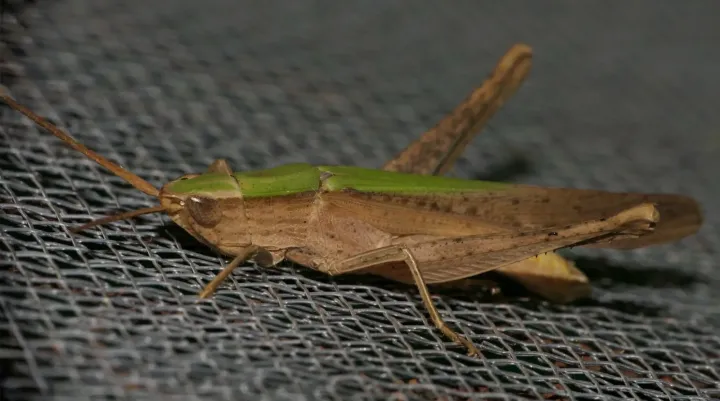
Description
How to identify
Duronia is a genus of grasshoppers belonging to the family Acrididae, order Orthoptera. These insects are well-adapted to living in grassland ecosystems, including cultivated cereal fields.
Physically, they are characterized by an elongated body and a distinctively slanted face, which is a key diagnostic feature separating them from many other grasshopper species. Their coloration often ranges from green to brown to provide effective camouflage.
The life cycle follows incomplete metamorphosis, consisting of three distinct stages: egg, nymph, and adult. Each nymphal stage involves successive molts, leading to increased size and the gradual development of wings.
Adults possess fully developed wings and are capable of active dispersal. They are diurnal, typically being most active during warm, sunny weather when they forage for food and seek mates.
This genus demonstrates significant resilience to environmental fluctuations, utilizing soil properties for overwintering and choosing habitats that provide both food and protection from predators.
What it damages
As phytophagous insects, Duronia species primarily target cereal crops such as wheat, barley, and oats. They feed on leaves, stems, and occasionally tender parts of the plants, causing significant mechanical damage.
This feeding activity interferes with the plant's photosynthetic capacity, leading to stunted growth, reduced tillering, and lower overall yields. In severe cases, high infestations can lead to total loss of vegetation.
Nymphs often congregate in edges of fields and meadows, causing localized destruction of young shoots. This feeding behavior can lead to patchy growth across the field, affecting crop uniformity.
Beyond cultivated crops, these grasshoppers feed on various wild grasses. If those resources become scarce due to drought or land management, they readily migrate to adjacent agricultural crops.
The economic impact increases during dry seasons when the availability of alternative food sources decreases, forcing the pest population to concentrate on cultivated agricultural areas.
When it appears
The seasonal activity of Duronia is intrinsically linked to its life cycle. They overwinter in the egg stage, typically buried in the soil or within the root zone of dense grasses.
Egg hatching usually occurs in early spring as soil temperatures rise. This timing is critical, as it aligns with the emergence of young cereal shoots, providing immediate access to essential nutrients.
Nymph development proceeds throughout the spring and early summer. During these months, the insects are highly voracious, requiring substantial energy to fuel their rapid growth and molting process.
Adults typically emerge by mid-summer, marking the phase of maximum mobility and reproduction. This generation remains active and continues to feed until the onset of autumn cooling.
Once reproduction is complete, the adults decline in number, leaving their eggs in the soil to endure the winter, which ensures the persistence of the population for the following year.
Signs of infestation
The most immediate sign of an infestation is the presence of irregular, ragged holes on the leaf edges. Unlike some insects that skeletonize leaves, Duronia tends to consume chunks of tissue.
The movement of the insects themselves is a primary indicator. Walking through a field in early summer will typically cause dozens of small grasshoppers to jump, revealing their presence in the canopy.
Frass (feces) found on the leaves and soil surface is a clear indicator of recent feeding. The accumulation of these droppings often correlates with the intensity of the infestation in a specific area.
In addition to leaf damage, the base of the stems may show bite marks, which can lead to wilting or weakening of the plant structure as the season progresses.
- Ragged leaf margins and chunks missing from blades.
- Visual sightings of adults jumping in the field.
- Presence of frass on the leaves.
- Yellowing or localized wilting of infested plants.
Control measures
Cultural control is the first line of defense. Tilling the soil after harvest and during late autumn is highly effective at destroying egg pods buried in the soil, preventing the next generation from emerging.
Managing the weed population on field margins and uncultivated areas reduces the available habitat and food source for grasshoppers, discouraging them from establishing large colonies near crops.
Biological control agents, including specific entomopathogenic fungi, can be utilized to suppress population growth in a sustainable manner without causing significant harm to the local ecosystem.
If population densities exceed the economic threshold, chemical insecticides targeting Orthoptera are employed. These are often applied as localized sprays to field borders to prevent further migration.
Consistent monitoring and scouting of fields during the spring and early summer months are essential to identify infestation "hotspots" before they expand across the entire field.
Taxonomy
- Latin name
- Duronia
- Order
- Orthoptera (locusts)
- Family
- Acrididae
- EPPO code
- DURNSP
Discussion
No discussions yet — be the first.