
Berry bug
Dolycoris baccarum
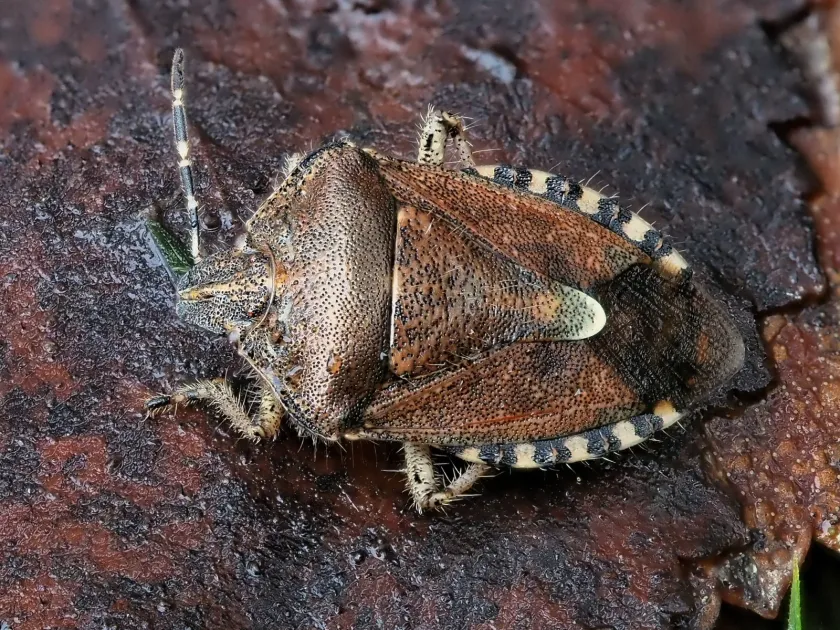
Description
How to identify
The berry bug (Dolycoris baccarum), also known as the sloe bug, is a shield bug belonging to the Pentatomidae family. Adults typically measure 10–12 mm in length and feature a distinctive shield-shaped body covered in dense, fine hairs.
Their color ranges from grayish-brown to reddish, with notable black markings on the edges of the abdomen and a light longitudinal stripe on the pronotum and scutellum. These markings help differentiate it from other related species.
The life cycle begins with barrel-shaped eggs, usually laid in clusters on the underside of leaves. They are white or pale green, often arranged in neat rows, making them visible upon close inspection.
Nymphs go through five distinct instars as they grow. They resemble miniature versions of the adults but lack developed wings and possess a different color pattern, shifting from yellowish-green to darker shades as they mature.
Adults overwinter in sheltered areas like leaf litter, dry vegetation, or under loose tree bark. Once temperatures rise in the spring, they emerge to feed and begin the reproductive cycle.
What it damages
As a polyphagous pest, the berry bug damages a wide variety of plants. Raspberries, blackberries, strawberries, and currants are among its most preferred hosts for feeding and reproduction.
Beyond berries, this pest targets vegetable crops, including tomatoes, peppers, and various beans. In some cases, it can also affect cereal crops, particularly during the milk stage of grain development.
The bug uses its piercing-sucking mouthparts to extract plant sap. During feeding, it injects digestive enzymes into the plant tissue, which causes significant internal damage to the fruit.
Direct damage results in stunted fruit growth, deformation, and an unpleasant, pungent odor characteristic of the bug's defensive secretions, rendering the berries unmarketable.
Severe infestations weaken the host plants significantly. By damaging the conductive tissues and facilitating the entry of fungal pathogens, the berry bug can lead to widespread crop loss and reduced plant health.
Signs of infestation
The most immediate sign of a berry bug presence is the pungent, unpleasant odor released when disturbing the foliage or harvesting fruit. This smell is a clear indicator of a pest infestation.
Visually, infected berries often show localized discoloration, hardening, or softening. They may appear withered or develop rotting spots at the sites where the bug has pierced the skin.
Deformed fruit is a hallmark sign of feeding. Because the bug affects the development of the drupelets in raspberries or the overall structure of strawberries, the fruit becomes misshapen and dry.
Clusters of eggs on the underside of leaves serve as a warning sign. Early detection and removal of these egg masses can prevent a massive outbreak of nymphs later in the season.
Finding the bugs themselves on the stems or leaves is the final confirmation. They are most active during the warmer parts of the day and can be spotted resting on the upper parts of the plants.
Control measures
Cultural control is essential. Regularly weeding around berry patches and removing debris at the end of the season reduces the available overwintering sites for the bugs.
Manual removal remains a viable option for home gardeners. In the early morning, when the bugs are sluggish due to cooler temperatures, they can be easily knocked off into a bucket of soapy water.
Biological control methods, such as encouraging natural predators like parasitic wasps or birds, can help keep the population in check without resorting to synthetic chemicals.
Chemical intervention should be considered only when populations exceed economic thresholds. Always select insecticides labeled for use on edible crops and strictly adhere to pre-harvest intervals.
- Clean cultivation to remove alternative host weeds.
- Netting or physical barriers to prevent bug migration to the crop.
- Monitoring using sticky traps to determine the timing of the first generation.
Taxonomy
- Latin name
- Dolycoris baccarum
- Order
- Hemiptera (bugs, aphids, leafhoppers)
- Family
- Pentatomidae
- EPPO code
- DOLYBA
Discussion
No discussions yet — be the first.