
Dociostaurus brevicollis
Dociostaurus brevicollis
Description
How to identify
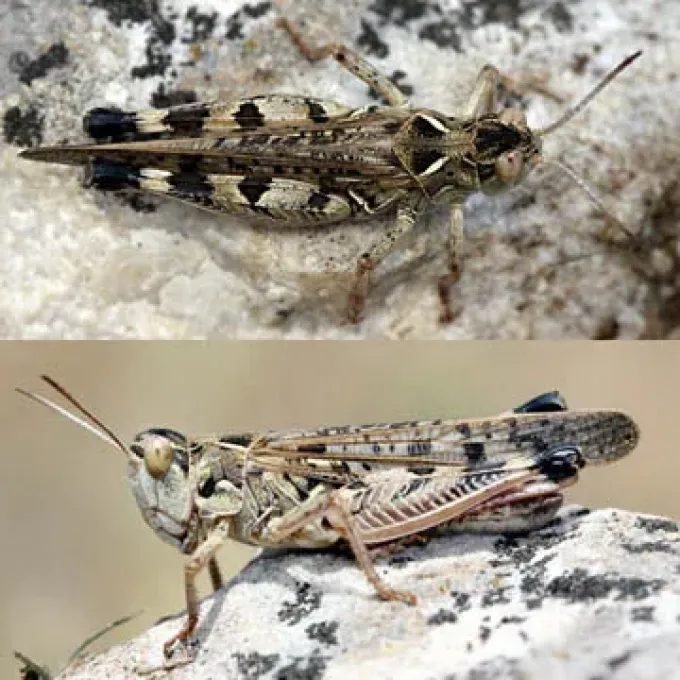
Dociostaurus brevicollis is a species of grasshopper belonging to the family Acrididae. It is a relatively small insect, with adults typically measuring between 14 and 23 mm in length.
The body coloration is adapted for camouflage in dry steppe habitats, ranging from greyish to yellowish-brown. A key identification feature is a light-colored, cross-shaped pattern on the pronotum, which makes this species distinct.
The grasshopper has well-developed hind legs adapted for jumping and clear wings, sometimes showing a subtle yellow hue at the base, which assists in its flight capabilities during migration.
Nymphs resemble smaller versions of the adults but lack developed wings in the early stages. They go through several molts, gradually increasing in size and developing morphological features characteristic of mature adults.
This species is well-adapted to arid and semi-arid environments, preferring open spaces with sparse vegetation where soil temperatures can reach high levels during the day.
What it damages
As a polyphagous insect, Dociostaurus brevicollis feeds on a wide range of plants. Its primary agricultural targets include cereal crops such as wheat, barley, oats, and millet.
During periods of population surges, these grasshoppers can cause significant damage to industrial crops like sunflowers, as well as various vegetable crops, by stripping leaves and stems.
The insects feed on both the leaves and the developing grain, leading to severe defoliation and a reduction in the overall photosynthetic capacity of the plants, which drastically impairs yield.
Damage is most severe during dry years when natural wild grasses, which serve as their primary food source, become scarce, forcing the grasshoppers to migrate into cultivated fields.
Heavy infestations at the early growth stages of cereal crops can result in patchy fields and significant economic losses if not managed promptly by agricultural staff.
When it appears
The lifecycle of this grasshopper consists of one generation per year. They overwinter in the egg stage, with females laying eggs in protective soil cavities known as egg pods.
Nymphs typically emerge in late spring, usually between April and May, triggered by the warming of the soil. This emergence often aligns with the early vegetative growth phase of cereal crops.
The developmental period for nymphs lasts approximately 30 to 40 days, covering five instar stages. During this time, they are highly active and consume significant amounts of plant biomass.
Adults reach maturity by early summer, typically in June or July. This stage is marked by increased mobility, allowing the insects to fly to new locations to seek fresh food and favorable egg-laying sites.
After the mating and egg-laying period in the late summer, the adult population gradually declines as the new generation of eggs enters diapause within the soil until the following spring.
Signs of infestation
Early signs of infestation include irregular holes in the leaves of cereal crops. As the nymphs grow, these holes enlarge, eventually leading to ragged leaf edges and skeletonized leaf blades.
The presence of large numbers of grasshoppers jumping in unison when approached is a primary field observation that indicates an active and growing population of the pest.
In areas of high infestation, noticeable bare patches or heavily damaged crop rows become visible, where plants have been severely pruned or completely consumed by the insects.
The presence of fecal pellets on the leaves and soil surface, along with discarded exoskeletons from molting, are reliable indicators of intense feeding activity in the field.
Active movement of the insects during the cooler parts of the day, such as early morning or late afternoon, makes it easier for scouts to assess the population density and infestation hotspots.
Control measures
Integrated pest management begins with regular field scouting to monitor population density. Early detection of nymph hotspots is critical to preventing the spread of the pest to wider areas.
Cultural control methods such as deep autumn plowing are highly effective, as they disturb the soil and destroy the egg pods, exposing the eggs to predators and unfavorable weather conditions.
Maintaining clean field margins by removing weeds and wild grasses helps eliminate the natural breeding grounds for these grasshoppers, reducing the risk of migration into crop fields.
When economic thresholds are exceeded, targeted application of contact or systemic insecticides is recommended. The best results are achieved when treatments are applied against early-instar nymphs.
Biological control options, including the use of entomopathogenic fungi or bacterial agents, offer an environmentally friendly alternative to chemical pesticides, contributing to sustainable pest management practices.
Taxonomy
- Latin name
- Dociostaurus brevicollis
- Order
- Orthoptera (locusts)
- Family
- Acrididae
- EPPO code
- DICICR
Discussion
No discussions yet — be the first.