
Dociostaurus albicornis
Dociostaurus albicornis
Description
How to identify
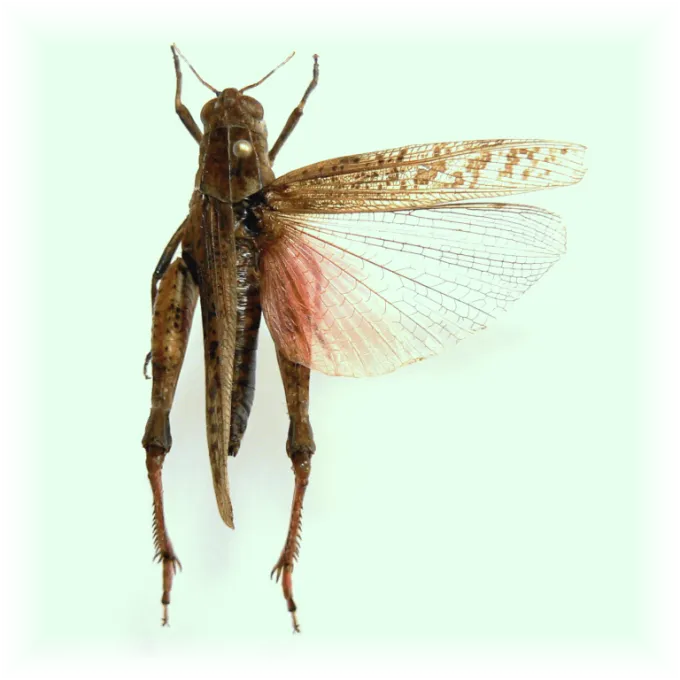
Dociostaurus albicornis belongs to the order Orthoptera and the family Acrididae. This grasshopper species is characterized by its moderate size and a specific color pattern that serves as camouflage in dry, open habitats.
Adults possess well-developed wings, enabling them to travel significant distances and rapidly infest new areas, which makes them a mobile threat to agricultural ecosystems.
The coloration of the body ranges from grayish-yellow to brownish with darker spots, allowing the insect to blend perfectly with dry soil and withered plant residues.
The head features a robust, chewing mouthpart capable of consuming the tough vegetative parts of grasses and cereal crops, ensuring the pest's survival even under harsh conditions.
Nymphs resemble smaller versions of adults but lack wings. They progress through several instars, gradually increasing in size and developing the morphological traits characteristic of the species.
What it damages
Dociostaurus albicornis is a polyphagous pest capable of causing significant economic damage to both wild grasses and a wide range of cultivated agricultural crops.
The primary victims of this pest are cereal crops, including wheat, barley, and rye, as the insects consume both young sprouts and the foliage of mature plants.
In addition to cereals, the pest can severely impact maize, sunflowers, and various fodder crops, especially when population levels rise significantly during the summer months.
When infestation density is high, the insects can strip plants of their entire leaf surface, leading to stunted growth, reduced photosynthetic activity, and potential yield loss.
In severe cases, the pest damages not only the leaves but also the generative organs, such as the heads of cereals, resulting in both quantitative and qualitative harvest losses.
When it appears
The life cycle of this grasshopper is closely tied to climatic conditions, particularly soil temperature and moisture levels during the spring growth period.
The species overwinters in the egg stage, with eggs deposited in soil pods deep enough to protect them from environmental stress and extreme temperature fluctuations.
Mass hatching of nymphs typically occurs in spring, coinciding with the warming of the topsoil, which often aligns with the germination and early growth of spring crops.
The nymphal development phase lasts for several weeks, during which the insects are highly active and feed intensively before molting into winged adults capable of flying.
Adults are most active during the summer, engaging in feeding and mating. They deposit eggs into the soil late in the season to ensure the survival of the next generation through winter.
Signs of infestation
Early signs of infestation include small, irregular feeding marks on the edges of leaves, which are typical for younger nymphs starting their lifecycle on a crop.
Increased infestation is evidenced by significant defoliation, where plants show ragged edges or completely missing leaves, leaving only the stem or major veins intact.
During the hottest parts of the day, adults tend to congregate in shaded or more succulent areas, which can sometimes mask the true extent of the population density in a field.
The presence of large amounts of frass (insect excrement) on the soil surface and the sound produced by large swarms are reliable indicators of a heavy pest population.
Damage often follows an edge-to-center pattern, beginning at the margins of fields adjacent to pastures, ditches, or fallow lands where the grasshopper populations originate.
Control measures
Cultural control methods include deep tillage of fallow lands and potential breeding sites, which destroys the soil pods and prevents the eggs from hatching successfully.
Maintaining clean field margins and controlling weeds along roadsides and irrigation ditches reduces the habitat available for the grasshoppers to lay their eggs.
Chemical control involving insecticides is necessary when the pest population exceeds the economic threshold, ensuring the protection of crop yields from severe damage.
Targeting nymphs at early developmental stages is the most effective approach, as they are localized and highly susceptible to contact and systemic insecticides.
Continuous monitoring of field boundaries throughout the season allows for timely intervention, enabling spot treatments that minimize chemical use and reduce environmental impact.
Taxonomy
- Latin name
- Dociostaurus albicornis
- Order
- Orthoptera (locusts)
- Family
- Acrididae
- EPPO code
- DICIAL
Discussion
No discussions yet — be the first.