
Dinocoris variolosus
Dinocoris variolosus
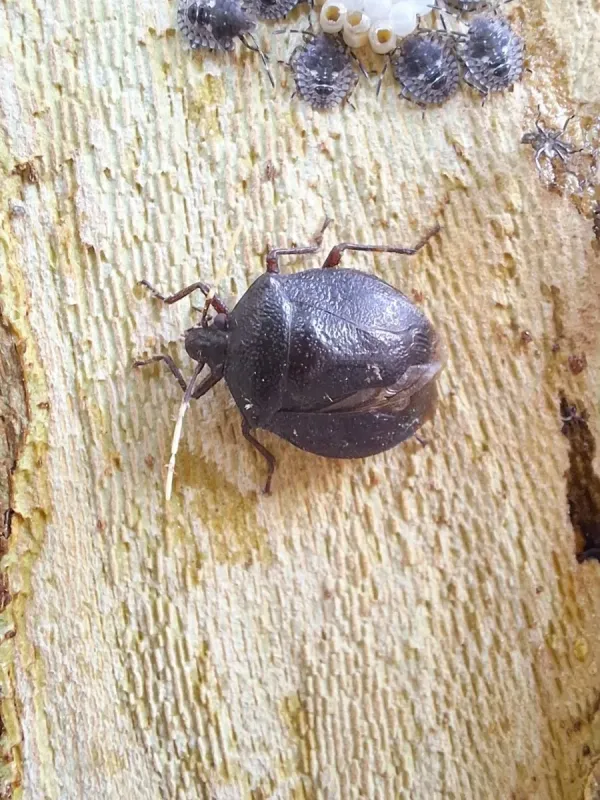
Description
How to identify
Dinocoris variolosus is a member of the order Hemiptera, belonging to the family Pentatomidae (stink bugs). Visually, this bug is characterized by a broad, flattened, shield-like body with a distinctive reticulated or dotted pattern on its elytra.
The coloration of the insect varies from grayish-brown to ochre, allowing it to effectively camouflage against tree bark or dry plant debris. The head is closely pressed against the pronotum, and it possesses well-developed piercing-sucking mouthparts in the form of a proboscis.
The nymphs look similar to the adults but differ in smaller size and the lack of fully developed wings. The developmental stages include the egg, five nymphal instars, and the adult stage.
In its natural habitat, populations of this species are closely associated with specific types of forest-steppe and tropical plant communities. Adults are highly mobile and capable of active flight over significant distances.
Identification of the species by specialists involves examining the genital apparatus of males, as the external appearance is very similar to other related species within the Dinocoris genus.
What it damages
The primary food sources for this species are various types of legumes, including both wild and agricultural crops. The bugs prefer to feed on the juices of developing seeds and young shoots.
Damage is primarily inflicted during the generative phase of plant development. Both adults and nymphs pierce the pods and suck the contents from immature seeds, leading to deformation and reduced germination potential.
At the puncture sites caused by the proboscis, secondary fungal or bacterial infections often develop, as the bug's saliva contains specific enzymes that break down plant tissue.
High pest populations lead to massive shedding of flower buds and the formation of non-marketable pods, which critically impacts the final yield of pulse-based agro-ecosystems.
In addition to legumes, if the primary host plants are absent, the species can switch to feeding on the sap of a wide range of herbaceous plants from the Asteraceae and Lamiaceae families.
When it appears
The life cycle of Dinocoris variolosus is closely linked to regional temperature patterns. Optimal activity is observed during the warmer months, corresponding to the vegetation period of host plants.
Adults (imagos) overwinter in plant debris, under fallen leaves, or in the topsoil layer, where they can survive moderate frosts while in a state of diapause.
In the spring, when soil temperatures rise to 12–15 degrees Celsius, the bugs emerge from their overwintering sites and begin intensive feeding. Shortly after, mating occurs, and eggs are laid on the undersides of leaves of the host plants.
The development of one generation takes approximately 30–45 days, depending on the cumulative active temperatures. Under favorable climatic conditions, two or more generations can develop within a single season.
The highest level of damage is noted during the seed filling stage, when the population density of late-instar nymphs and the new generation of adults reaches its peak.
Signs of infestation
The first sign of infestation is the appearance of small, light spots («stings») on leaves and pods, around which the tissue gradually undergoes necrosis and darkens.
By inspecting the plants during morning or evening hours, one can find the bugs themselves on the undersides of leaf blades or directly on inflorescences and developing fruits.
A characteristic sign is the presence of empty or deformed («shriveled») seeds inside the pods, even when there are no visible external signs of damage to the pod walls.
Massive colonization is often accompanied by a specific odor, which the bugs release when disturbed using their specialized scent glands.
- Deformation of fruits and pods.
- Presence of dark dots and necrotic spots on surfaces.
- Reduction in the overall germination vigor of seeds.
- Yellowing and wilting of young shoots under intense feeding pressure.
Control measures
Agronomic control methods include strict crop rotation, timely weed management in fields and borders, which serve as refugia for the bugs.
A significant factor in reducing the population is thorough deep autumn plowing (tillage), which disrupts the insects' overwintering conditions and reduces the number of survivors in the spring.
Chemical protection methods involve the use of contact-stomach insecticides when economic thresholds are exceeded, which are determined based on the crop's developmental stage.
The application of biological agents, such as entomophages or biopreparations based on fungal pathogens, has also shown effectiveness when used preventively at the start of the season.
Population monitoring is carried out using yellow sticky traps or sweep netting during the morning hours, which allows for timely decision-making regarding the need for intervention.
Taxonomy
- Latin name
- Dinocoris variolosus
- Order
- Hemiptera (bugs, aphids, leafhoppers)
- Family
- Pentatomidae
- EPPO code
- EMPIVA
Discussion
No discussions yet — be the first.