
Dinocoris macraspis
Dinocoris macraspis
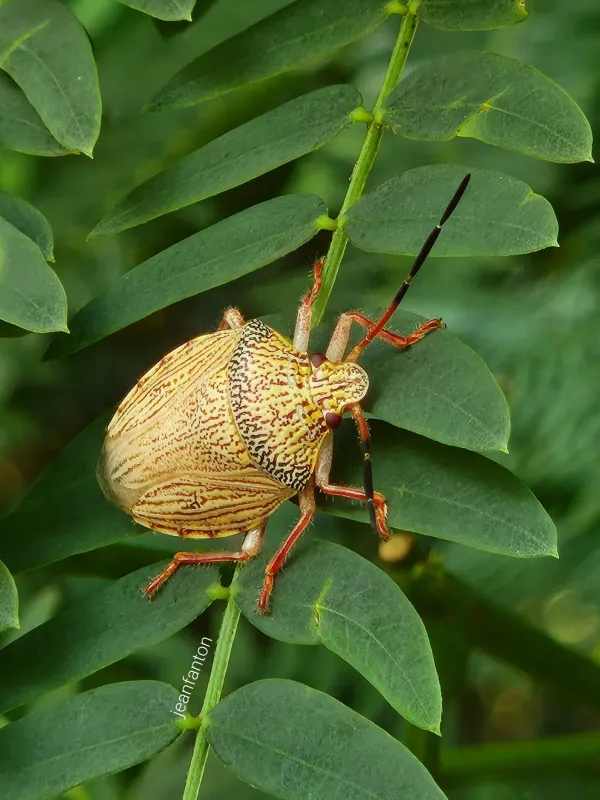
Description
How to identify
Dinocoris macraspis belongs to the Pentatomidae family, commonly known as stink bugs, within the order Hemiptera. The adult insect possesses a characteristic shield-shaped body, which provides both protection and camouflage against predators within dense foliage.
The scutellum is well-developed and covers a significant portion of the abdomen. Like other members of the Pentatomidae family, it features piercing-sucking mouthparts, which are specialized for extracting sap from the vascular tissues of host plants.
The life cycle of this species follows hemimetabolous development, comprising egg, nymph, and adult stages. Nymphs often resemble adults but lack functional wings and exhibit different coloration, becoming more distinct as they molt through several instars.
These insects are highly adapted to tropical and subtropical environments, where they thrive in warm, humid conditions. Females typically deposit egg masses in organized clusters on the underside of leaves to protect the developing embryos.
Effective identification relies on observing the shield-like silhouette and the specific feeding damage patterns. Knowledge of their lifecycle phases is crucial for timing agricultural interventions to prevent large-scale population outbreaks.
What it damages
This species is recognized as a pest for several tropical and subtropical crops, showing a preference for legumes and solanaceous plants. Both adults and nymphs contribute to significant yield losses by feeding on the sap of growing plants.
When feeding, the insect injects salivary enzymes into the plant tissue, which break down cell walls and complex sugars. This process results in the tissue becoming necrotic and often creates structural deformities in the affected plant parts.
The most severe economic damage occurs when the pests attack reproductive structures such as flowers and developing fruits. This feeding causes fruit drop and prevents the development of marketable produce, leading to substantial yield reductions.
Additionally, the feeding sites serve as entry points for various phytopathogens, including fungi and bacteria. These secondary infections exacerbate the physical damage, leading to soft rots and further deteriorating the quality of the harvested produce.
In high-density infestations, the cumulative feeding pressure can cause plants to stunt or wilt, severely compromising the physiological health of the crop and increasing its susceptibility to other environmental stressors.
Signs of infestation
Primary signs of infestation include the physical presence of the bugs on stems or the undersides of leaves, especially during the cooler hours of the day. Their shield-like form makes them identifiable upon close visual inspection of the canopy.
Leaves often show chlorotic spots or mottled appearances at the feeding sites. As damage progresses, these spots may coalesce into larger, brownish necrotic areas, leading to leaf curling and general distortion of the foliage.
Small, dark droplets of excrement on the leaf surface are a common indicator of pest activity. The premature shedding of flowers and the absence of fruit set in affected areas are clear biological markers of heavy infestation.
Developing fruit may exhibit visible dimples, depressions, or sunken areas at the points of previous feeding. These damaged regions frequently undergo discoloration and become necrotic due to secondary opportunistic pathogens.
A noticeable decline in plant vigor, coupled with general wilting or chlorosis across patches of the field, necessitates a thorough search for the presence of Dinocoris macraspis to confirm the cause of the crop health issue.
Control measures
Integrated pest management strategies for this species prioritize cultural and biological controls. Maintaining clean fields by eliminating host weeds and removing crop debris post-harvest reduces the available overwintering sites.
Biological control methods involve supporting natural enemies, such as egg parasitoids and predatory insects, which can keep stink bug populations below damaging levels in balanced agricultural ecosystems.
Chemical control should be implemented only when scouting confirms that the population has crossed the economic injury threshold. Contact or systemic insecticides, such as pyrethroids, can effectively suppress active pest populations.
Spatial isolation of new plantings from older, infested crops is an effective technique to hinder the movement of the bugs. Monitoring programs using pheromone traps can assist in early detection and timely application of control measures.
- Regular field scouting for nymphs and adults.
- Application of targeted insecticides during peak infestation.
- Removal of infected crop residues to disrupt life cycles.
Taxonomy
- Latin name
- Dinocoris macraspis
- Order
- Hemiptera (bugs, aphids, leafhoppers)
- Family
- Pentatomidae
- EPPO code
- DINOMA
Discussion
No discussions yet — be the first.