
Dinocoris
Dinocoris
Description
How to identify
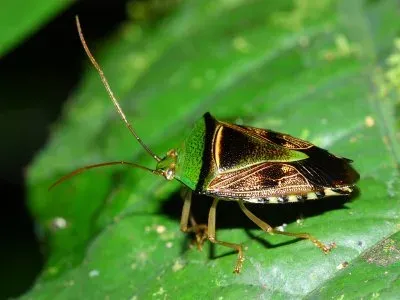
Dinocoris is a genus belonging to the family Pentatomidae, commonly known as shield bugs or stink bugs, within the order Hemiptera. These insects are characterized by their shield-shaped bodies, often featuring distinct humeral angles or projections on the pronotum, which vary significantly by species.
Adult specimens possess a tough exoskeleton, typically colored in shades of brown or green, providing excellent camouflage against vegetation. Their head is relatively small, equipped with a specialized piercing-sucking mouthpart known as a rostrum.
The life cycle follows a hemimetabolous development process, consisting of egg, five nymphal instars, and adult stages, with no pupal stage present. Younger nymphs often aggregate in groups, dispersing across the plant as they mature, which serves as a key diagnostic feature for early detection.
The developmental rate from egg to adult is highly dependent on ambient temperatures, requiring a specific sum of degree-days to complete a generation. Understanding these climatic requirements is essential for predicting seasonal population spikes.
Correct identification requires examining the shape of the pronotum and the color patterns on the scutellum. Unlike some predatory pentatomids, most species within the Dinocoris genus are phytophagous, feeding on the sap of vegetative plant parts.
What it damages
The primary damage caused by Dinocoris occurs through the piercing and sucking of sap from tender shoots, leaves, and reproductive structures, including developing fruits and seeds. This feeding disrupts the internal nutrient transport systems of the host plant.
Feeding sites are frequently prone to secondary infections, as the bugs can introduce various bacterial or fungal plant pathogens during the probing process. The surrounding plant tissue typically yellows, wilts, and eventually undergoes necrosis.
Fruit-bearing crops are particularly susceptible; feeding on the ovaries leads to fruit deformation, premature drop, or internal quality degradation. This significantly reduces both the market value of the produce and the overall crop yield.
Pest severity often increases during periods of drought when plants are already under physiological stress. Massive infestations in large-scale plantations can lead to substantial economic losses if control measures are not implemented promptly.
Agronomists must implement regular field scouting, especially during vulnerable phonological stages of crop development, to monitor for the presence of these sap-sucking insects before damage becomes widespread.
Signs of infestation
The first noticeable signs of an infestation include chlorotic spots on leaves, which progressively expand and merge. Over time, these damaged areas may turn brown and become necrotic, severely impacting the photosynthetic capacity of the plant.
Affected fruits often exhibit pinpoint punctures surrounded by depressions or "pitting." Internally, the flesh may discolor and develop an off-flavor, rendering the crop commercially unviable for processing or fresh markets.
Small, barrel-shaped egg clusters located on the undersides of leaves or along stems are definitive signs of reproduction. Similarly, the presence of nymphal stages on growing tips indicates an active and growing population on the site.
Stunted plant growth and the curling of terminal leaves are common side effects associated with Dinocoris feeding. In severe cases, entire sections of a crop may show signs of weakened vigor and retarded development compared to healthy areas.
Adult insects are best observed during cooler parts of the day or in overcast weather, as they tend to seek shelter on the undersides of leaves to avoid direct sunlight and predation.
Control measures
Management of Dinocoris requires an integrated pest management (IPM) approach, combining cultural, biological, and chemical strategies. Cultural control begins with robust weed management, as adjacent wild vegetation often acts as a refuge for the pest between seasons.
Biological control emphasizes the conservation of natural enemies, including egg parasitoids like Telenomus species, which are highly effective at suppressing population growth. Maintaining field edges and biodiversity can help balance the local ecosystem.
Chemical control is warranted when pest density exceeds established economic injury thresholds. Utilizing systemic or contact-action insecticides registered for specific crops can reduce populations rapidly when timed correctly during the growing season.
It is crucial to rotate chemical classes to prevent the development of resistance within the insect population. Applications should ideally be performed during early morning or late evening hours to maximize coverage and efficacy while protecting pollinators.
Practicing proper crop rotation and adjusting planting dates can further disrupt the lifecycle of the pest. Additionally, pheromone monitoring traps serve as a vital tool for predicting population surges and timing protective interventions precisely.
Taxonomy
- Latin name
- Dinocoris
- Order
- Hemiptera (bugs, aphids, leafhoppers)
- Family
- Pentatomidae
- EPPO code
- DINOSP
Discussion
No discussions yet — be the first.