
Dictyotus caenosus
Dictyotus caenosus
Description
How to identify
Dictyotus caenosus is a species of shield bug belonging to the family Pentatomidae. These insects are known for their cryptic lifestyle, often dwelling on the ground or within the dense lower layers of vegetation, which makes them difficult to observe.
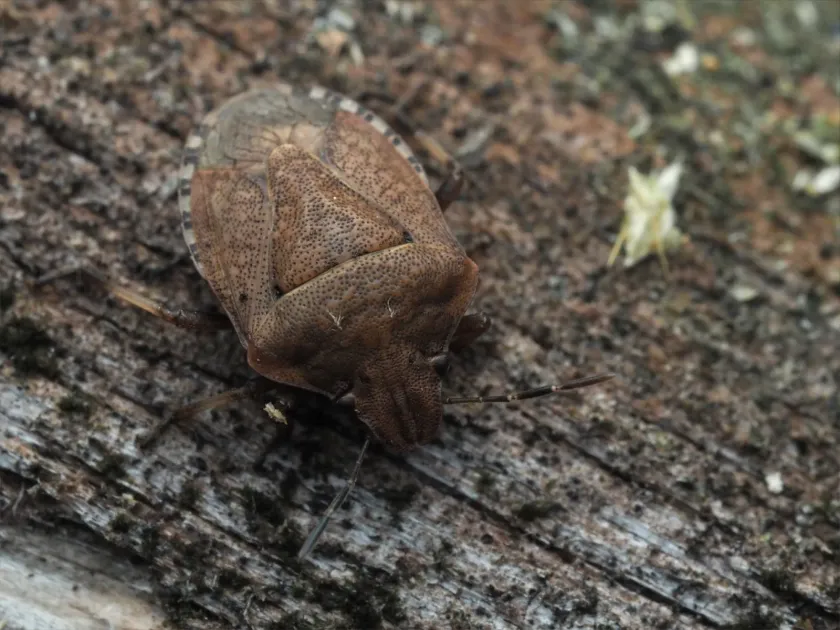
Adults typically measure between 7 and 9 mm in length. Their bodies are oval and flattened, characterized by a dull brown or grayish coloration that provides excellent camouflage against soil and organic debris, allowing them to remain undetected for long periods.
The eggs of this species are barrel-shaped and are usually deposited in clusters on the undersides of leaves or near the base of the stems. This strategy protects the eggs from harsh sunlight and potential predators throughout the incubation phase.
Taxonomically, they fall under the order Hemiptera. Their specialized piercing-sucking mouthparts enable them to penetrate plant tissues effectively, allowing them to draw nutrients directly from the vascular system of the host plant.
Field identification requires careful inspection of the basal plant zone during the early morning or late evening hours. Entomologists often use soil sampling methods to confirm their presence, as they are not always visible on the upper foliage during the day.
What it damages
This pest is known to affect a variety of agricultural crops, including cereals, legumes, and several vegetable species. The primary damage is caused by feeding on the sap, which saps the vitality of young, developing plants and stunts their growth.
Seedlings are particularly vulnerable to Dictyotus caenosus infestation. By feeding at the base of the stem, the bugs inject enzymes into the plant tissue, leading to necrosis and potentially causing entire seedlings to wilt and collapse in a short timeframe.
Beyond the direct sap removal, the damage sites serve as entry points for secondary infections, including various bacterial and fungal pathogens. This opportunistic infection can cause further decay and significantly reduce the overall quality of the harvest.
In mature cereal crops, the insects may target developing grain heads. When the bugs pierce the developing kernels, they inhibit proper grain filling, which results in shriveled seeds, decreased yield, and lowered nutritional value of the final harvest product.
The economic impact is highly dependent on environmental conditions. When crops are under stress due to drought or nutrient deficiency, they are much less capable of recovering from the feeding damage, leading to significant yield losses in infested fields.
When it appears
The life cycle of the pest is closely synchronized with seasonal temperatures. Adults overwinter in protected sites, such as the upper soil layer, thick leaf litter, or crevices in the ground, remaining dormant until the return of warmer weather in spring.
Emergence from hibernation occurs as temperatures rise. After a period of initial feeding on early-season weeds or host plants, the adults begin to mate and lay eggs, marking the start of the first generation of the current growing season.
The peak activity of Dictyotus caenosus typically occurs during the middle of the summer. During this timeframe, various larval stages and adults can be found simultaneously, creating a continuous pressure on the crops through the summer months.
Late summer and early autumn represent the period when the final generation prepares for diapause. During this time, they begin moving toward overwintering habitats, often clustering in field margins, hedge rows, or areas with thick perennial grasses.
The survival rate during winter significantly dictates the infestation levels for the following year. A mild winter followed by a warm, dry spring often creates the ideal conditions for a population explosion, increasing the risk to the new crop cycle.
Control measures
Cultural control remains the cornerstone of managing Dictyotus caenosus. Deep plowing of the fields after harvest disrupts the overwintering sites of the bugs, significantly reducing the survival rate of the population and decreasing the threat for the next year.
Field sanitation is critical in preventing outbreaks. Removing weeds from field borders and irrigation ditches eliminates the early-season food sources that sustain the pests before the main crops emerge, thereby effectively limiting their population growth.
Chemical control is indicated when scouting confirms that the population levels have exceeded the economic threshold. Applying systemic or contact insecticides during the early larval development stage is the most effective way to protect the crop.
Crop rotation serves as a natural barrier to the buildup of high pest densities. By changing the host crop annually, farmers make it harder for the pest population to establish a stable and abundant food source, which helps maintain the balance of the agroecosystem.
- Implement regular field monitoring using sweep nets.
- Encourage the presence of natural biological enemies and predators.
- Apply balanced fertilization to ensure robust plant health and stress resistance.
Taxonomy
- Latin name
- Dictyotus caenosus
- Order
- Hemiptera (bugs, aphids, leafhoppers)
- Family
- Pentatomidae
- EPPO code
- DCTTCA
Discussion
No discussions yet — be the first.