
Spotted-winged dichroplus
Dichroplus maculipennis
Description
How to identify
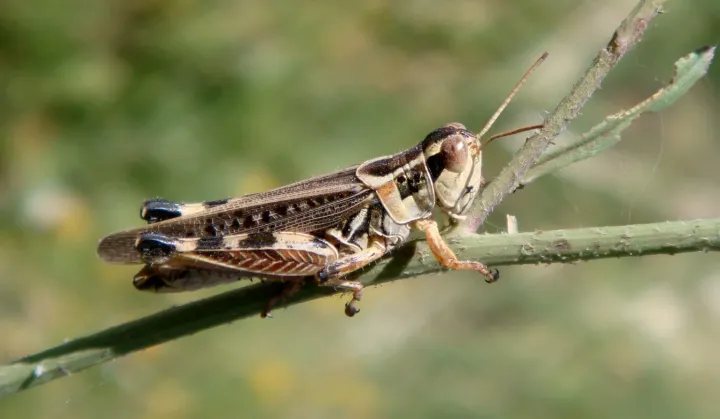
Dichroplus maculipennis is a species of grasshopper belonging to the Acrididae family and the Melanoplinae subfamily. Adults are characterized by their medium size and a distinct, mottled or spotted pattern on their forewings, which gives them their common name.
The coloration of these insects is typically a blend of yellowish-brown and greenish tones, providing excellent camouflage within grasslands and crop foliage. Adults possess well-developed wings, enabling them to migrate over significant distances when seeking food.
The nymphs (immature stages) go through several instars of development, growing progressively larger while retaining the general body structure of the adults. Identification relies on specific thoracic features and patterns on the pronotum.
This species is primarily associated with arid and semi-arid environments in South America, where it thrives under specific moisture and temperature regimes. It is known for its ability to maintain populations in various habitat types.
As a grasshopper species, it leads a primarily terrestrial life but is highly mobile, showing migratory behavior when high population densities lead to severe competition for available food resources.
What it damages
This pest is a polyphagous insect, meaning it feeds on a broad spectrum of vegetation. It causes significant economic damage to cereal crops, including wheat, corn, barley, and oats, particularly during the early stages of plant development.
Beyond cereals, the spotted-winged dichroplus frequently impacts pasture grasses, forage legumes, and occasionally vegetable crops or fruit nursery seedlings when population numbers reach outbreak levels.
Both late-instar nymphs and adults contribute to crop damage using their strong mandibles. They graze leaf blades extensively, which reduces the plant's photosynthetic surface and hinders development.
Severe infestations can result in complete defoliation, leaving only the tough fibrous stems of the crops. This level of damage directly impacts yield potential and quality, often forcing farmers to implement urgent control measures.
Indirect damage occurs when the insects consume flowers or developing grains, further decreasing the crop's marketable value and overall biomass production in agricultural ecosystems.
When it appears
The life cycle of the spotted-winged dichroplus is strictly seasonal. Eggs overwinter in the soil within protective masses known as egg pods, which safeguard them against environmental extremes until the next season.
Hatching occurs in the spring when temperatures rise to a threshold required for embryological development. This timing often aligns with the early vegetative growth phase of cereal crops.
The nymphs begin feeding immediately after hatching, making the early spring period critical for field monitoring. As the season progresses, nymphs mature into highly active adults capable of long-distance movement.
Summer months represent the peak of the insect's activity and reproductive phase. During this time, the most intense feeding and potential migratory swarms are typically observed across agricultural landscapes.
Generally, this species has a single generation per year (univoltine), but prolonged warm seasons can influence the timing and speed of population growth, necessitating consistent scouting throughout the summer.
Signs of infestation
The primary indicators of an infestation include the appearance of ragged, scalloped edges on leaves, resulting from the grasshoppers' gnawing behavior. Over time, patches of the leaf tissue may be entirely consumed.
Field scouting often reveals groups of nymphs congregating in specific areas, which is a key sign of an emerging problem. Insects are particularly active and visible during the warmer parts of the day.
The presence of large amounts of insect droppings (frass) on the soil surface and foliage is a clear marker of high pest pressure. This often correlates with areas of visible grazing damage on the crops.
Infested fields may exhibit patches where the crop stand appears thinned or "eaten away," leading to reduced plant height and vigor. In severe cases, the field may look stunted or completely bare in certain spots.
Frequent, sudden jumps by the insects when a person enters the field serve as an immediate visual warning of a potential population outbreak, requiring prompt assessment and action.
Control measures
Regular field scouting and monitoring of nymph density are essential for successful control. Threshold-based management allows farmers to intervene before the pest population expands significantly.
Cultural methods, such as deep tillage (plowing) after harvest, are highly effective in destroying overwintering egg pods in the soil, which significantly reduces the population for the following year.
Chemical control involving approved insecticides is often necessary during outbreaks. Treatments are most effective when applied against early-instar nymphs before they gain the ability to migrate and cause widespread destruction.
Targeted applications, such as treating field borders or identified infestation spots, help manage the pest efficiently while minimizing the volume of chemicals used, supporting integrated pest management practices.
Biological control alternatives, including the use of entomopathogenic fungi like Metarhizium anisopliae, are being explored as sustainable ways to suppress grasshopper populations without disrupting local ecological balance.
Taxonomy
- Latin name
- Dichroplus maculipennis
- Order
- Orthoptera (locusts)
- Family
- Acrididae
- EPPO code
- DICRMA
Discussion
No discussions yet — be the first.