
Dichroplus elongatus
Dichroplus elongatus
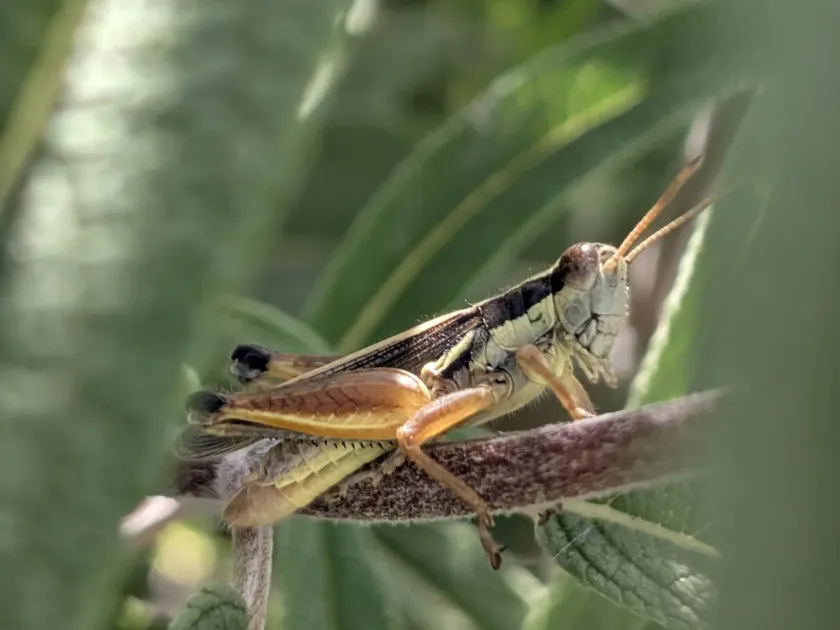
Description
How to identify
Dichroplus elongatus is a species of grasshopper belonging to the family Acrididae, widely recognized for its potential impact on agricultural productivity in specific regions.
The insect possesses a characteristic elongated body shape, with coloration usually ranging from brownish-yellow to grayish-brown, providing effective camouflage in fields.
Its head features a robust chewing mouthpart, designed for consuming a wide variety of plant tissues, which makes it a significant threat to young and mature plants alike.
Equipped with powerful hind legs, Dichroplus elongatus is highly agile and capable of jumping over long distances, which complicates manual removal efforts.
The species also features well-developed wings in adults, allowing it to migrate between fields or pastures in search of food when local resources are depleted.
What it damages
As a polyphagous insect, it poses a threat to a variety of crops, including wheat, corn, and various forage grasses, causing localized but significant losses.
The grasshoppers feed on the vegetative parts of the plants, causing defoliation that weakens the crop and reduces the overall yield of grain or biomass.
In seedling stages, massive infestations can result in total stand loss, forcing farmers to reseed or significantly change their agricultural management strategies.
Beyond leaf consumption, the damage includes stem girdling, which often leads to the lodging of crops and makes them more susceptible to subsequent plant diseases.
In pasture systems, these grasshoppers compete directly with livestock for valuable forage, significantly reducing the carrying capacity of the land.
When it appears
The life cycle of Dichroplus elongatus is seasonal, with the most damage occurring during the summer months when temperature conditions are optimal.
Winter is spent in the egg stage, which are laid in the soil in clusters, usually near the roots of dense vegetation where they remain protected from cold.
Hatching typically begins in the spring, once soil temperatures rise, leading to several nymphal stages before the insects reach their mature adult form.
The activity of adults peaks during mid-summer, representing the period of highest nutrient consumption and reproductive mating activity before the next egg-laying cycle.
Drought conditions often correlate with higher survival rates, as these grasshoppers tend to thrive in dry environments that are less favorable for many of their natural pathogens.
Signs of infestation
The primary symptom of infestation is the presence of jagged, irregular leaf edges where the grasshoppers have consumed the green tissue of the plant.
A noticeable reduction in plant population density, especially along the borders of the field, often indicates that a grasshopper invasion is in progress.
Visual confirmation of the pests themselves, particularly during the cooler parts of the day when they are most visible, is the most reliable sign.
Damage to stems, which may look like small gnawed marks or complete severance of younger stems, is a hallmark of significant feeding pressure.
Presence of excrement deposits on the soil surface beneath the infested plants is another indicator of recent and high-intensity feeding activity.
Control measures
Effective control starts with early detection and monitoring, as young nymphs are significantly easier to manage than fully developed, winged adults.
Cultural practices, such as tillage and plowing of field edges, can destroy egg clusters in the soil and disrupt the overwintering success of the population.
Chemical control using authorized insecticides is recommended when population thresholds reach levels that threaten to cause economic losses to the farmer.
Maintaining clean field borders by reducing weed populations can decrease the available habitat for the grasshoppers to thrive and multiply.
- Regular scouting for nymphal development in spring.
- Targeted insecticide applications to field margins.
- Deep plowing to reduce soil egg banks.
Taxonomy
- Latin name
- Dichroplus elongatus
- Order
- Orthoptera (locusts)
- Family
- Acrididae
- EPPO code
- DICREL
Discussion
No discussions yet — be the first.