
Brown shield bug
Dichelops melacanthus
Description
How to identify
The brown shield bug, Dichelops melacanthus, is a significant pest belonging to the Pentatomidae family, known for its ability to damage various agricultural crops.
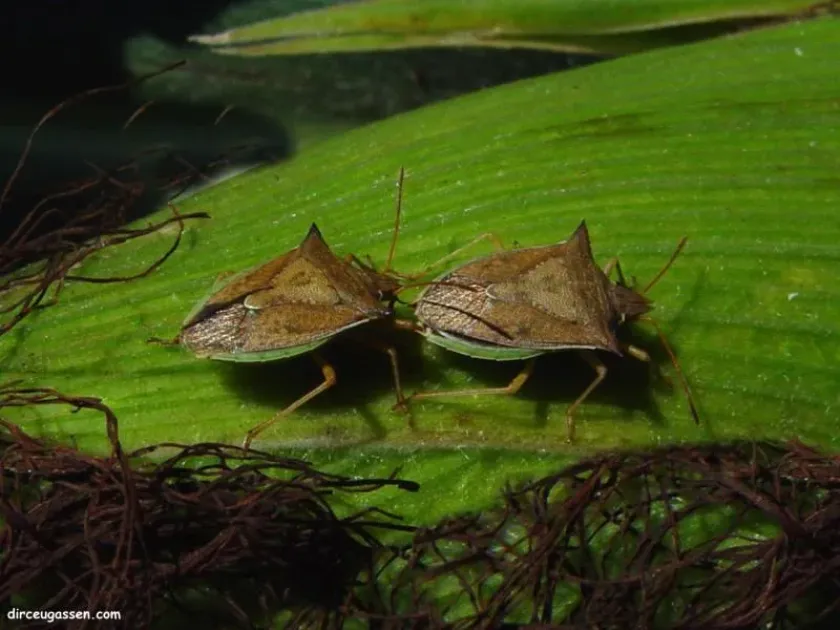
Adult insects are typically 8–10 mm long, with a characteristic shield-shaped body and a brown color that helps them blend into soil debris and vegetation.
A key diagnostic feature is the presence of sharp, lateral spines on the pronotum, which differentiate this species from other similar looking stink bugs.
The eggs are laid in clusters, often on the underside of leaves, and have a barrel shape, protected by an adhesive secretion from the female.
Nymphs undergo several developmental stages, resembling miniature versions of the adults but with different color patterns and lacking fully developed wings.
What it damages
Dichelops melacanthus is particularly notorious for damaging maize during the early stages of growth, specifically targeting the plant's growing point.
By feeding on the sap, the bug injects saliva containing enzymes that cause necrosis and metabolic disruption, often leading to stunted growth or total plant mortality.
Beyond maize, this pest also targets wheat and other grasses, causing reduced yield and lower grain quality due to the piercing-sucking feeding method.
Damage to the stems leads to physical deformation, and the wounds created by the insects can serve as entry points for various fungal pathogens.
Under high population pressure, the damage caused by this insect can result in severe thinning of crop stands, necessitating urgent intervention.
When it appears
The lifecycle of the brown shield bug is highly dependent on environmental factors, with population levels peaking during warm and humid weather conditions.
Overwintering occurs in the adult stage, where the bugs seek refuge in plant residues, hedgerows, or the upper layers of the soil to survive cold periods.
As spring temperatures rise, the overwintered adults emerge and begin feeding on early vegetation or crop sprouts, starting the cycle for the new season.
Several generations can be produced within a single year if the climatic conditions remain favorable, leading to continuous pest pressure throughout the summer.
Visual identification of the pest is often challenging as they hide at the base of plants or within leaf axils during the hottest parts of the day.
Signs of infestation
The primary symptom of infestation is the yellowing and wilting of the central leaf in young plants, which may eventually lead to the death of the growing point.
Close inspection of the stem base often reveals small puncture marks, which appear as dark spots surrounded by yellow or chlorotic tissue.
Plants often exhibit deformed growth, commonly referred to as "dead heart" or irregular branching as the plant attempts to compensate for the primary stem damage.
- Reduced plant height compared to healthy individuals in the field.
- Presence of nymphs or adults in the base of the plant or soil surface.
- Small necrotic lesions on the leaves or stems at the point of insect feeding.
These signs can easily be confused with soil-borne diseases or nutritional deficiencies, making it vital to inspect for the actual presence of the bugs.
Control measures
Integrated Pest Management (IPM) strategies for Dichelops melacanthus focus on combining chemical, cultural, and mechanical methods to minimize damage.
Chemical control involving systemic insecticides is the most effective way to protect crops, especially when applied at the first signs of pest emergence.
Tillage practices, such as deep plowing after harvest, are effective in destroying overwintering sites and reducing the population for the next crop cycle.
Weed control is essential, as many non-crop hosts provide food and shelter for the bugs before the main cash crop is planted in the field.
Monitoring using pheromone traps or systematic scouting allows farmers to make informed decisions about when to apply treatments, preventing unnecessary costs.
Taxonomy
- Latin name
- Dichelops melacanthus
- Order
- Hemiptera (bugs, aphids, leafhoppers)
- Family
- Pentatomidae
- EPPO code
- DICLME
Discussion
No discussions yet — be the first.