
Dichelops furcatus
Dichelops furcatus
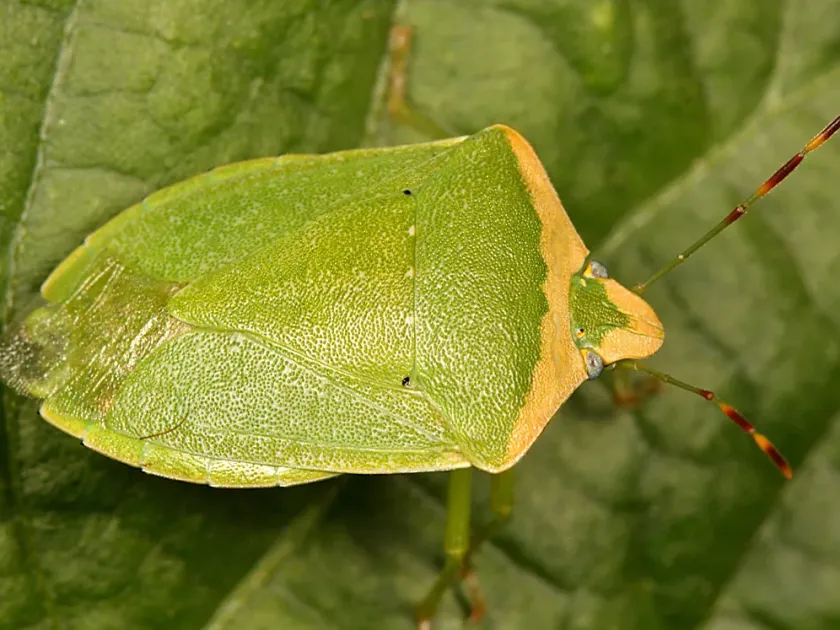
Description
How to identify
Dichelops furcatus belongs to the order Hemiptera and the family Pentatomidae. Adult bugs have a characteristic shield-shaped body, typically measuring about 8–10 mm in length.
The species is easily identified by two prominent, forward-pointing projections on the pronotum, which give the bug its distinct appearance and common name reference.
The nymphs go through five developmental stages, progressively increasing in size and changing color while gradually developing their body structures towards the adult form.
Eggs are typically deposited in clusters on the undersides of leaves, a strategy that helps protect the developing embryos from predators and environmental stressors.
This bug is highly adaptable and thrives in agricultural settings, particularly where monocultures provide an abundant and continuous food supply throughout the season.
What it damages
Dichelops furcatus is primarily known as a significant pest of soybeans, although it can also impact crops like maize and wheat depending on the environmental context.
The damage is most severe during the reproductive stages of the plant, specifically when the bug feeds on the sap of developing seeds and pods.
When feeding, the bug injects digestive enzymes into the plant tissue, which causes deformations in seeds, reduces their germination potential, and decreases overall grain weight.
Heavy infestations can lead to significant yield losses, often ranging between 10% and 30%, depending on the intensity of the pest population and the growth stage of the crop.
Furthermore, the puncture wounds created by the bug act as entry points for secondary fungal and bacterial infections, significantly downgrading the quality of the harvested crop.
When it appears
The seasonal activity of this bug begins in the spring when temperatures rise, triggering the emergence of overwintering adults from their hiding spots to move into crop fields.
Population peaks are typically observed during the flowering and pod-filling phases, which align with the period of high nutrient demand by the plant and high attractiveness to the pest.
Under optimal conditions, including high humidity and warm temperatures, the species is capable of completing multiple generations during a single growing season.
As the season nears its end and days shorten, the adults prepare for overwintering, seeking refuge in plant debris, hedgerows, or surrounding wooded areas.
The presence of weeds within and around fields serves as a crucial bridge for the pest population, allowing them to survive when primary crops are not available.
Signs of infestation
Signs of an infestation include the appearance of localized necrotic spots on leaves and stems where the bugs have been feeding with their piercing-sucking mouthparts.
Careful scouting of the field, especially on the undersides of leaves, can reveal the presence of egg masses and nymphs at various stages of development.
Soybean pods that have been fed upon often exhibit shriveled textures and clear puncture marks that may darken over time due to tissue necrosis.
- Yellowing and wilting of plant tissues near the puncture site.
- Deformed, flat, or underdeveloped pods.
- Presence of discarded nymphal skins on stems.
- Reduction in grain size and weight at harvest.
A strong, unpleasant odor is often associated with high populations, as these bugs release defensive chemical compounds when disturbed.
Control measures
Effective management of Dichelops furcatus requires an integrated approach that balances cultural practices with timely chemical interventions when thresholds are reached.
Cultural control involves the rigorous management of weeds in and around fields to minimize alternative host sites and reduce the overwintering capacity of the population.
Chemical control, utilizing systemic or contact insecticides, is most effective when applied during the early stages of infestation to prevent mass reproduction.
Monitoring using pheromone traps is essential for detecting the arrival of the pest and timing insecticide applications to ensure maximum efficacy and cost-efficiency.
Biological control strategies, such as the conservation of natural enemies and the release of egg parasitoids, can help suppress population growth and reduce the need for chemicals.
Taxonomy
- Latin name
- Dichelops furcatus
- Order
- Hemiptera (bugs, aphids, leafhoppers)
- Family
- Pentatomidae
- EPPO code
- DICLFU
Discussion
No discussions yet — be the first.