
Ancylus scale
Diaspidiotus ancylus
Description
How to identify
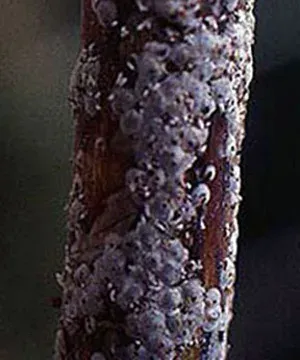
The Ancylus scale (Diaspidiotus ancylus) belongs to the Diaspididae family within the order Hemiptera. Adult females are characterized by a circular or oval grayish-brown scale with a lighter center, which serves as effective camouflage on tree bark.
Adult insects measure approximately 1.5–2 mm in diameter. The crawler stage, which is the only mobile phase of the insect, is extremely tiny and yellowish, allowing them to be easily dispersed by wind or bird activity between trees.
These insects are sedentary, attaching themselves firmly to the bark surface. Unlike some other scale species, the Ancylus scale creates a very dense test (shell), which provides significant protection against environmental stressors and many common contact insecticides.
The life cycle involves an egg stage, the first-instar crawler, a second-instar stage, and the adult (imago). Mature females remain under their scales for their entire lifespan, whereas males undergo a pupal stage and gain the ability to fly to locate mates.
Identification can be challenging due to their cryptic coloration. It is recommended to use a 10x magnifying glass to inspect trunks and major limbs during early spring, when the scales become most visible before the new foliage appears.
What it damages
This pest affects a wide range of pome and stone fruit trees, including apples, pears, plums, cherries, and peaches. Beyond fruit trees, the scale can also infest various ornamental and forest species such as maples, lindens, and ashes.
Damage is caused by both crawlers and adult females feeding on the plant's cell sap. This activity leads to significant exhaustion of the tree, stunted growth, and a marked reduction in orchard productivity over successive growing seasons.
Heavy infestations cause the bark to crack, creating entry points for secondary infections like fungal pathogens or bacterial cankers. Severe cases often result in premature leaf drop and the deformation of young, succulent shoots.
Fruits on infested trees are frequently stunted, lose their marketability, and suffer from reduced flavor quality. If left unmanaged, dense colonies can lead to the death of individual branches or even the total loss of young saplings.
The high reproductive potential of the females allows the pest to colonize significant areas of an orchard quickly under favorable climatic conditions, making prompt identification and intervention essential for growers.
When it appears
The Ancylus scale typically completes one generation per year in temperate climates. The pest overwinters primarily as a second-instar nymph, firmly attached to the bark of the host tree.
In early spring, once temperatures consistently exceed 10°C, the overwintered nymphs resume feeding. During this period, they grow rapidly in size as they prepare to reach sexual maturity and reproduce.
The emergence of the new generation of crawlers is usually staggered, depending on regional weather patterns. This process generally occurs from late June through early July, representing the most critical time for monitoring.
During the summer, crawlers disperse across the tree to select young shoots with thinner bark for feeding. It is during this crawler phase that they are most susceptible to pest control measures before they develop their protective shells.
By autumn, the nymphs settle into their second-instar stage, secure themselves to the bark, and enter winter diapause. The cycle repeats, necessitating consistent annual monitoring to prevent the population from reaching economic threshold levels.
Signs of infestation
The primary sign of infestation is the appearance of numerous tiny, grayish-brown bumps on the bark. When scraped, these bumps detach easily, leaving a lighter-colored spot on the bark tissue beneath.
- Bark cracking and the flaking of outer layers in areas of heavy infestation.
- Withered, dying tips on young shoots during the summer months.
- Small, light-colored "windows" on the bark surface where colonies were previously present.
- Overall tree decline, characterized by yellowing leaves and premature leaf fall.
Close inspection of the trunk often reveals surface deformations caused by metabolic disruptions at the feeding sites. The bark may appear uneven or scarred in areas where large numbers of scales have been feeding for an extended period.
In cases of severe infestation, a crust of old shells and debris may build up on the bark. This material creates a substrate for sooty mold growth, which further stresses the tree by blocking photosynthesis and impeding gas exchange.
Control measures
Managing the Ancylus scale requires an integrated approach that combines cultural practices with targeted insecticide applications during the most vulnerable life stages of the pest.
Annual sanitary pruning and the removal and destruction of heavily infested branches are essential cultural practices. Clearing rough, dead bark from the trunk helps to reduce the number of overwintering sites available to the scale.
Dormant oil applications in early spring are highly effective, as they physically coat the overwintering nymphs and smother them before the tree's sap flow begins. This method targets the pest before it reaches the reproductive stage.
During the mass crawler emergence period (June-July), systemic or contact-action insecticides are applied. Two treatments spaced 10–14 days apart are usually recommended to ensure maximum coverage of the emerging population.
Encouraging natural predators, such as ladybird beetles and parasitic wasps, can help keep scale populations in check. Maintaining a healthy orchard ecosystem is a key component of sustainable long-term scale management.
Taxonomy
- Latin name
- Diaspidiotus ancylus
- Order
- Hemiptera (bugs, aphids, leafhoppers)
- Family
- Diaspididae
- EPPO code
- DIAOAN
Discussion
No discussions yet — be the first.