
Diaphorina communis
Diaphorina communis
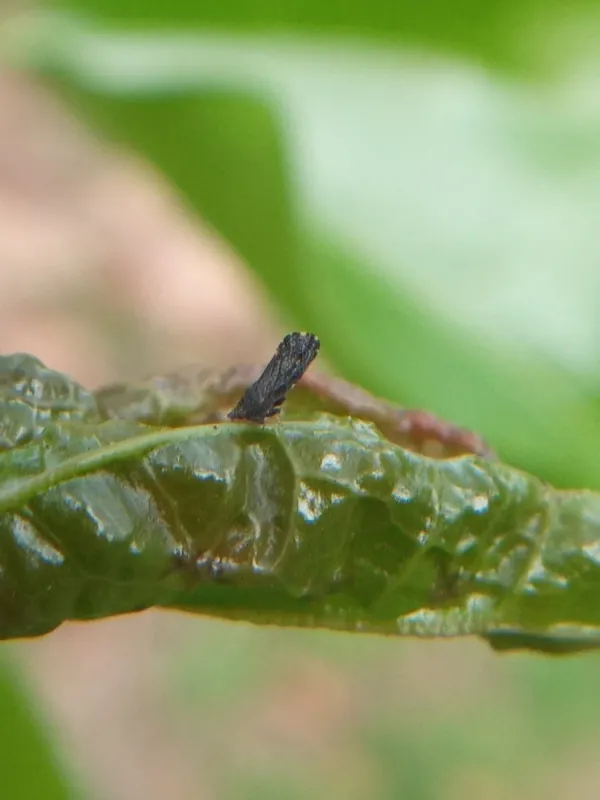
Description
How to identify
Diaphorina communis belongs to the Psyllidae family, order Hemiptera. This small insect, commonly known as a jumping plant louse, measures about 2–3 mm in its adult stage.
Adults are recognized by their jumping behavior when disturbed. Their body color ranges from grayish-brown to orange-brown, providing effective camouflage against tree bark and foliage.
Nymphs, which are the immature stages of the pest, are yellowish or orange in color. They are typically found covered in waxy secretions and congregate on new shoots or leaf axils.
Eggs are extremely small and elongated. They are laid by females primarily on young, tender plant tissues, ensuring that newly hatched nymphs have immediate access to food.
For accurate field identification, agronomists rely on magnifying lenses, as adults are highly mobile and jump rapidly when their host plant is approached.
What it damages
This species specializes in attacking plants of the Rutaceae family, particularly various types of citrus trees, causing significant economic losses.
The pest feeds by piercing the epidermis of young shoots with its needle-like mouthparts to extract plant sap, leading to stunted growth and nutrient depletion.
The primary concern is not just the direct sap extraction, but the insect's potential to serve as a vector for systemic bacterial pathogens that can devastate citrus orchards.
Plant surfaces often become covered in honeydew, a sugary excretion from the insects that promotes the growth of sooty mold, blocking sunlight from reaching the leaves.
Heavy infestations result in deformed leaves, stunted twig development, and premature fruit drop, which significantly impacts the overall tree vigor and fruit yield.
When it appears
The seasonal activity of Diaphorina communis is closely linked to the growth cycles of citrus trees, as the pest requires fresh vegetative flushes for oviposition.
In regions with mild or tropical climates, the insect can remain active throughout the year, provided there is continuous tree growth.
Population peaks are typically observed during the spring and late summer flushes when citrus trees produce an abundance of new, succulent foliage.
Temperature dictates the rate of reproduction: development cycles are accelerated significantly in warm conditions, specifically within the 20°C to 30°C range.
During colder months, adult activity decreases, but they can survive unfavorable conditions by sheltering in bark crevices or protected areas of the canopy.
Signs of infestation
The first visual sign of infestation is the curling and distortion of young leaves, often resulting in a "puckered" appearance of the foliage.
A sticky residue on leaves and branches, which eventually turns black due to the accumulation of sooty mold, is a clear indicator of a resident psyllid colony.
When inspecting terminal buds, one can observe clusters of stationary nymphs surrounded by distinctive white waxy filaments secreted during their development.
Reduced shoot elongation and unexplained yellowing of leaves (chlorosis) often point to prolonged sap-feeding by these insects.
- Development of sooty mold on leaf surfaces.
- Distortion and curling of tender new shoots.
- Presence of jumping insects when branches are disturbed.
- Clusters of yellowish nymphs visible on buds.
Control measures
Effective management begins with routine monitoring using yellow sticky traps, which help detect the presence and density of adults in the orchard.
Cultural control practices include pruning heavily infested shoots and maintaining tree health to enhance the plant's natural resistance to insect damage.
Systemic insecticides are the cornerstone of commercial control, as these products are absorbed into the plant tissues, making the sap toxic to the feeding pests.
It is vital to rotate chemical classes to prevent the population from developing resistance, as psyllids are known to adapt quickly to common pesticides.
Biological control, utilizing natural enemies like parasitic wasps and predatory insects, represents a sustainable long-term strategy for integrated pest management.
Taxonomy
- Latin name
- Diaphorina communis
- Order
- Hemiptera (bugs, aphids, leafhoppers)
- Family
- Psyllidae
- EPPO code
- DIAACO
Discussion
No discussions yet — be the first.