
Asian citrus psyllid
Diaphorina citri
Description
How to identify
The Asian citrus psyllid (Diaphorina citri) is a small sap-sucking insect of the family Liviidae that serves as the primary vector for the devastating citrus greening disease.
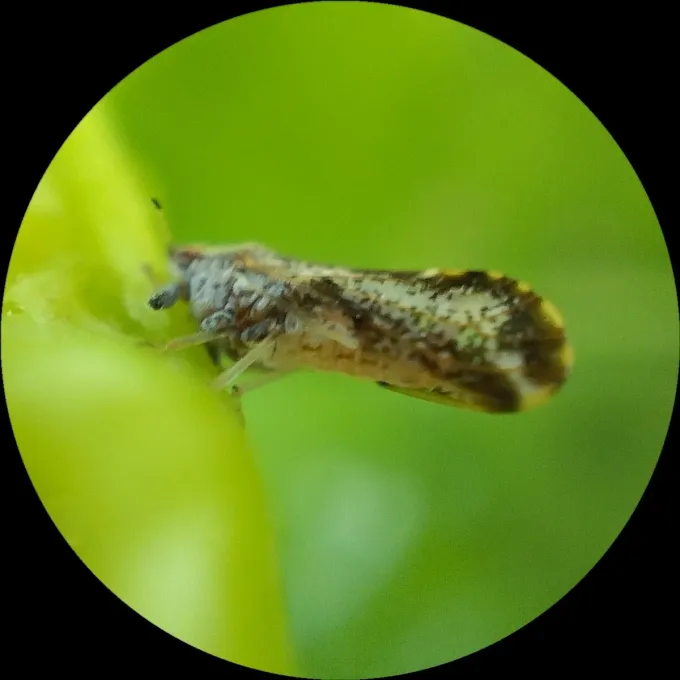
Adult psyllids are about 3 to 4 mm long with brownish, mottled wings and a body that stays in a characteristic "45-degree angle" position while feeding.
The nymphs are small, yellowish-orange, and often surrounded by waxy secretions, which they produce while feeding on tender leaf tissues.
Eggs are typically laid in small clusters on the tips of new, emerging shoots, as the larvae require fresh growth to survive and complete their development.
This insect has a high reproductive rate, and its nymphs undergo five instars before reaching the adult stage, making constant vigilance necessary.
What it damages
The species feeds exclusively on plants within the Rutaceae family, primarily targeting all commercial varieties of citrus fruits like lemons, oranges, and limes.
While direct feeding damage (stunting and twisting of shoots) is significant, the greatest threat is the transmission of Candidatus Liberibacter asiaticus.
This pathogen causes Huanglongbing (HLB), a systemic disease that leads to tree decline, reduced fruit quality, and eventual death of the infected citrus tree.
The psyllid also excretes honeydew, which promotes the growth of sooty mold, blocking sunlight from reaching the leaves and reducing photosynthetic efficiency.
Infested trees show symptoms of nutrient deficiency because the bacteria disrupt the vascular system (phloem), preventing the transport of nutrients throughout the plant.
When it appears
Psyllid activity is closely tied to the flushing cycles of citrus trees, as they preferentially feed and lay eggs on newly developed, soft foliage.
In warm, tropical climates, the psyllid can breed continuously throughout the year, leading to overlapping generations and a massive buildup of populations.
Temperature significantly impacts the duration of the life cycle; higher temperatures shorten development time, allowing for rapid outbreaks in spring and summer.
During unfavorable weather or lack of fresh foliage, adults can survive on older leaves, waiting for the next cycle of shoot growth to begin feeding again.
They are mobile insects capable of short-distance flights, and strong winds can aid their spread across large orchards and neighboring properties.
Signs of infestation
Early warning signs include the presence of twisted, "burned" looking shoot tips where nymphs have been feeding on the sap.
Visual inspection often reveals white, waxy, thread-like structures on leaves, which are the protective excretions left behind by the developing nymphs.
The presence of sticky honeydew on the foliage, often followed by a black layer of sooty mold, is a classic indication of a psyllid infestation.
Infected trees often exhibit blotchy mottling on the leaves, which is a symptom of the systemic HLB infection spread by the insect's saliva.
Fruits on affected trees are often small, misshapen, lopsided, and fail to color properly, often remaining green even when they are physiologically mature.
Control measures
Management strategies emphasize an Integrated Pest Management (IPM) approach to minimize chemical use while effectively suppressing the population.
The release of the biological control agent Tamarixia radiata (a tiny parasitic wasp) has shown significant success in reducing psyllid density in many regions.
Chemical control includes the application of systemic insecticides during peak flushing periods to protect new growth from colonization.
Strict quarantine measures are essential to prevent the movement of infested nursery stock, which is the primary driver of long-distance spread.
- Regular monitoring of orchards using yellow sticky traps to detect adult arrival.
- Removal of symptomatic, HLB-infected trees to eliminate the source of the bacteria.
- Maintaining healthy trees through proper irrigation and nutrition to build resilience.
Taxonomy
- Latin name
- Diaphorina citri
- Order
- Hemiptera (bugs, aphids, leafhoppers)
- Family
- Psyllidae
- EPPO code
- DIAACI
Discussion
No discussions yet — be the first.