
Diaphorina amoena
Diaphorina amoena
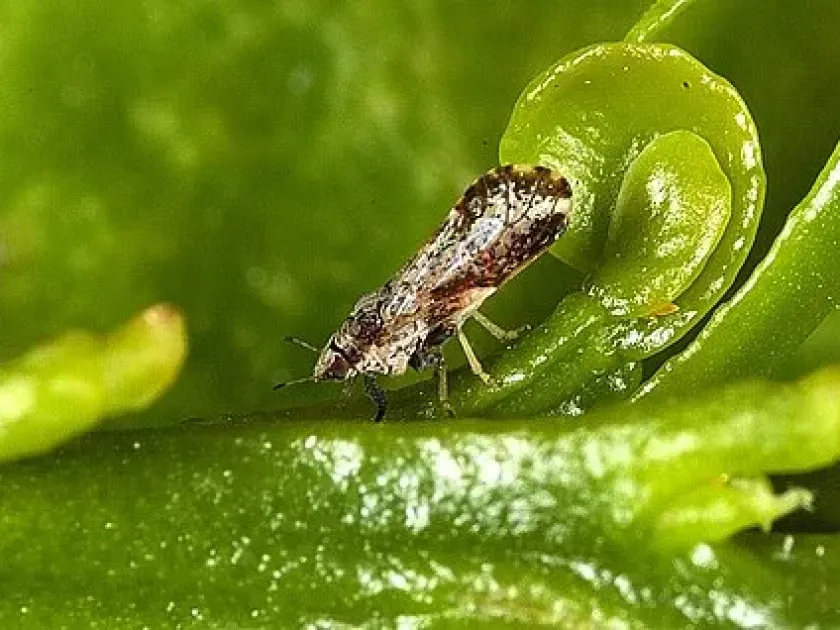
Description
How to identify
Diaphorina amoena is a species of psyllid belonging to the family Psyllidae, order Hemiptera. These small insects, often referred to as jumping plant lice, are significant pests primarily known for their impact on woody ornamental and fruit-bearing plants.
The adult form is a minute insect with powerful hind legs designed for jumping, which is a characteristic behavior when the insect is disturbed. Their coloration is usually muted, often appearing yellowish or brownish to blend in with foliage.
Nymphs are typically sedentary and are distinguished by the production of waxy excretions. This substance covers the nymphs and protects them from environmental stress, predators, and direct contact insecticides.
The life cycle consists of egg, five nymphal stages, and the adult phase. Females preferentially deposit their eggs on flush growth, ensuring that hatching nymphs have immediate access to the most nutrient-dense plant tissues.
Taxonomic identification of Diaphorina amoena requires specialized knowledge and equipment, as the morphological features distinguishing it from other closely related psyllid species are often microscopic.
What it damages
This pest primarily attacks plants within the Rutaceae family. Their feeding activity is most damaging to citrus trees, where they target the tender, actively growing shoots and foliage.
By extracting sap from the phloem, the insects cause significant physiological stress to the plant. This leads to stunted growth, distorted shoot development, and a general decline in the vitality of the host.
Direct mechanical damage is often exacerbated by the secretion of toxins into the plant's vascular system. This can lead to leaf curling, premature yellowing, and severe chlorosis, which hinders photosynthesis.
Heavy infestations reduce the marketability of nursery stock, as the trees exhibit a deformed and unhealthy appearance. In some cases, the damage is severe enough to cause the death of young seedlings.
Furthermore, like many psyllids, they are implicated in the transmission of various plant pathogens, making them a high-priority pest for agricultural biosecurity programs.
When it appears
The population dynamics of Diaphorina amoena are closely linked to the phenology of the host plant. They thrive during periods of active vegetative growth, known as "flushing," when the plant produces soft new leaves.
Under favorable climatic conditions, multiple generations can occur annually. Temperature is a key driver, with warmer climates accelerating the developmental cycle and leading to population outbreaks.
Overwintering typically occurs in the adult stage. These individuals seek shelter in protected areas, such as bark crevices, dense foliage, or leaf litter, to survive the dormant season.
As spring temperatures rise, the surviving adults migrate to the newly emerging buds. Regular scouting during these early stages of plant development is crucial for effective population management.
Dry and hot weather periods may force the population to cluster in more humid microclimates, where they continue to feed and reproduce if the host plant remains active.
Signs of infestation
The most noticeable sign of infestation is the curling and distortion of new leaves. The shoots may become twisted, and growth appears severely inhibited or "rosetted."
Infested plants often display a layer of honeydew on the leaves, which is a sticky, sugary excretion left by the nymphs. This substance often attracts secondary infestations of sooty mold, which appears as a black, powdery coating.
The presence of white, cottony, or waxy tufts on the underside of leaves or within shoot tips is a primary visual cue that a nymphal colony is present and active.
The sudden jumping movement of tiny adults when a branch is tapped provides immediate confirmation of psyllid presence in the canopy.
Yellowing of the leaf margins or irregular chlorotic spots on the leaf blades are common indicators of prolonged feeding activity by the nymphs.
Control measures
Systemic insecticides are the most effective tool for managing Diaphorina amoena. Compounds that move through the plant's vascular system help reach the nymphs, which are often protected by their waxy coverings.
Treatment should be timed to coincide with the appearance of new growth. Repeated applications may be necessary to protect successive flushes of leaves throughout the growing season.
Biological control strategies involving the release of specific natural enemies, such as parasitic wasps or ladybird beetles, can significantly suppress psyllid populations in integrated pest management programs.
Cultural practices, such as pruning away heavily infested shoot tips and ensuring the plant receives proper fertilization and hydration, can help trees recover and minimize the pest's impact.
- Use yellow sticky traps to monitor adult population levels.
- Maintain proper plant spacing to improve air circulation and reduce pest migration.
- Destroy severely infested plant material to reduce the total number of overwintering individuals.
Taxonomy
- Latin name
- Diaphorina amoena
- Order
- Hemiptera (bugs, aphids, leafhoppers)
- Family
- Psyllidae
- EPPO code
- DIAAAM
Discussion
No discussions yet — be the first.