
Darna trima
Darna trima
Description
How to identify
Darna trima is a species of moth in the family Limacodidae, commonly known as nettle caterpillars or slug caterpillars due to the appearance of their larvae.
The adult moth is relatively small with a wingspan of approximately 20–25 mm and features cryptic coloration, usually varying shades of brown, which provides camouflage on tree bark.
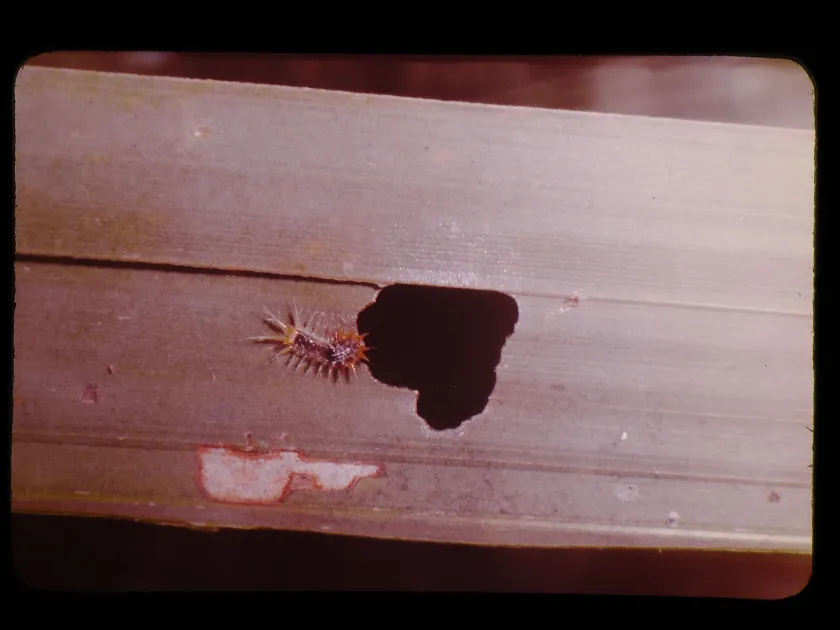
The larvae are distinct for their slug-like movement and bright, often yellow-green coloration, featuring stinging hairs that can cause significant skin irritation to handlers.
The life cycle typically spans about 50 to 60 days, comprising egg, larva, pupa, and adult stages, with the larvae being the primary stage responsible for feeding damage.
Female moths deposit their eggs in clusters on the underside of host leaves, ensuring that hatching larvae have immediate access to plant tissues for sustenance.
What it damages
The primary host for this pest is the oil palm, although it can also cause economic damage to coconut palms and banana trees in affected regions.
This pest is notably problematic in Southeast Asian tropical agricultural systems, where large-scale monoculture provides ideal conditions for rapid outbreaks.
Signs of infestation
Early signs of infestation include small, window-like spots on the leaves, created as the young larvae feed only on the epidermal tissue of the leaflets.
As the larvae mature, they consume the entire leaf lamina, leaving behind only the tough midribs and veins, a process referred to as skeletonization.
Large amounts of frass, or larval excrement, accumulating at the base of the palms or on the lower leaves serve as a visual indicator of heavy infestation.
Severe defoliation results in a significant reduction in the palm's photosynthetic capacity, which directly correlates to a decrease in fruit bunch production.
Trees severely affected by Darna trima are often weakened and may become susceptible to secondary infections or environmental stress, further impacting yield quality.
Control measures
Biological control is highly effective, utilizing specific pathogens such as NPV (Nuclear Polyhedrosis Virus) or entomopathogenic fungi to suppress larval populations.
Chemical intervention should be reserved for periods of peak infestation, using selective insecticides that minimize harm to beneficial insects and natural predators.
Regular monitoring using pheromone traps allows for the early detection of adult moth flights, enabling growers to intervene before massive egg-laying occurs.
Manual removal of heavily infested leaves during the early stages of an outbreak can effectively slow the spread of the pest across the plantation.
- Maintain healthy soil nutrition to improve tree resilience.
- Encourage natural predator populations like parasitic wasps.
- Implementation of regular plantation scouting schedules.
Taxonomy
- Latin name
- Darna trima
- Order
- Lepidoptera (butterflies)
- Family
- Limacodidae
- EPPO code
- DARNTR
Discussion
No discussions yet — be the first.