
Darna diducta
Darna diducta
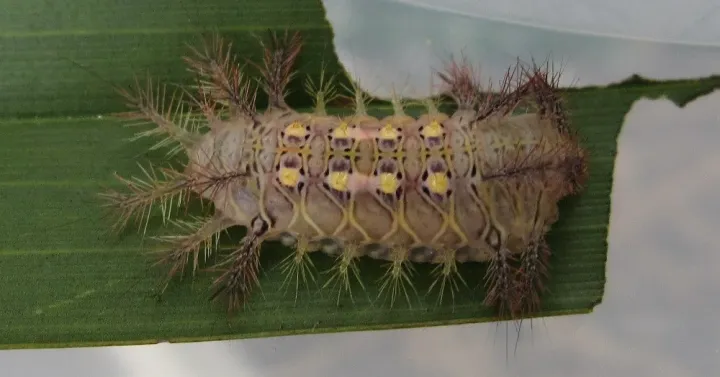
Description
How to identify
Darna diducta belongs to the order Lepidoptera and the family Limacodidae, commonly known as slug moths due to the appearance of their larvae.
The larvae are typically flattened and exhibit vibrant colors or distinctive patterns that serve as warnings to potential predators.
These caterpillars possess stinging hairs or spines that cause skin irritation, acting as a defensive mechanism against natural enemies.
Adult moths are relatively small and nocturnal, making them difficult to detect during standard daytime plantation inspections.
The morphological characteristics of the larva are crucial for field identification, especially during the early stages of a population outbreak.
What it damages
This pest is primarily known for causing significant damage to oil palm plantations, where it feeds voraciously on the foliage.
By consuming the leaf tissue, the larvae severely reduce the photosynthetic capacity of the trees, leading to stunted growth and reduced vigor.
In young plantations, a severe infestation can lead to total defoliation of seedlings, resulting in high mortality rates and financial losses.
The impact on mature trees includes a reduction in fruit production, as the plant lacks the energy reserves required for reproductive processes.
Economic damage is cumulative, as sustained feeding cycles weaken the overall structure and health of the palm canopy over time.
When it appears
The life cycle of Darna diducta is highly influenced by tropical climatic conditions, allowing for continuous generations throughout the year.
Population density often peaks following periods of heavy rainfall, which create ideal microclimatic conditions for egg development and larval survival.
Higher average temperatures speed up the metabolic processes of the insect, significantly shortening the development time between life stages.
Seasonal outbreaks can be unpredictable, necessitating constant monitoring programs across large plantation areas to manage potential threats.
Changes in local weather patterns can shift the periods of peak activity, requiring flexible management strategies for plantation managers.
Signs of infestation
The initial signs of infestation are characterized by irregular patches of missing leaf tissue, creating a skeletal appearance on the palm fronds.
Scouting the underside of the leaves reveals clusters of larvae, which is the most reliable way to confirm the presence of the pest.
The accumulation of larval frass on the leaves or at the base of the tree is a clear indicator of active feeding within the canopy.
As the damage progresses, the leaves turn brown and eventually die, significantly reducing the overall green surface area of the plantation.
Severe infestations often result in a thin, ragged canopy structure, indicating that the population has reached a damaging threshold level.
Control measures
Integrated Pest Management (IPM) is the most effective approach, focusing on biological controls such as Bacillus thuringiensis applications.
Encouraging the presence of natural parasitoids and predators is essential for long-term population regulation within the agroecosystem.
Chemical control should be used judiciously as a last resort, ensuring that selected products minimize harm to beneficial insect populations.
Proper plantation maintenance, including balanced fertilization, helps trees remain resilient against pest-induced stress and canopy loss.
- Deploying light traps to monitor adult flight activity and density.
- Manual removal of larval colonies in small-scale or localized outbreaks.
- Regular canopy inspections to ensure early detection of emerging generations.
Taxonomy
- Latin name
- Darna diducta
- Order
- Lepidoptera (butterflies)
- Family
- Limacodidae
- EPPO code
- PLONDI
Discussion
No discussions yet — be the first.