
Darna
Darna
Description
How to identify
Darna is a genus of moths belonging to the Limacodidae family, commonly known as slug moths. Adult moths are typically small and cryptic, colored in shades that blend in with the tree bark, which makes them difficult to spot during routine inspections.
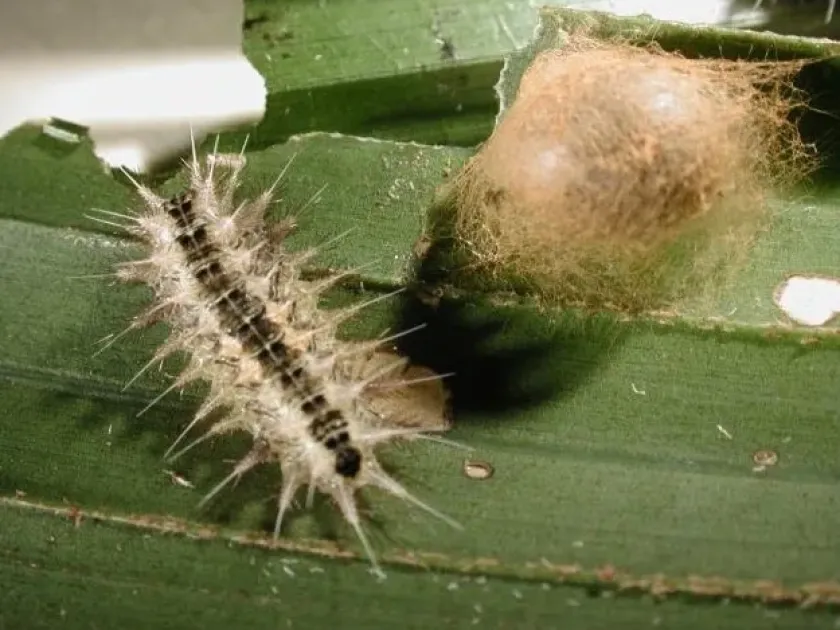
The larvae are the destructive stage of this insect. They are often oval or slug-like in appearance, lacking visible legs and covered in a thick cuticle. Some species possess stinging hairs or spines that serve as a defensive mechanism against predators and handlers.
What it damages
The primary hosts of Darna larvae are palm species, with commercial crops like oil palms and coconut palms being particularly vulnerable. The insects feed on the leaf tissues, significantly reducing the tree's photosynthetic capacity.
In cases of severe infestation, the pest can strip entire palm fronds, leaving only the vascular structure behind. This defoliation leads to a significant loss of productivity and can eventually kill younger or weakened trees.
When it appears
The biological cycle of Darna is continuous in tropical environments. Multiple generations can occur within a single year, provided that the climate remains warm and sufficiently humid for larval development and pupation.
Environmental factors such as high humidity and moderate temperatures often trigger population spikes. Farmers monitor the developmental stages, as timing the application of control measures is critical during the peak activity of the larvae.
Signs of infestation
Identification of an infestation begins with noticing skeletonized leaves. As larvae graze on the underside of the foliage, they remove the leaf blade tissue, leaving only the network of veins, which soon turns brown and brittle.
Evidence of feeding often includes the presence of frass (droppings) on the leaves below the feeding sites. Observing the underside of the leaves usually reveals the presence of larvae or their distinct oval cocoons hidden within the foliage.
Control measures
Management strategies for Darna focus on monitoring and timely intervention. Chemical control using selective insecticides is often necessary when populations exceed defined economic thresholds to prevent widespread damage to the palm plantations.
- Cultural control: pruning and destroying infested fronds.
- Biological control: introducing natural parasitoids.
- Chemical control: applying bio-rational insecticides.
- Monitoring: using pheromone traps where available.
- Education: training field workers to identify early signs.
Taxonomy
- Latin name
- Darna
- Order
- Lepidoptera (butterflies)
- Family
- Limacodidae
- EPPO code
- DARNSP
Discussion
No discussions yet — be the first.