
Pearl danio
Danio albolineatus
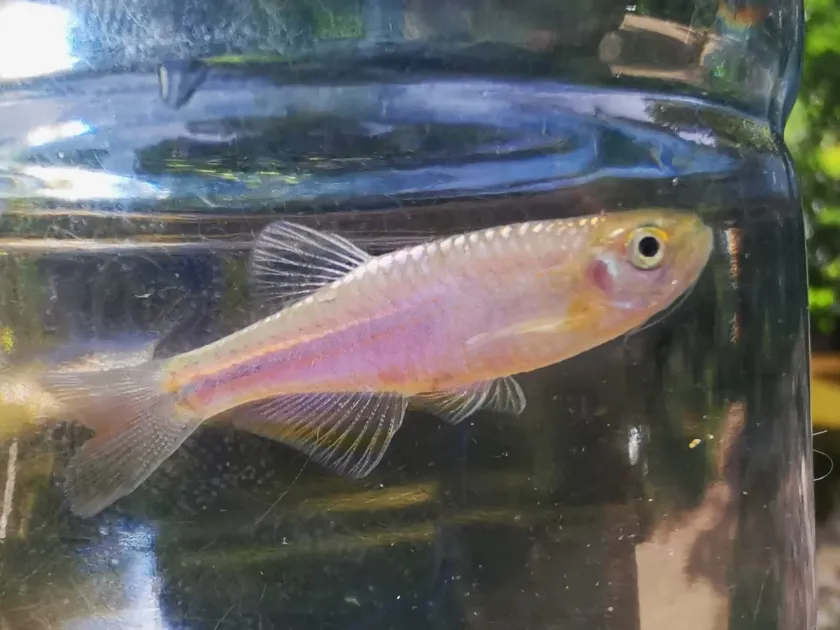
Description
How to identify
The pearl danio (lat. Danio albolineatus) is a small freshwater fish species belonging to the Cyprinidae family. While not an agricultural pest, it is frequently encountered in integrated aquaponic farming systems where it interacts with plant root zones.
Morphologically, the fish features an elongated body reaching up to 6 cm in length, characterized by an iridescent, pearly pink hue. Its slender profile allows it to navigate through dense hydroponic irrigation channels and root matrices.
Taxonomically, it falls under the order Cypriniformes. In controlled agricultural environments, these fish are often introduced to provide a biological source of nitrogen for hydroponic plants, acting as an essential component of the nitrogen cycle.
The biological lifecycle of the species involves spawning in shallow water. During this phase, the fish seek out submerged objects, including plant roots, which can occasionally lead to accidental interactions with the vegetation.
This species thrives in tropical temperatures ranging from 20 to 25 degrees Celsius, making it highly compatible with many indoor greenhouse cultivation systems that utilize recirculating water.
What it damages
Danio albolineatus is not a phytophagous species and therefore does not consume plant leaves or stems. Its diet consists primarily of small aquatic invertebrates, insects, and plankton, meaning it poses no direct herbivorous threat to crops.
Damage potential is limited to mechanical disruption. During active spawning or searching for food in the substrate, these fish can cause minor injuries to sensitive root hairs of young seedlings, which may temporarily impede plant growth.
Indirect damage can occur if the fish population is too high, leading to over-saturation of the water with metabolic waste. This can alter the nutrient solution chemistry and create an environment favorable for root-rot pathogens.
Physical trauma to the root system, even if minor, acts as a primary entry point for opportunistic bacteria and fungi. This makes proper management of fish behavior essential in high-density hydroponic setups.
Overall, the pearl danio is considered an asset in sustainable aquaponics rather than a pest, provided that proper structural barriers are implemented to protect the plant root systems from physical interference.
Control measures
The most effective method for protection is the installation of fine mesh barriers or dedicated root-zone enclosures. These prevent fish from directly accessing the delicate root areas of the plants.
Maintaining a strictly controlled feeding schedule ensures that fish remain satiated, drastically reducing the likelihood of them disturbing the plant substrate in search of naturally occurring microorganisms.
Regular water quality monitoring is crucial. Implementing robust filtration systems prevents the buildup of organic waste, which keeps the root environment healthy and unattractive to unwanted pathogens.
Routine density management ensures that the fish population remains at sustainable levels relative to the tank size, minimizing territorial behavior that could lead to plant interference.
- Use of protective mesh dividers.
- Balanced nutrient monitoring in water.
- Properly calibrated feeding regimes to avoid substrate disturbance.
Taxonomy
- Latin name
- Danio albolineatus
- Family
- Cyprinidae
- EPPO code
- DANIAL
Discussion
No discussions yet — be the first.