
Cactus mealybug
Dactylopius confusus
Description
How to identify
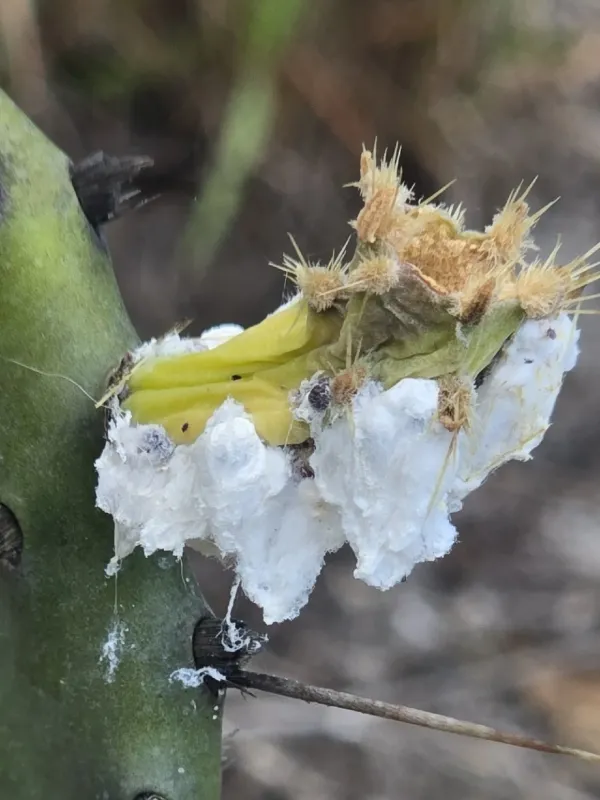
The cactus mealybug Dactylopius confusus is a sap-sucking pest belonging to the family Dactylopiidae. Adult females are sessile and covered in a white, cottony wax secretion.
This white waxy substance acts as a protective shield against predators and chemical sprays, making the pest appear like small clumps of white wool on the plant surface.
Unlike other mealybugs, this species is highly specialized for life on cacti. They tend to aggregate in crevices, areoles, and at the base of spines, which provides them with extra protection.
Males are rarely seen; they are winged and much smaller than females, typically focusing only on the reproductive phase of the life cycle.
Accurate identification requires careful observation, as the white, fluffy covering can sometimes be mistaken for the natural pubescence or wool of certain cactus species.
What it damages
These pests feed by inserting their stylets into the plant tissue and extracting phloem sap. This feeding process directly affects the vitality of the host plant.
Initial signs of damage include localized chlorosis and stunted growth of the stems. If left untreated, the plant tissues may become necrotic and collapse.
The continuous loss of nutrients results in a weakened immune system, making the cactus highly susceptible to secondary fungal and bacterial rot infections.
Heavy infestations can lead to the complete disfiguration of the cactus and, in severe cases, the death of the entire plant due to systemic exhaustion.
In addition to physical damage, the honeydew excreted by the mealybugs provides a substrate for sooty mold growth, which further hampers photosynthesis.
When it appears
In indoor environments or greenhouses, the cactus mealybug can complete multiple generations throughout the year, with no seasonal pause.
High temperatures and lower humidity levels in greenhouses often trigger faster reproduction and quicker development of the crawler stages.
The peak activity period is typically spring and summer, correlating with the active growth cycle of the cactus hosts.
During the winter, although development slows down due to lower light and temperature, the colony remains present and ready to expand once conditions improve.
Infestations are frequently introduced through new, unquarantined plants, leading to rapid spread throughout the collection during the active growing season.
Signs of infestation
The most prominent sign is the appearance of white, cotton-like masses on the cactus stems, particularly around the areoles and spine clusters.
- Sticky honeydew residue on the plant or surrounding pots and tables.
- Yellowing or sunken spots on the epidermis indicating where the pest has been feeding.
- Stunted development of new pads or growth points.
- Sudden failure of flower buds to mature or open.
- The presence of tiny, mobile crawlers moving along the cactus ribs.
Control measures
The first step in management is to isolate the infested plant immediately to prevent crawlers from moving to healthy specimens.
Manual removal using a small brush dipped in isopropyl alcohol is effective for light infestations, though it requires precision to avoid damaging the plant epidermis.
Systemic insecticides, particularly those containing neonicotinoids, are the gold standard for control, as they reach the pest through the plant's vascular system.
Consistent treatment is crucial; a single application is usually insufficient because eggs protected by the waxy coating remain viable and hatch later.
Maintaining a clean greenhouse environment and practicing strict quarantine procedures for new acquisitions are the most effective preventative strategies against this pest.
Taxonomy
- Latin name
- Dactylopius confusus
- Order
- Hemiptera (bugs, aphids, leafhoppers)
- Family
- Dactylopiidae
- EPPO code
- DACLCN
Discussion
No discussions yet — be the first.