
Ceylon cactus mealybug
Dactylopius ceylonicus
Description
How to identify
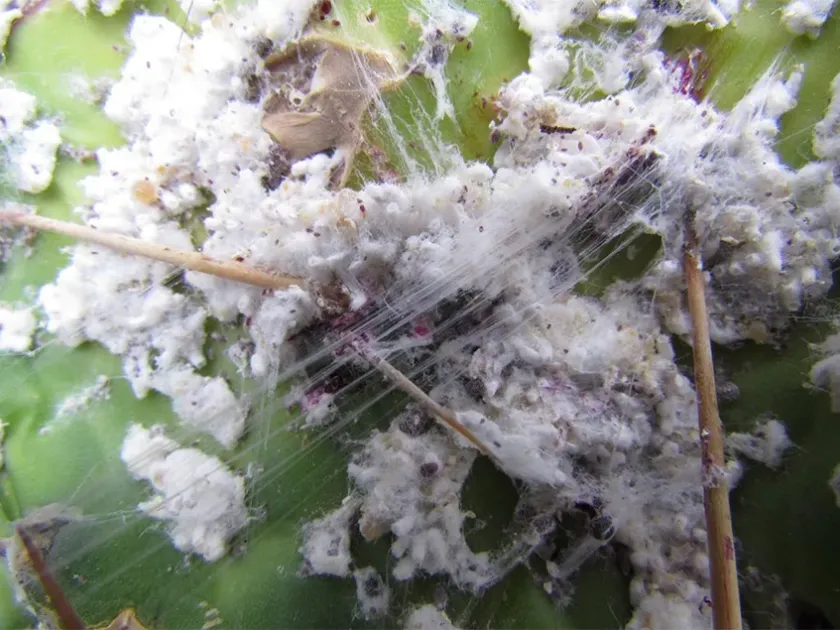
The Ceylon cactus mealybug (Dactylopius ceylonicus) is a hemipteran insect belonging to the family Dactylopiidae. Adult females are protected by a dense, white, waxy covering that resembles cotton wool.
Because of their appearance, these pests are often mistaken for fungal infections. Adult females are sessile, while their crawler larvae are capable of moving actively across the plant surface.
This species primarily targets cactus species, with a strong preference for the genus Opuntia. Its life cycle includes the egg stage, several larval instars, and the adult stage.
Adult males are much smaller than females, possess wings, and do not feed; they live only long enough to mate. The females are responsible for the damage caused to the host plant.
While historically used as a biological control agent to manage invasive prickly pear populations, in cactus collections, they are considered destructive pests.
What it damages
The primary host plants are cacti, particularly those in the Opuntia genus. Under indoor or greenhouse conditions, they may occasionally attack other succulents if they are in close proximity.
The mealybugs feed by inserting their piercing-sucking mouthparts into the plant tissue to extract sap. This causes physiological stress, loss of turgor, and overall weakening of the cactus.
Heavy infestations lead to the development of necrotic lesions on the stem. If left untreated, these spots expand, providing entry points for secondary bacterial and fungal infections.
The insects excrete honeydew, which promotes the growth of sooty mold. This mold covers the cactus surface, inhibiting photosynthesis and interfering with gas exchange.
In cases of severe infestation, the plant may lose structural integrity, suffer from rotting, and eventually die due to the combined effects of sap loss and pathogenic contamination.
When it appears
The activity of the mealybug is heavily dependent on ambient temperature. In controlled environments like homes or greenhouses, the pest can reproduce year-round.
Population peaks typically occur during the warmer months, as higher temperatures accelerate the development of larvae and increase the frequency of reproductive cycles.
In outdoor environments, particularly in tropical and subtropical regions, activity intensifies during hot and dry seasons when the plant metabolism is high.
The protective waxy layer shields females from many environmental stressors, although extremely high humidity or fluctuating temperatures may slightly alter their development rates.
Crawler larvae are the most mobile and vulnerable stage of the life cycle, typically emerging during periods of active plant growth when nutrient content in the sap is high.
Signs of infestation
The earliest symptom of an infestation is the appearance of white, cottony masses clustered in the crevices of the cactus stem and around the base of the spines.
Removing the white waxy fluff reveals the insects themselves. When crushed, they release a distinct bright red or purple fluid, which is a key diagnostic feature of this family.
The plant begins to look unhealthy, with stunted growth and a loss of vibrant color. Yellowish or brownish spots often appear on the epidermis where feeding is concentrated.
The surface of the cactus may become sticky due to honeydew production. This stickiness is often accompanied by the presence of black sooty mold.
In advanced infestations, segments of the Opuntia may drop off, and the entire plant may show signs of collapse, indicating that the vascular system is severely compromised.
Control measures
Initial control efforts should focus on physical removal. Colonies can be wiped off using a cotton swab dipped in rubbing alcohol, which effectively kills the bugs on contact.
Systemic insecticides, particularly those containing imidacloprid or acetamiprid, are the most effective chemical means to manage populations hidden under the waxy layer.
- Isolate the infested plant immediately to prevent spreading.
- Regularly monitor the collection for early signs of infestation.
- Use neem oil sprays as a preventive and mild treatment option.
- Quarantine any new cactus arrivals for at least three to four weeks.
- Maintain proper airflow and hygiene to reduce the risk of secondary infections.
Because the waxy coating is water-repellent, it is essential to add a surfactant (spreader-sticker) to any chemical solution to ensure that the insecticide penetrates the protective wax.
A consistent treatment schedule—typically three or four applications spaced 7–10 days apart—is necessary to kill subsequent generations of crawlers that emerge from eggs.
Taxonomy
- Latin name
- Dactylopius ceylonicus
- Order
- Hemiptera (bugs, aphids, leafhoppers)
- Family
- Dactylopiidae
- EPPO code
- DACLIN
Discussion
No discussions yet — be the first.