
Cochineal scale
Dactylopius coccus
Description
How to identify
The cochineal scale (Dactylopius coccus) is an insect belonging to the order Hemiptera and the family Dactylopiidae. It is a specialized scale insect widely known for its historical role in the production of the natural crimson dye, carmine.
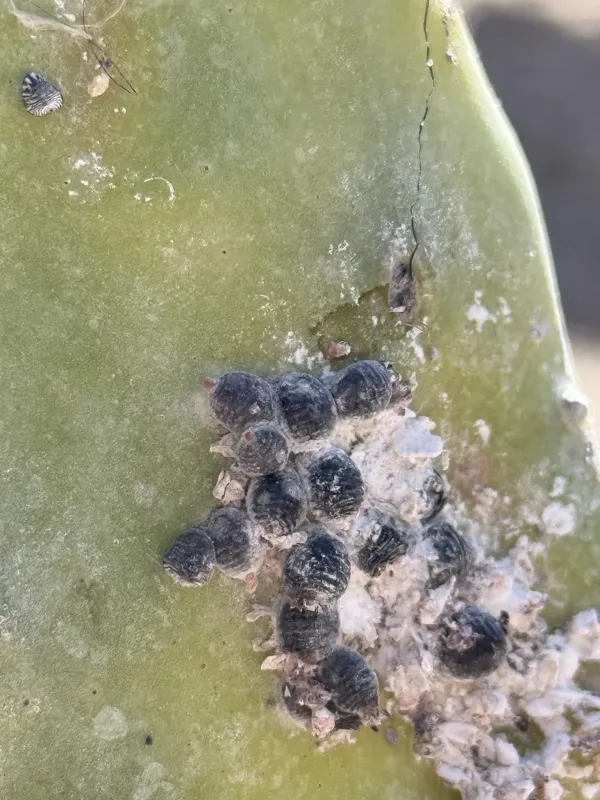
Adult females are sessile, possessing an oval body protected by a thick, white, waxy secretion that acts as an effective shield against predators and desiccation. In contrast, males are winged, significantly smaller, and non-feeding, existing only for reproductive purposes.
The life cycle involves a mobile first-instar stage known as "crawlers," which actively search for suitable feeding sites on the host plant before settling down and beginning their development.
These insects are strictly host-specific, primarily infesting various species within the Opuntia genus. Their survival and proliferation are closely linked to climate, as they are sensitive to excessive moisture and extreme temperature fluctuations.
A distinctive biological marker of the cochineal scale is its high concentration of carminic acid, which gives the insect's hemolymph a deep red pigment that is immediately visible if the insect is crushed.
What it damages
The primary hosts for the cochineal scale are species of the genus Opuntia. The insects establish themselves on the succulent pads (cladodes) of these cacti, where they spend most of their life cycle.
By using their specialized piercing-sucking mouthparts, the insects penetrate the epidermis of the cactus pad to feed directly on the plant's nutrient-rich sap.
Persistent feeding causes the loss of turgor in the plant tissues, leading to the development of chlorotic spots, localized necrotic lesions, and a significant decline in the overall vigor of the cactus.
Under heavy infestation, the colonies can completely cover the surface of the cactus pads, severely impairing the plant's ability to photosynthesize and ultimately leading to the death of the segment.
Beyond the direct sap extraction, the stress caused by the insects makes the cactus highly susceptible to secondary infections by pathogenic fungi and bacteria, which can accelerate the plant's decay.
Signs of infestation
The most prominent sign of infestation is the appearance of white, cotton-like masses on the surface of the cactus pads, which are the protective wax secretions produced by the females.
Upon closer examination, one can identify the dark purple or red bodies of the insects hidden beneath these white waxy layers, usually tightly adhered to the plant skin.
The area surrounding the feeding site often exhibits discoloration, turning yellowish or brownish, as the tissues become damaged and dehydrated due to the scale's feeding activity.
The presence of honeydew—a sticky, sweet substance excreted by the insects—is another clear indicator that often attracts secondary pests and promotes the growth of sooty mold.
Stunted growth, deformation of new pads, and an overall sickly appearance of the plant indicate a significant and established cochineal scale population.
Control measures
For minor infestations, manual removal of the scale colonies using a soft brush dipped in a rubbing alcohol solution is an effective and safe way to manage the problem.
Systemic insecticides containing imidacloprid or similar active ingredients are highly effective as they are translocated throughout the plant, poisoning the insects as they ingest the sap.
Horticultural oils or insecticidal soaps can be used as a contact treatment to smother the insects by creating a thin film that disrupts their respiration process.
Prevention is key; always inspect new plants thoroughly before introducing them to your collection and ensure proper airflow to discourage the colonization of these pests.
Biological control methods involve the introduction of natural predators, such as specific ladybird beetles (e.g., Hyperaspis spp.), which are known to prey upon cochineal scales in their natural habitat.
Taxonomy
- Latin name
- Dactylopius coccus
- Order
- Hemiptera (bugs, aphids, leafhoppers)
- Family
- Dactylopiidae
- EPPO code
- DACLCC
Discussion
No discussions yet — be the first.