
Tatar locust
Cyrtacanthacris tatarica
Description
How to identify
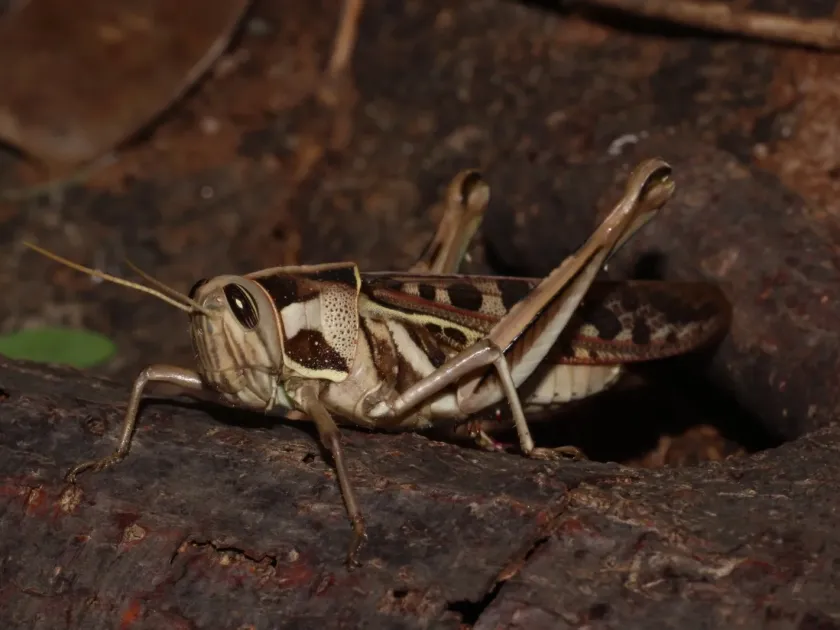
The Tatar locust (Cyrtacanthacris tatarica) is a large insect belonging to the order Orthoptera and the family Acrididae, well-known for its destructive potential.
Morphologically, it is characterized by a sturdy body that is typically yellowish-brown or grey, which provides effective camouflage in arid environments.
The species can be identified by the distinct spine located on its prosternum, a diagnostic feature that separates it from many other locust species.
Equipped with powerful hind legs for jumping and well-developed wings for flight, this insect is capable of rapid movement across large agricultural landscapes.
The sexual dimorphism is pronounced, as females are generally larger than males, reflecting the heavy energetic investment required for egg production and laying.
What it damages
As a highly polyphagous pest, the Tatar locust feeds on a diverse range of plant materials, causing severe damage to various agricultural commodities.
Cereals like wheat, barley, and maize are particularly susceptible, with locusts defoliating the plants and damaging the stems during their growth stages.
Technical crops including sunflowers and cotton are also prone to heavy attacks, leading to reduced yields and significant losses for farmers.
Pastures and grazing lands are frequently targeted, resulting in a critical shortage of feed for livestock and forcing the premature relocation of herds.
In cases of outbreak, these insects can swarm in large numbers, stripping entire fields of their vegetation within a very short period of time.
When it appears
The life cycle of the Tatar locust is highly dependent on environmental factors, particularly soil temperature and moisture levels that trigger egg hatching.
In spring, nymphs emerge from the soil and begin the process of active feeding, progressing through several instars before reaching the adult stage.
During the summer months, the population reaches its peak, and adult locusts become highly mobile, seeking out new food sources as local supplies are depleted.
As the season shifts towards autumn, adult insects mate and deposit their eggs back into the soil, ensuring the continuity of the species for the next season.
Agrometeorological monitoring is crucial because the timing of these stages can vary based on local climatic conditions and overall seasonal temperature patterns.
Signs of infestation
The most apparent sign of an infestation is the rapid reduction of leaf area on crops, characterized by irregular edges or complete defoliation.
Field inspections often reveal large amounts of fecal pellets at the base of affected plants, which serves as a clear indicator of a high population density.
The presence of jumping nymphs or flying adults is a strong signal for immediate intervention to prevent the establishment of a larger swarm.
Heavily infested areas may show stripped stalks and shredded leaf tissues, leaving the plants vulnerable to secondary infections or environmental stress.
Identifying egg pods in the soil during pre-planting tillage is an essential early-warning sign that dictates the necessity of preventive control measures.
Control measures
Successful management of the Tatar locust relies on an integrated pest management (IPM) approach that combines mechanical, biological, and chemical strategies.
Deep tillage of the soil remains an effective cultural method to destroy egg pods and expose them to unfavorable conditions, thereby reducing the hatching rate.
Chemical control is most successful when targeting early-stage nymphs, as these insects are less mobile and more susceptible to contact insecticides.
- Regular field scouting to monitor locust population levels.
- Weed management on field margins to eliminate secondary food sources.
- Use of biological control agents like entomopathogenic fungi.
- Barrier spraying along field edges to intercept migrating groups.
Consistent monitoring and coordinated community-wide control efforts are necessary to minimize the impact of this pest on sustainable agricultural production.
Taxonomy
- Latin name
- Cyrtacanthacris tatarica
- Order
- Orthoptera (locusts)
- Family
- Acrididae
- EPPO code
- CYRHTA
Discussion
No discussions yet — be the first.