
Cyrtacanthacris
Cyrtacanthacris
Description
How to identify
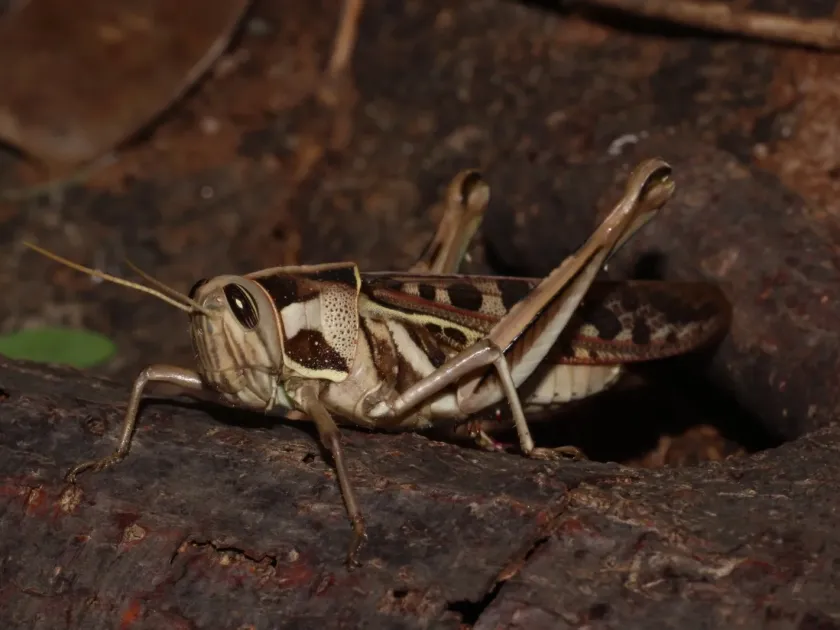
Cyrtacanthacris is a genus of large grasshoppers belonging to the family Acrididae. These insects are recognized for their robust body size, powerful hind legs, and fully developed wings, which enable them to travel long distances in search of suitable feeding grounds.
Adults typically exhibit earth-toned coloring, ranging from mottled brown to olive green, providing excellent camouflage in agricultural landscapes. Their physical structure is characterized by a prominent conical projection on the prosternum, a diagnostic feature used by entomologists to distinguish them from other orthopteran groups.
The life cycle of these pests involves several developmental stages, including egg, nymph, and adult. Females deposit eggs in the soil within protective cases known as pods, which are often laid in compact, sun-warmed areas suitable for embryonic development.
Growth occurs through successive molts, with nymphs gradually increasing in size and wing development. Environmental factors such as humidity and temperature play a critical role in determining the speed of development and the frequency of population outbreaks.
During favorable seasons, these insects can aggregate into large groups, displaying gregarious behavior that marks the beginning of a potential infestation event. Monitoring these aggregations early is essential for effective population suppression.
What it damages
Cyrtacanthacris acts as a generalist feeder, consuming a wide variety of plant species including cereals, legumes, vegetables, and fruit trees. This polyphagous nature allows them to shift between different crop hosts throughout the growing season.
The damage is primarily caused by the intensive defoliation of plants. Large populations can strip away leaf tissue, succulent stems, and reproductive structures such as flower buds and young fruits, leading to significant yield reduction.
Beyond direct physical consumption, the feeding process creates entry wounds that expose the plant to secondary pathogens. This often results in the spread of viral and fungal diseases that further weaken the crop, decreasing overall plant vitality.
In high-intensity agriculture, the economic damage caused by these insects can be catastrophic. Early-season infestations often result in reduced photosynthesis, which prevents the proper development of grains and fruits, impacting the harvest quality.
Producers must assess the potential risk based on the density of the pest population within their specific fields and surrounding vegetation buffers, as these insects can quickly move into agricultural zones from natural habitats.
Signs of infestation
A primary indicator of a Cyrtacanthacris infestation is the presence of uneven, ragged leaf edges. When populations are high, the plants may appear skeletonized, with only the major veins remaining on the leaves or stalks.
Direct sightings of the grasshoppers are common during the day, especially as they flush when disturbed by movement or farm machinery. The presence of large numbers of these insects jumping or flying in coordinated groups is a clear warning sign.
The accumulation of insect droppings (frass) on soil or leaf surfaces is another reliable signal of active feeding. This provides farmers with a visual indicator of where the population is most concentrated for targeted control measures.
Surveys of field borders and adjacent uncultivated land are crucial, as these areas often serve as reservoirs for nymphs before they migrate into the main crop. Early detection in these buffer zones allows for timely containment.
Additionally, signs of wilting in plants without obvious soil water stress can sometimes indicate that the crown or main vascular tissues have been damaged by insect feeding, causing a disruption in water transport.
Control measures
Effective management begins with agrotechnical practices such as deep tillage. By disturbing the soil in areas where egg pods are concentrated, farmers can destroy future generations before they even hatch.
Chemical control involving approved insecticides remains the most common response to major outbreaks. These applications should be timed carefully to reach the most susceptible stages of the insect's development while minimizing impact on non-target species.
Integrated Pest Management (IPM) strategies emphasize monitoring population thresholds before deciding to spray. Utilizing GPS and satellite mapping helps in locating infestation clusters, allowing for precise, localized applications that reduce the need for large-scale chemical coverage.
Biological control options, including the use of fungal pathogens like Metarhizium, are increasingly studied as sustainable alternatives. These biological agents can effectively reduce populations without leaving chemical residues on crops.
- Maintaining field sanitation to remove secondary hosts.
- Implementing crop rotation to disrupt insect life cycles.
- Cooperating with neighbors to manage landscape-level outbreaks.
- Regular scouting of margins during the early vegetative stages.
Taxonomy
- Latin name
- Cyrtacanthacris
- Order
- Orthoptera (locusts)
- Family
- Acrididae
- EPPO code
- CYRHSP
Discussion
No discussions yet — be the first.