
Mirror carp
Cyprinus specularis
Description
How to identify
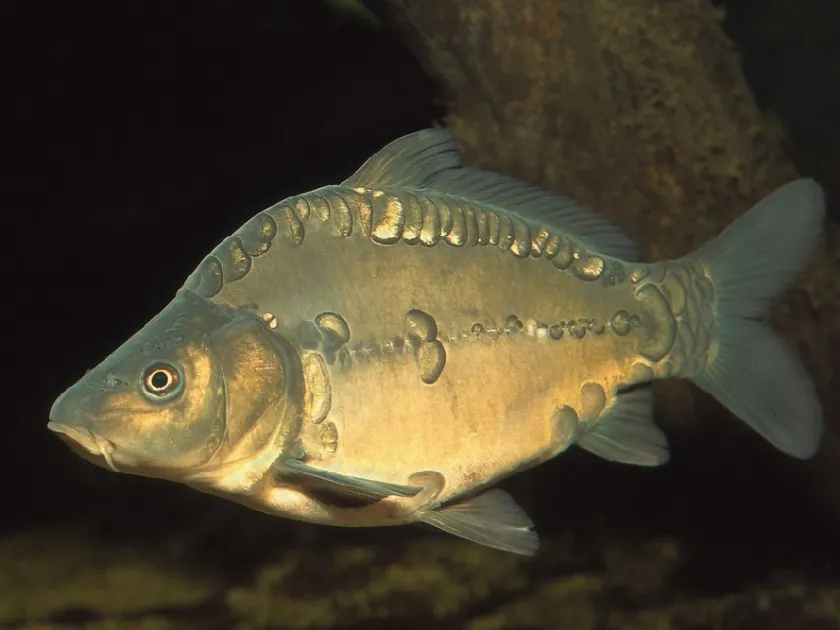
The mirror carp (Cyprinus specularis) is a cultivated variety of the common carp, characterized by large, scattered scales along its body and an otherwise smooth, scaleless skin. It belongs to the family Cyprinidae in the order Cypriniformes.
This fish is known for its rapid growth rate and high adaptability to various aquatic environments, which allows it to thrive in irrigation ditches and flooded agricultural fields.
Morphologically, it is a sturdy fish with a deep body shape, making it highly mobile and capable of navigating through shallow water systems used in paddy fields.
While often farmed for food, its presence in agricultural water systems is considered problematic due to its foraging behavior and significant biomass.
Its biological cycle is characterized by a high consumption rate of available organic matter, including both animal and plant-based food sources.
What it damages
The primary agricultural damage is caused by the carp grazing on young rice sprouts and other delicate aquatic crops, leading to significant yield loss.
By constantly rooting in the bottom sediments, the mirror carp increases water turbidity, which blocks sunlight and inhibits the photosynthesis of submerged plants.
The fish frequently destroys the root systems of hydroponic crops, especially in setups integrated with open water reservoirs or irrigation systems.
Secondary damage occurs through the erosion of channel banks and levees, as the fish digs into the soil, causing water leaks and field drainage issues.
The depletion of helpful algae and microorganisms that naturally enrich the paddy soil is another long-term negative effect of their presence.
When it appears
The carp becomes active as water temperatures rise in early spring, marking the start of the feeding season after winter dormancy.
The peak period of damage coincides with the planting season, as young seedlings are particularly vulnerable to consumption by foraging fish.
Throughout the summer, the fish maintains a high metabolic rate, requiring constant feeding that keeps the water agitated and turbid.
As autumn approaches, feeding continues as the fish prepares for winter, further damaging any residual vegetation in the agricultural system.
Temperature thresholds between 18°C and 25°C trigger the most intensive feeding cycles, causing maximum damage to irrigation systems and flooded crops.
Signs of infestation
Increased water turbidity in irrigation canals is the most prominent indicator that mirror carp are actively foraging on the bottom.
Visible damage to rice stems or leaves, showing frayed or cleanly cut edges, often indicates that fish have been feeding on the vegetation.
The presence of craters or hollows on the bed of irrigation channels is a sign of intense bottom-feeding activity by large mirror carp individuals.
Structural integrity issues in field levees, such as unexpected breaches or tunnels under the soil, are clear signs of pest activity.
Visual confirmation of fish activity, including tail-slapping or surface disturbance, is frequently reported during the early morning hours.
Control measures
Installing fine-mesh screens at the inlet points of irrigation channels acts as a critical physical barrier to prevent the entry of fish.
Regular maintenance of irrigation systems, including the cleaning and strengthening of banks, reduces the likelihood of fish causing structural damage.
Active population control through systematic trapping or netting in the supply canals helps to keep fish numbers at a manageable level.
Adjusting water levels in fields can be used as a management tactic to discourage the movement of carp into sensitive agricultural zones.
The use of sound-based deterrents may be employed to drive the fish away from specific high-value areas of the agricultural plot.
Taxonomy
- Latin name
- Cyprinus specularis
- Family
- Cyprinidae
- EPPO code
- CYPNSE
Discussion
No discussions yet — be the first.