
Common carp
Cyprinus carpio
Description
How to identify
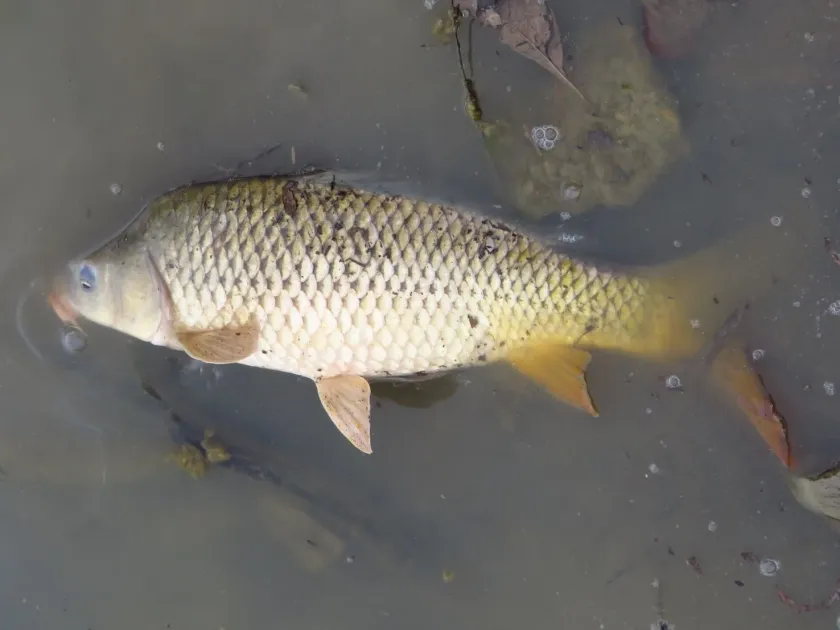
The common carp (lat. Cyprinus carpio) belongs to the order Cypriniformes and the family Cyprinidae. It is a large freshwater fish characterized by a robust, scaled body and two pairs of barbels at the corners of its mouth.
Biologically, the carp is adapted to slow-moving or stagnant waters with silty bottoms. In an agricultural context, it is considered a pest when it invades irrigation systems or fields intended for crop cultivation.
The lifecycle of the carp is dependent on water temperature, with spawning occurring when water reaches 18–20 degrees Celsius. This reproductive strategy allows them to colonize flooded agricultural lands rapidly.
Identification in agricultural settings usually involves observing turbidity and signs of soil disturbance. Carp are bottom feeders that stir up sediment, which is a clear indicator of their presence.
From an agronomical standpoint, carp act as a destructive biological agent that interferes with the controlled environment required for optimal rice production and other water-based crops.
What it damages
The primary damage occurs in rice paddies where carp forage for benthic organisms. By digging into the substrate, they physically dislodge and uproot young rice seedlings, leading to sparse plant stands.
Water turbidity caused by carp activity significantly inhibits photosynthesis in submerged plants. The suspended sediments block sunlight, preventing the rice from accessing the energy needed for healthy growth.
Carp are known to undermine dams and levees in irrigation networks. By burrowing into the banks, they cause structural instability, leading to water leakage and the loss of critical water depth in the fields.
The erosion of irrigation infrastructure results in economic loss due to increased water consumption and the need for frequent repairs to maintain proper hydraulic management of the farm.
Furthermore, their presence promotes the uneven distribution of nutrients and organic matter, which can favor the growth of invasive algae that compete with agricultural crops for essential resources.
When it appears
The peak activity of this pest occurs during the spring and summer, which coincides with the critical phases of rice planting and the early growth stage of the crop.
As fields are flooded for cultivation, adult carp migrate from main canals into the paddy fields to spawn and search for food, representing a constant threat to the newly planted crop.
Throughout the summer months, high water temperatures increase the fish's metabolic rate, resulting in more aggressive bottom-disturbing behavior and increased physical damage to the field substrate.
By the time autumn arrives and water temperatures drop, the primary damage to the crops is typically done. However, the structural damage to the field's irrigation levees often persists.
Monitoring efforts should be most intense during the initial flooding of the paddies to prevent the entry of carp and mitigate the risks to the agricultural yield.
Control measures
The most effective protective measure is the installation of fine-mesh screens and grids at irrigation intakes to block adult fish from entering the crop fields.
Proper water management and the use of sluice gates can help isolate aquaculture zones from crop fields, ensuring that fish populations remain separate from sensitive plant environments.
Structural integrity of levees is essential. Utilizing synthetic geomembranes or reinforced embankments can prevent carp from burrowing and maintain the stability of the water distribution system.
Integrated farm management should include periodic checks and maintenance of canals to identify and remove fish before they reach the paddies during the crucial planting season.
In some cases, controlled drying of fields or specific drainage schedules can be used to manage fish populations and minimize the damage to the irrigation and production infrastructure.
Taxonomy
- Latin name
- Cyprinus carpio
- Family
- Cyprinidae
- EPPO code
- CYPNCA
Discussion
No discussions yet — be the first.