
Common carp
Cyprinus
Description
How to identify
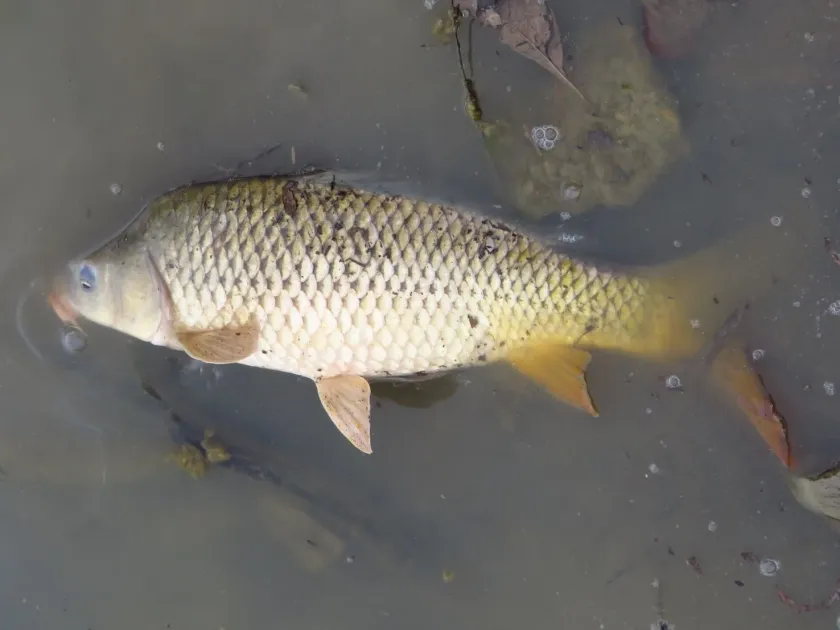
The common carp (Cyprinus carpio) is a member of the Cyprinidae family and is a robust freshwater fish.
Characterized by a heavy body and scales, it has a specialized snout and mouthparts used for rooting in substrate.
This species is highly adaptable to various environmental conditions, including shallow and warm stagnant water found in rice fields.
Systematically, it belongs to the order Cypriniformes, and is recognized for its omnivorous feeding behavior.
The fish is capable of surviving in low-oxygen environments, making rice paddies an ideal, if problematic, habitat.
What it damages
The primary agricultural damage is caused by the carp's habit of rooting in the soil in search of aquatic organisms and nutrients.
This rooting activity effectively dislodges young rice seedlings, often causing them to float to the surface and perish.
In addition to destroying seedlings, the fish increases water turbidity, blocking essential sunlight from reaching the submerged parts of the rice plant.
Damage to the structural integrity of irrigation dams and levees is a secondary but significant economic impact.
At high population densities, the common carp can devastate entire sections of rice production during the early establishment phase.
When it appears
The threat period begins immediately upon flooding the rice fields and sowing the rice seeds.
The most critical window is the initial growth phase, usually occurring in late spring and early summer.
As summer temperatures rise, the metabolism and feeding activity of the carp increase, leading to intensified damage to the crops.
By late summer, the rice crop usually reaches a stage of development where the damage caused by rooting fish is significantly reduced.
The pressure from the carp concludes once the fields are drained in preparation for the harvest season.
Signs of infestation
The most evident sign is the appearance of bare patches within the flooded rice fields where vegetation has been completely uprooted.
Turbid, muddy water that fails to clear indicates heavy fish activity in the substrate of the paddy.
Physical damage to the earthen mounds, such as tunnels or breaches in the field boundaries, confirms the presence of larger individuals.
Floating plant debris and dislodged roots on the surface are telltale signs of recent foraging by the carp.
Disturbed soil patterns, such as shallow pits or furrows on the bed of the field, reflect the fish’s feeding paths.
Control measures
The installation of mesh screens or physical barriers at water inlets is essential to prevent carp from entering rice paddies.
Regular maintenance and inspection of irrigation banks are required to prevent leaks caused by the fish digging.
Pre-flooding management involves clearing water distribution systems to ensure no carp are present in the supply lines.
In cases of integrated systems, precise control of population density is required to balance aquaculture benefits with crop safety.
- Proper compaction of earthen levees to resist burrowing.
- Early-season monitoring of rice establishment.
- Draining fields strategically to minimize fish residency time.
Taxonomy
- Latin name
- Cyprinus
- Family
- Cyprinidae
- EPPO code
- CYPNSP
Discussion
No discussions yet — be the first.