

Description
How to identify
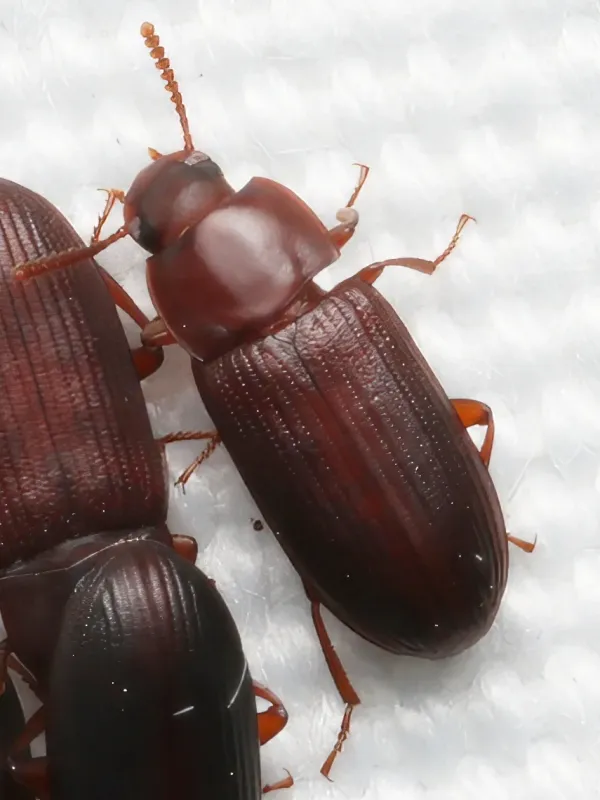
Cynaeus angustus, commonly known as the larger black flour beetle, belongs to the family Tenebrionidae and is a significant pest of stored grain products.
Adult beetles are elongated, measuring about 3 to 4 mm in length, and typically exhibit a reddish-brown to dark brown coloration with a slight sheen on the surface.
A key identifying feature is their club-shaped antennae, which are composed of three distinct segments at the tip, distinguishing them from other similar stored product beetles.
The larvae are whitish to yellowish with two small, serrated urogomphi on the last abdominal segment, reaching a size of approximately 5-6 mm before pupation.
These insects are highly mobile and are known to be capable fliers, which allows them to infest new storage facilities rapidly and propagate within favorable environments.
What it damages
The primary hosts for Cynaeus angustus include stored grains like corn and wheat, as well as processed food products such as flour, bran, and various dry feeds.
Both adult beetles and larvae feed on the product, causing significant physical damage and reducing the nutritional value and mass of the stored grain.
They contribute to the contamination of grain stocks with their waste products, larval exuviae (cast skins), and dead individuals, which compromises the hygienic safety of the food.
Feeding activity often leads to the heating of the grain mass, creating a moist environment that encourages the rapid growth of molds, yeasts, and toxic fungi.
Economic losses are compounded by the necessity of discarding contaminated batches, leading to serious financial impact for grain handlers and feed manufacturers.
When it appears
Cynaeus angustus thrives in warm, humid conditions, with the most significant population growth occurring during the summer months when temperatures are optimal.
In temperature-controlled storage facilities, warehouses, or processing plants, these beetles can maintain continuous breeding cycles throughout the year regardless of the season.
Cold temperatures in unheated structures significantly slow down their biological development, though the pest can survive in wall cracks, floor crevices, and equipment gaps.
Infestation cycles are usually more intense during late summer and early autumn when migrating adults seek out fresh grain storage units for wintering.
The rate of infestation is highly dependent on grain moisture content; higher moisture levels significantly accelerate the reproductive rate of the population.
Signs of infestation
The presence of Cynaeus angustus is first indicated by the sighting of small, reddish-brown beetles crawling on the surface of grain piles or near containers.
Infested flour or milled products often exhibit clumping caused by silk webbing produced by larvae and the accumulation of fine powder-like excrement.
A distinct, musty, or foul odor emerging from the grain storage indicates advanced infestation and the onset of decay or localized heating of the product.
Visual inspection of corners, seams in silos, and along warehouse walls using flashlights often reveals the beetles in their hiding spots.
- Adult beetles found in samples or on surfaces.
- Larval presence within the stored grain mass.
- Noticeable darkening of the grain or flour.
- Dusty debris accumulating around storage bags.
- Localized warm spots detected by temperature sensors.
Control measures
Sanitation is the most critical control measure: thorough cleaning of warehouses, removal of all grain debris, and ensuring no residual stock remains between seasons.
Temperature management is vital; keeping grain cool and dry is a highly effective way to inhibit the reproduction and development of the pest population.
Proactive monitoring using pheromone traps or sticky traps helps in detecting early infestations before they reach levels requiring chemical intervention.
In cases of severe infestation, fumigation of the grain and the storage structure using authorized, safe chemicals is required to eliminate the pest completely.
Regular maintenance of the facility to seal structural cracks and gaps prevents the entry of adults and makes it more difficult for the pest to colonize the area.
Content graph
Connections · Cynaeus angustus
Most often together:
Marketplace
Products · 1
Biology
Taxonomy
- Latin name
- Cynaeus
- Order
- Coleoptera (beetles)
- Family
- Tenebrionidae
- EPPO code
- CYNASP
Community
Discussion
No discussions yet — be the first.