
Poultry lice
Cuclotogaster heterographus
Description
How to identify
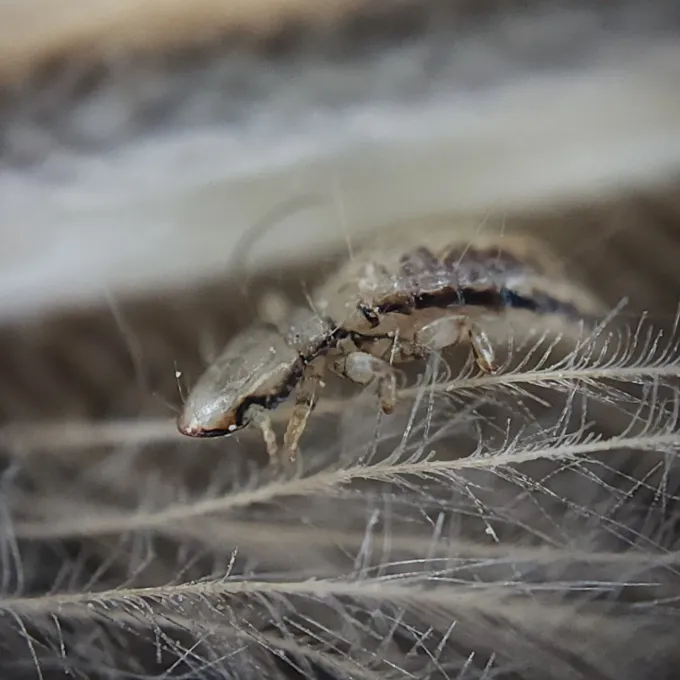
Poultry lice (Cuclotogaster heterographus) belong to the order Mallophaga and family Philopteridae. They are small, wingless, dorso-ventrally flattened insects that live exclusively on the body of the host.
Adult specimens typically measure 2 to 3 mm in length and possess a yellowish-brown color. A distinctive feature is their wide, robust head, which is equipped with powerful mandibles designed for chewing.
The entire life cycle of Cuclotogaster heterographus occurs on the bird. They are obligate parasites and cannot survive long periods away from the host, usually dying within a week if separated.
The reproduction cycle is rapid. Females glue their eggs (nits) to the barbs of the feathers, primarily around the head and neck area, which is difficult for the bird to reach for preening.
The life cycle from egg to mature adult can be completed in approximately 3 to 4 weeks under ideal conditions, which explains why infestations can spread very quickly across a flock.
What it damages
These parasites affect chickens, turkeys, and occasionally other poultry. Unlike blood-feeding mites, poultry lice feed on skin debris, feather components, and epithelial secretions.
The damage caused is primarily related to intense irritation and skin discomfort. Birds suffering from heavy infestation become restless, preen excessively, and show signs of severe stress.
In young birds, the physical toll of infestation can result in stunted growth, weight loss, and general lethargy. The constant itching prevents the birds from resting or feeding properly.
Egg production in laying hens frequently drops due to the stress factor, impacting the overall profitability of the poultry farm.
Furthermore, persistent scratching and pecking at the skin to alleviate itching often lead to localized dermatitis and susceptibility to secondary infections.
Signs of infestation
The most common sign of infestation is an increase in restless behavior. Affected birds will be seen constantly preening, ruffling their feathers, or shaking their heads violently.
Close examination of the skin, particularly near the feather follicles on the neck, head, and under the wings, will reveal clusters of lice or their white, oval-shaped eggs stuck to the base of the feathers.
A dull, ragged, or damaged appearance of the feathers is a strong indicator of a long-term infestation, as the lice continuously consume the plumage material.
In severe cases, the skin may appear inflamed or raw due to self-inflicted injuries caused by the bird's efforts to reach the parasites.
A decrease in feed conversion efficiency despite stable intake levels is another critical sign for farmers to monitor during regular flock health inspections.
Control measures
Effective management requires a two-pronged approach: treating the infested birds directly and maintaining high sanitary standards within the housing area.
- Apply approved insecticidal treatments such as dusts, sprays, or spot-on solutions specifically labeled for poultry use.
- Thoroughly clean and disinfect the poultry coop, removing all old bedding where parasites or eggs might reside.
- Provide access to dust baths, as these are a natural and effective way for poultry to keep louse populations under control.
- Implement strict quarantine protocols for any new birds entering the farm to prevent the introduction of parasites.
Always repeat treatment cycles according to product instructions, usually about two weeks later, to kill any new lice that have hatched from eggs since the initial application.
Taxonomy
- Latin name
- Cuclotogaster heterographus
- Family
- Philopteridae
- EPPO code
- CUCLHE
Discussion
No discussions yet — be the first.