
Eucalyptus psyllid
Ctenarytaina spatulata
Description
How to identify
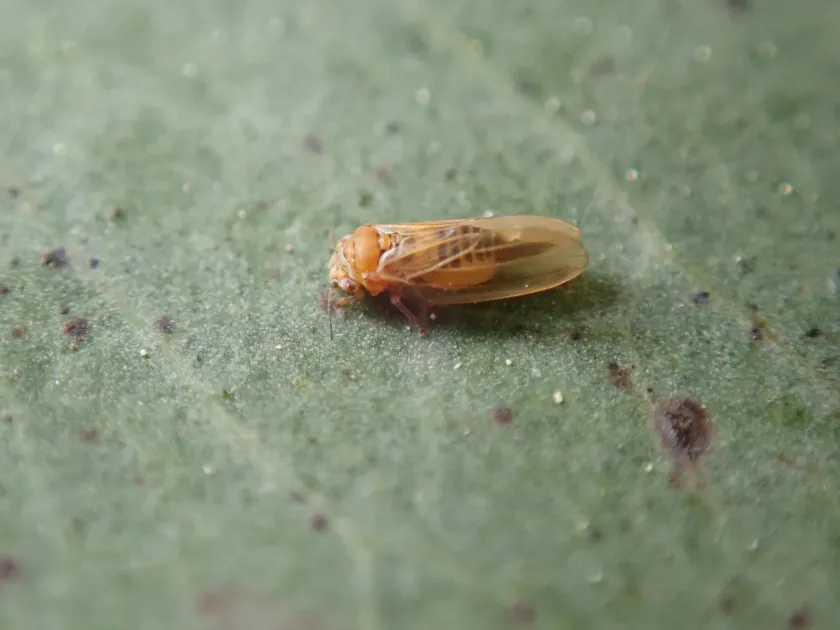
The eucalyptus psyllid (Ctenarytaina spatulata) is a member of the family Psyllidae, order Hemiptera. These small, jumping insects typically measure between 2 to 3 mm in length.
Adults exhibit cryptic coloration, ranging from light yellow to deep brown, allowing them to blend perfectly with the bark and foliage of their host trees.
The nymphs are distinct from adults, appearing flattened and often secreting waxy, white threads that act as a protective covering during their developmental stages.
The insect undergoes incomplete metamorphosis, consisting of egg, nymph, and adult stages, often completing several generations within a single growing season.
Originally native to Australia, this pest has successfully spread to various global regions where eucalyptus is cultivated, largely due to the movement of nursery stock.
What it damages
This pest feeds exclusively on species of eucalyptus, showing a strong preference for tender young foliage and succulent new growth on the tree branches.
Both adults and nymphs pierce the leaf surface with their specialized mouthparts to extract plant sap, directly depriving the tree of essential nutrients.
Severe infestations cause significant distortion of leaves and terminal shoots, essentially stunting the plant's ability to grow at a healthy rate.
Beyond direct physical damage, the constant feeding causes stress, making trees more susceptible to environmental factors and secondary infections.
In ornamental nurseries, the presence of these psyllids drastically reduces the market quality of saplings, leading to significant economic losses for growers.
When it appears
The life cycle and population density of the eucalyptus psyllid are closely tied to the availability of new, succulent growth on the eucalyptus host plants.
Under favorable climatic conditions, particularly in temperate regions, the pest can reproduce continuously, sustaining multiple generations year-round.
Activity levels typically peak during spring and early summer when the trees produce the most abundant new leaf growth suitable for nymphal feeding.
Temperature fluctuations significantly influence the speed of development, with warmer conditions generally shortening the time between the egg and adult stages.
Regular monitoring using yellow sticky traps is a standard practice for nursery managers to detect the arrival of winged adults before a widespread outbreak occurs.
Signs of infestation
The most immediate symptom of a psyllid infestation is the curling and abnormal twisting of new leaves as they emerge from the terminal buds.
Sticky honeydew is frequently excreted by the insects, creating a medium for the subsequent growth of black sooty mold on the leaf surfaces.
The presence of white, cotton-like waxy secretions on the underside of leaves or on stems is a definitive diagnostic indicator of nymphal activity.
When the foliage is disturbed, adult psyllids are often seen jumping rapidly, which helps in identifying the presence of a live population in the canopy.
- Deformed and curled tender leaves.
- Visible white waxy filaments on stems.
- Accumulation of sticky honeydew.
- Development of black sooty mold.
- Reduced vigor and stunted shoot development.
Control measures
Integrated pest management (IPM) for this species often involves the release of biological control agents, such as specific parasitic wasps or predatory bugs.
Systemic insecticides may be necessary during severe outbreaks, as they are absorbed into the plant vascular system to target the nymphs feeding in protected areas.
Strict quarantine measures on nursery stock are vital to prevent the unintentional introduction of this pest into new growing areas or protected environments.
Pruning and safely disposing of heavily infested terminal growth can significantly reduce the pest population in smaller landscapes or ornamental garden settings.
Horticultural oils or insecticidal soaps can be effective when applied precisely, helping to suppress populations while remaining relatively gentle on the ecosystem.
Taxonomy
- Latin name
- Ctenarytaina spatulata
- Order
- Hemiptera (bugs, aphids, leafhoppers)
- Family
- Aphalaridae
- EPPO code
- CTNRST
Discussion
No discussions yet — be the first.