
Eucalyptus psyllid
Ctenarytaina bipartita
Description
How to identify
The Eucalyptus psyllid (Ctenarytaina bipartita) is a small sap-sucking insect belonging to the family Psyllidae. Often referred to as "jumping plant lice," these insects are major pests that specifically target various Eucalyptus species.
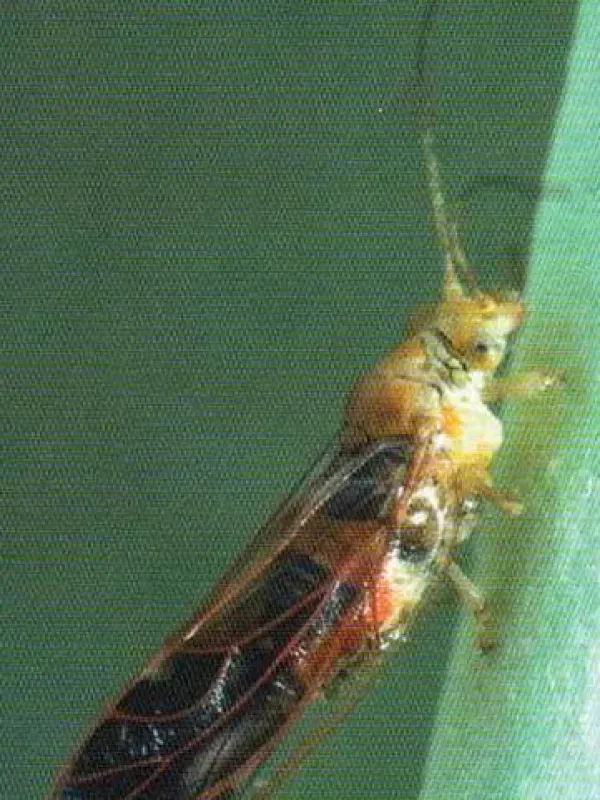
Adult psyllids are very small, usually measuring only a few millimeters in length. They are characterized by their powerful hind legs, which enable them to jump quickly when disturbed, and their clear, veined wings.
The nymph stage is arguably the most recognizable phase due to the production of white, flocculent wax. This secretion covers the nymphs, providing them with a protective, cotton-like camouflage against predators and harsh environmental conditions.
The life cycle involves incomplete metamorphosis, meaning the nymphs resemble miniature versions of the adults but lack functional wings. Development is rapid, especially during warmer months, leading to multiple generations per year.
Identification often relies on spotting the waxy, cottony masses on new growth rather than the insects themselves, as the adults are mobile and often fly away before being noticed.
What it damages
Damage is caused by both adults and nymphs, which insert their stylets into the soft, succulent tissues of young eucalyptus shoots. By feeding directly on the phloem, they deplete the tree of essential nutrients and fluids.
As the insects feed, they inject saliva into the plant, which can induce severe localized reactions. This frequently results in the curling, distortion, and yellowing of the leaves, hindering the tree's ability to perform photosynthesis.
The constant drain of plant sap leads to stunted growth, especially in young saplings and ornamental trees. If left unchecked, persistent infestations can cause dieback of the terminal shoots and overall weakening of the tree's vigor.
The secretion of honeydew as a byproduct of feeding creates an ideal environment for sooty mold fungi to colonize the foliage. This black, powdery-looking mold further interferes with light absorption by the leaves.
Severe infestations can lead to premature leaf drop and, in extreme cases, the death of entire branches. This significantly impacts the aesthetic value of the trees and their health in nursery and landscape settings.
When it appears
The seasonal activity of the Eucalyptus psyllid is closely synchronized with the flush of new growth on the eucalyptus trees. In warmer climates, populations can remain active and reproductive throughout the year.
Spring is typically the period of highest activity, as rising temperatures coincide with the flush of young, tender leaves. This period provides an abundance of food, allowing psyllid populations to explode rapidly.
During the peak of summer, if temperatures are extremely high, development may temporarily slow down. However, trees that are irrigated or in slightly cooler microclimates continue to support high numbers of the pest.
Autumn often sees a resurgence in activity, as temperatures moderate and trees put on a second flush of growth. This allows the population to build up reserves before the onset of winter.
In colder regions, psyllids may enter a state of dormancy or reduced activity during the winter months, hiding in bark crevices or protected spots on the tree, waiting for the return of favorable growth conditions.
Signs of infestation
The presence of white, woolly, or cotton-like material on the youngest leaves and stems is the most obvious sign of an infestation. These are the protective coatings produced by the psyllid nymphs.
Deformed, twisted, or curled leaves on the tips of branches are common symptoms. The leaves may appear stunted and exhibit a yellowish, chlorotic discoloration due to nutrient extraction by the feeding insects.
Sticky honeydew residues on the foliage or the ground beneath the tree are telltale signs. Over time, this sticky substance turns black as sooty mold begins to grow on it, giving the tree a dirty appearance.
Dieback or the death of terminal buds is another serious indicator of a long-term infestation. When the tips of branches start turning brown and brittle, it suggests the population has already caused significant physiological damage.
Visual observation of tiny, winged insects jumping from the foliage when the branches are gently tapped confirms the presence of the adults, indicating that the population is actively breeding.
Control measures
Systemic insecticides, particularly those containing imidacloprid, are highly effective as they move through the tree's vascular system. This ensures the insect is exposed to the poison while feeding on the sap.
Biological control plays a significant role in managing psyllid populations. Encouraging the presence of natural predators, such as ladybird beetles (ladybugs) and various parasitic wasps, can help keep numbers below economic thresholds.
Pruning out heavily infested shoots and disposing of them away from the site is a practical management strategy. This helps reduce the immediate pest load and promotes better airflow within the canopy.
Avoid excessive nitrogen fertilization, which forces the tree to produce large amounts of succulent new growth. Since this growth is the primary target for psyllids, reducing it can make the tree less attractive to the pests.
- Monitor plants frequently using yellow sticky traps to detect early outbreaks.
- Use horticultural oils to suffocate nymphs, which are sensitive to direct contact.
- Ensure adequate irrigation to keep trees robust and resistant to sap-sucking damage.
Taxonomy
- Latin name
- Ctenarytaina bipartita
- Order
- Hemiptera (bugs, aphids, leafhoppers)
- Family
- Aphalaridae
- EPPO code
- CTNRBI
Discussion
No discussions yet — be the first.