
Eucalyptus psyllid
Ctenarytaina
Description
How to identify
The Eucalyptus psyllid (genus Ctenarytaina) belongs to the Aphalaridae family in the order Hemiptera. These are tiny, jumping insects that resemble miniature cicadas.
Adult insects are typically 2-3 mm long. Their coloration ranges from pale yellow to dark brown, which helps them camouflage against the leaves and stems of host plants.
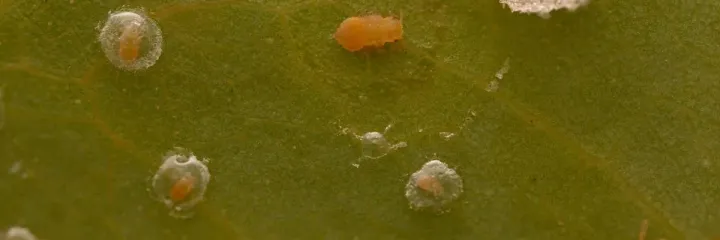
The larvae are particularly recognizable by the white, waxy secretions they produce, which cover their bodies and protect them from predators and environmental stress.
Species such as Ctenarytaina eucalypti and Ctenarytaina spatulata are recognized as major pests that have spread globally wherever eucalyptus is cultivated.
They are primarily found in the terminal buds and on the young foliage, where they feed by piercing the plant tissues and extracting sap.
What it damages
The Eucalyptus psyllid targets various species of eucalyptus, causing significant stress to trees in both plantation and ornamental settings.
Damage is most severe on young saplings, where intensive feeding can lead to stunted growth, distortion, and in extreme cases, the death of the terminal shoot.
The insects extract plant sap, causing the leaves to curl, yellow, and drop prematurely, which weakens the overall health of the tree.
Feeding at the growing points results in excessive branching or "witches' broom" formation, which ruins the structural integrity and aesthetic value of the trees.
The honeydew excreted by the psyllids promotes the growth of sooty mold, which blocks sunlight and interferes with the plant's photosynthetic capacity.
When it appears
The life cycle of the Eucalyptus psyllid is highly dependent on climate conditions. In warm regions, the pest can reproduce continuously throughout the year.
Egg-laying activity is synchronized with the flush of new growth on the eucalyptus, providing abundant food for the developing larvae.
During the spring and summer months, populations grow rapidly as temperatures reach optimal levels for the insect's development.
Multiple generations can be produced within a single season, leading to high population densities if left unmanaged.
In cooler climates, development slows down, but adults can survive in sheltered areas, waiting for favorable conditions to return.
Signs of infestation
The most reliable sign of an infestation is the presence of white, cotton-like wax accumulations on the tips of new shoots and tender leaves.
Curled, twisted, or discolored foliage is a clear indication that the plant is under attack by sap-sucking insects.
Black sooty mold covering the surface of leaves and stems often points to a heavy infestation and the presence of honeydew-producing psyllids.
The cessation of growth or the dieback of terminal buds is a critical symptom that indicates extensive damage to the tree's vascular system.
A simple visual inspection of the newest leaves usually reveals the presence of adult psyllids or their wax-covered larvae.
Control measures
Effective management requires an integrated approach, utilizing chemical, cultural, and biological control methods to suppress the pest population.
Systemic insecticides are the preferred choice for controlling larvae because they are absorbed by the plant and target the insects hidden under the waxy secretions.
Integrated Pest Management (IPM) practices should involve rotating different classes of insecticides to prevent the development of resistance.
- Monitoring populations with yellow sticky traps to determine the best timing for treatment.
- Pruning and destroying heavily infested branches to reduce the pest load.
- Releasing biological control agents, such as parasitic wasps, in controlled environments.
Maintaining vigorous plant health through proper fertilization and watering helps trees withstand and recover from psyllid attacks.
Taxonomy
- Latin name
- Ctenarytaina
- Order
- Hemiptera (bugs, aphids, leafhoppers)
- Family
- Aphalaridae
- EPPO code
- CTNRSP
Discussion
No discussions yet — be the first.