
Cryptoneossa triangula
Cryptoneossa triangula
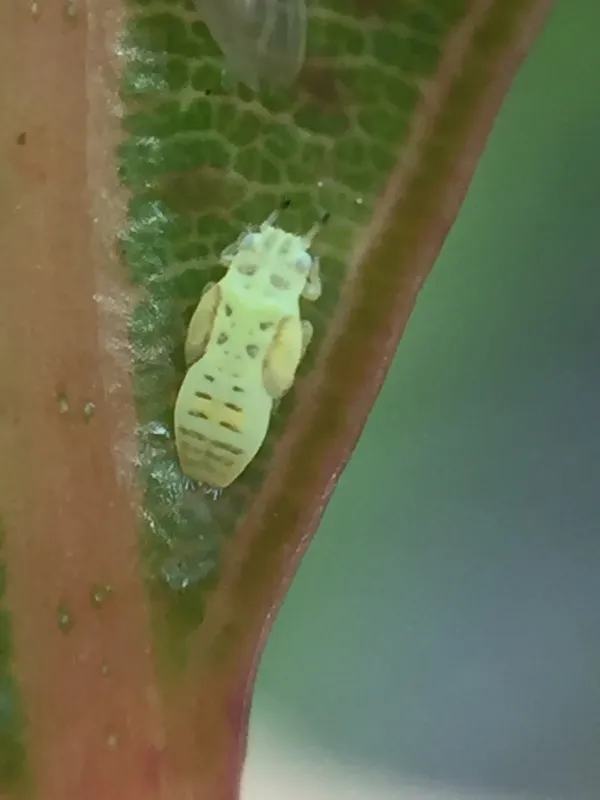
Description
How to identify
Cryptoneossa triangula is a species of psyllid belonging to the family Psyllidae within the order Hemiptera. These insects are specialized sap-sucking pests that have evolved to live on specific host plants.
Adults are small and characterized by a body shape that allows them to blend in with the leaves of their host trees. This crypsis makes them extremely difficult to detect during the early stages of an infestation.
The life cycle involves several nymphal stages. Nymphs often produce waxy, protective secretions that serve as a defense mechanism against predators and environmental stress.
Taxonomically, this species is closely associated with Eucalyptus hosts. Its survival depends on the specific nutritional chemistry of the eucalyptus foliage, which dictates its distribution.
Environmental conditions, particularly temperature and humidity, play a critical role in the population dynamics of the species, driving the timing and intensity of outbreaks.
What it damages
The primary hosts for Cryptoneossa triangula are species of the genus Eucalyptus. The pest targets tender young shoots and leaves where sap is most abundant.
By feeding on the plant tissue, the pest disrupts the photosynthetic activity of the leaves. This leads to reduced carbon assimilation and general physiological stress to the tree.
High levels of infestation cause significant leaf deformation, yellowing, and premature senescence. In nurseries, this can lead to high mortality rates among young saplings.
Continuous feeding pressure makes trees more susceptible to secondary attacks from other insects and fungal diseases, further compromising tree vigor.
The economic impact of this pest is notable in forestry and ornamental cultivation, where eucalyptus trees are highly valued for their timber or landscape aesthetics.
Signs of infestation
The most common sign of infestation is the curling and distortion of leaf blades. This deformation is a direct result of the feeding and injecting of salivary substances into the plant.
Heavy infestations are accompanied by honeydew production, which creates a sticky surface. This substrate often encourages the growth of sooty mold, which blocks light and hinders photosynthesis.
Ant activity on the branches is a frequent indicator of a psyllid infestation. Ants are attracted to the honeydew and often act as guardians for the nymphs, preventing predators from accessing them.
Premature leaf drop is a classic symptom of a severe infestation. Close inspection of the undersides of the leaves reveals the presence of nymphs and their characteristic waxy protective structures.
Exuviae, the discarded exoskeletons from molting, are often left behind on the leaf surface. These remnants are a clear diagnostic feature for identifying the presence of this specific psyllid.
Control measures
Managing Cryptoneossa triangula requires an integrated pest management (IPM) approach. Regular monitoring of the canopy is essential to catch early signs of population growth.
Systemic insecticides are the most effective chemical control method. These products are taken up by the tree, providing long-lasting protection against the sap-sucking insects.
Biological control focuses on utilizing natural predators such as lacewings, lady beetles, and parasitoid wasps. Maintaining a diverse ecosystem around the trees encourages these beneficial insects.
Cultural practices, such as proper irrigation and maintaining optimal plant health, significantly improve the tree's resilience. Avoiding overly dense plantings can also reduce the spread of the pest.
- Regular visual inspections of the foliage during spring.
- Selective pruning of heavily infested branches to reduce local populations.
- Application of targeted systemic insecticides when necessary.
- Promotion of natural enemy habitats to suppress population outbreaks.
Taxonomy
- Latin name
- Cryptoneossa triangula
- Order
- Hemiptera (bugs, aphids, leafhoppers)
- Family
- Aphalaridae
- EPPO code
- CNSSTR
Discussion
No discussions yet — be the first.