
Improbana leaf miner
Coscinoptycha improbana
Description
How to identify
The Improbana leaf miner (Coscinoptycha improbana) belongs to the order Lepidoptera, family Tortricidae. This pest is characterized by a specific lifestyle where larvae feed within plant tissues, creating tunnels known as mines.
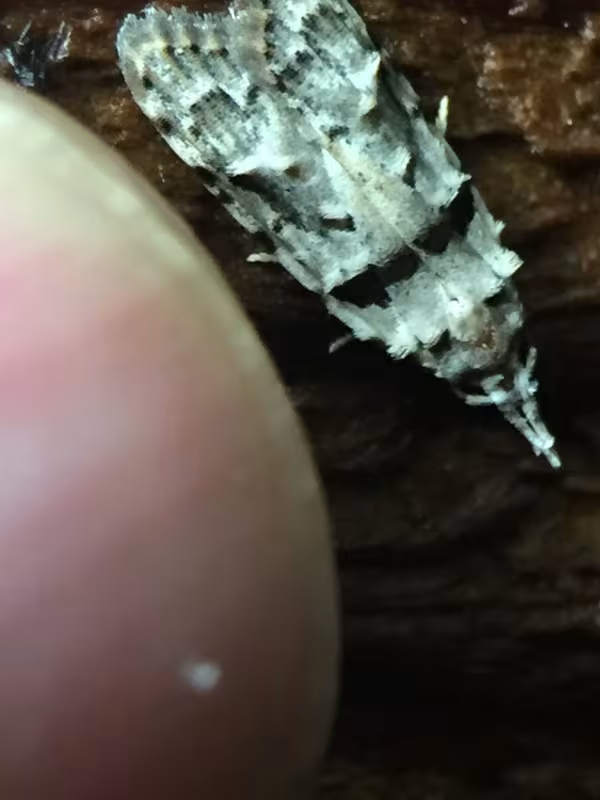
The adult is a small moth with a wingspan of approximately 15–20 mm. Its wing coloration ranges from gray-brown to ochre, featuring patterns that provide effective camouflage on the bark or leaves of its host plant.
Females typically deposit eggs on the underside of leaves or on young shoots. The life cycle consists of the egg, larva (caterpillar), pupa, and adult stages, typical of insects undergoing complete metamorphosis.
Larvae develop through several instars, feeding actively throughout the larval stage. They possess developed chewing mouthparts, enabling them to easily penetrate the leaf epidermis and parenchyma.
Pupation usually occurs within the leaf mine, in the topsoil, or within rolled leaves, depending on ambient temperature and humidity levels.
What it damages
The primary host for this pest is ginger (Zingiber officinale), though other members of the Zingiberaceae family may also be affected. Infestations cause significant yield losses in commercial rhizome production.
Larvae bore into the base of the stem or the leaf blade, disrupting normal photosynthetic processes. Over time, the plant loses vigor, turns yellow, and can succumb to mass infestations.
The pest damages both young seedlings and mature plants during active growth. In plantation settings, high population density can lead to a reduction of up to 30–50% in total ginger yields.
While root damage is indirect, the suppression of the plant's aerial parts leads to rhizome depletion. This reduces commercial quality, weight, and shelf life due to a compromised immune system.
Additional damage occurs as entry points created by the pest facilitate the invasion of fungal and bacterial pathogens, leading to rot that can spread rapidly throughout the plantation.
Signs of infestation
The first sign of infestation is the appearance of light, winding trails (mines) on leaves, which darken and dry out over time. In severe cases, the leaf blade curls and twists.
Holes may appear on stems where larvae have burrowed into the tissue. Frass (excrement) is often visible near entry holes or on the leaf surface.
Stunted growth and wilting of the plant tops are common symptoms. If a curled leaf is unrolled, the larva can often be found inside, exhibiting sudden movements when disturbed.
Moths are active at dusk and dawn; monitoring during these times can reveal their presence. Population surges are often associated with warm, humid weather conditions.
General wilting of ginger clusters that does not respond to watering is a reliable indicator that larvae are feeding within the plant stems or foliage.
Control measures
The primary control method involves regular plantation monitoring using pheromone traps to identify the onset of adult moth flight. This allows for timely chemical or biological interventions.
Agronomic control measures include deep autumn plowing or tilling between rows after harvest to destroy overwintering pupae in the soil. Maintaining crop rotation and avoiding monoculture is essential for long-term management.
For chemical protection, systemic insecticides are recommended. Applications are most effective when larvae hatch from eggs, before they have fully embedded themselves within the plant tissues.
Biological products based on Bacillus thuringiensis are effective against young larvae. Encouraging natural parasitoid wasps can also help keep population levels in check under field conditions.
- Removal and destruction of infested plant debris.
- Use of certified, disease-free planting material.
- Timely weeding to eliminate alternative host reservoirs.
Taxonomy
- Latin name
- Coscinoptycha improbana
- Order
- Lepidoptera (butterflies)
- Family
- Carposinidae
- EPPO code
- KOSCIM
Discussion
No discussions yet — be the first.