
Raspberry moth
Carposina rubophaga
Description
How to identify
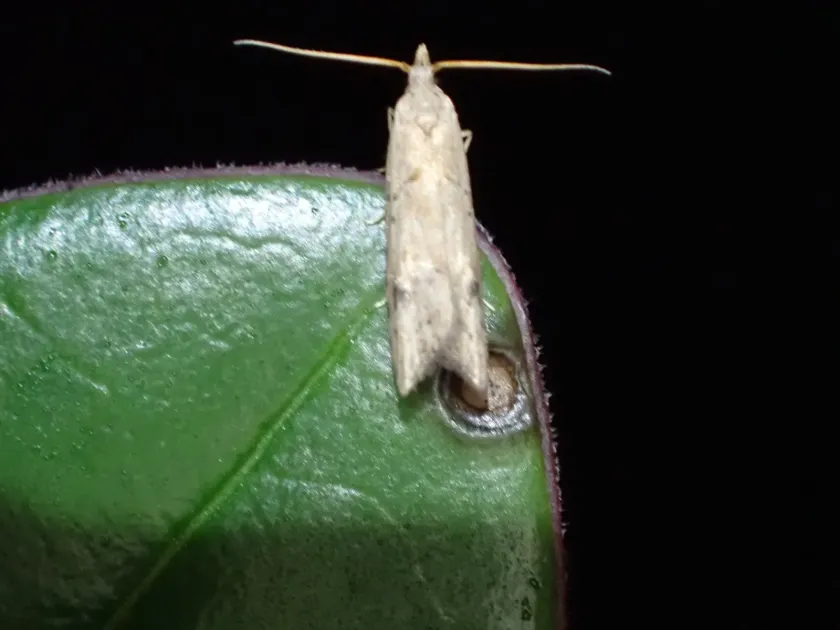
The raspberry moth (Carposina rubophaga) is a specialized pest belonging to the order Lepidoptera and the family Carposinidae. The adult moth is small, with a wingspan of 15–18 mm, and possesses a brownish-gray coloration that provides excellent camouflage against tree bark and foliage.
The larvae, or caterpillars, reach about 10–12 mm in length and are characterized by a dirty-white to pinkish body color. They lead a cryptic, internal-feeding life cycle, making them difficult to detect during the early stages of infestation.
The insect typically completes one generation per year, although favorable climatic conditions can sometimes trigger a partial second generation. The life cycle is strictly synchronized with the phenology of the host plant, specifically the raspberry flowering and fruiting period.
The pest overwinters as a mature larva inside a dense, silk-lined cocoon located in the soil at a depth of 5–10 cm. With the arrival of spring, these larvae pupate, preparing for the emergence of adult moths.
Adults emerge during the raspberry bloom. Mated females lay their eggs directly on the developing fruitlets or sepals, ensuring that newly hatched larvae have immediate access to food.
What it damages
The primary host for this pest is the garden raspberry. While other Rubus species can be affected, the economic impact is most pronounced in raspberry plantations, where the larvae feed on the developing drupelets of the fruit.
Feeding larvae tunnel through the berries, causing significant internal damage. This activity results in the deformation of the fruit, premature ripening, and a reduction in the overall size and weight of the harvest.
Damaged berries lose their commercial value and become highly susceptible to secondary infections, such as mold and gray rot, which spread through the feeding tunnels and rot the entire fruit on the plant.
The pest's ability to cause premature fruit drop significantly complicates harvesting operations. In cases of high infestation, growers may see losses exceeding 40% of the total marketable crop.
Because the larvae are protected inside the berry, conventional contact-based insecticides are often ineffective once the infestation is established, making early intervention critical for yield protection.
Signs of infestation
Visible signs of infestation include misshapen, bumpy, or unevenly colored berries during the ripening process. Affected berries often show signs of stunted development compared to their healthy counterparts on the same cane.
Small entry holes surrounded by fine frass (larval excrement) on the surface of the fruit are classic indicators of the moth's presence. In some cases, light silk webbing may be visible near the point of entry or between the drupelets.
Premature shriveling or drying of berries is a common symptom. If a damaged berry is carefully opened, the larva can often be found actively feeding on the inner tissues near the receptacle.
Heavy fruit drop before maturity is another key sign. Growers should inspect the fallen berries for evidence of larval activity to confirm that the raspberry moth is the cause of the harvest loss.
Monitoring the undersides of sepals and the base of flower buds may reveal tiny, flattened eggs, although these are rarely seen without the aid of magnification due to their small size.
Control measures
Cultural control is the cornerstone of managing this pest. Spring and autumn cultivation of the soil within the root zone helps to disrupt the overwintering cocoons, exposing them to environmental stress and predators.
Chemical control must be timed precisely with the moth’s life cycle. Applications of insecticides should target the period between the appearance of flower buds and the onset of bloom to prevent egg-laying and larval entry into the fruit.
Biological control, such as the use of Bacillus thuringiensis, is recommended as the berries approach harvest. These products effectively target the larvae while ensuring the fruit remains safe for consumption.
Sanitation practices are essential. Regularly picking and destroying infested berries throughout the season prevents the larvae from completing their development and entering the soil to overwinter.
- Shallow soil cultivation in spring and fall;
- Prompt removal and destruction of infested fruit;
- Targeted insecticide applications during the bud stage;
- Use of biological pesticides near harvest time;
- Implementation of pheromone traps for population monitoring.
Taxonomy
- Latin name
- Carposina rubophaga
- Order
- Lepidoptera (butterflies)
- Family
- Carposinidae
- EPPO code
- CARSRU
Discussion
No discussions yet — be the first.